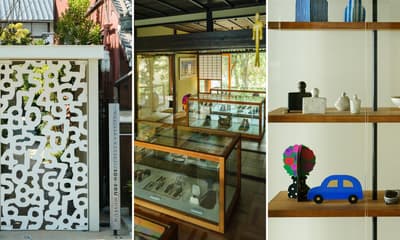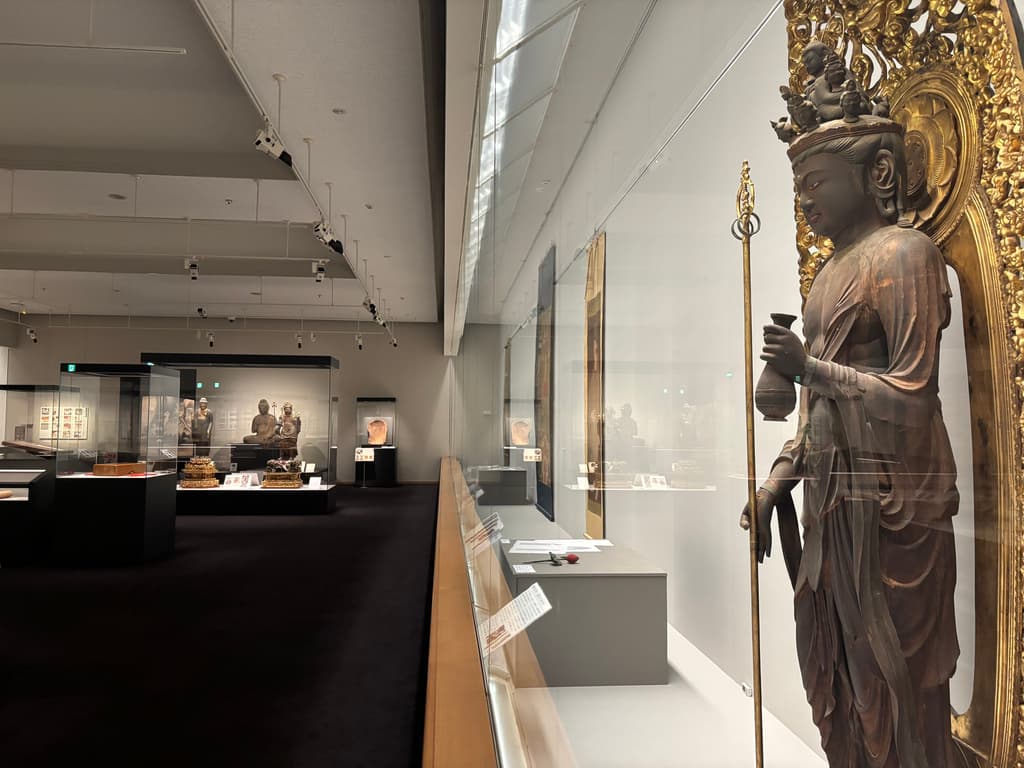
The special exhibition "Long Live Cultural Properties 2026: Skills and People Connecting to the Next Generation" is currently on view at Sen-oku Hakukokan (Kyoto, Higashiyama/Shishigatani). Supported by the Sumitomo Foundation — a cultural patronage initiative established by the Sumitomo Group — the exhibition showcases works that have undergone restoration with foundation grants. Around 30 objects from Kyoto and the broader Kansai region are presented across three phases, each accompanied by information on the problems the works faced, the restoration methods chosen, and how they will be preserved going forward.
Phase I (April 4 – May 6) featured highlights such as the Important Cultural Property Poem Card from the Satake Album of Thirty-six Poetry Immortals: Minamoto no Nobumitsu from the Sen-oku Hakukokan collection and the embroidered Nehan-zu (Parinirvana of the Buddha) from Sanpoji Temple. Phase II began on May 9 with the Important Cultural Property Eleven-faced Kannon Standing Figure from Otokunji Temple and the Important Cultural Property Bodhisattva Kanzeon from Tenryuji Temple. Phase III (June 2–28) will include the Important Cultural Property Red Crepe Noshi-pattern Yuzen-dyed Furisode from the Yuzen History Association.
The exhibition runs in three phases:
- Phase I: April 4 (Sat) – May 6 (Wed) (concluded)
- Phase II: May 9 (Sat) – May 31 (Sun)
- Phase III: June 2 (Tue) – June 28 (Sun)
A Symbol of Prayer — The "One-day Constructed Buddha"
A "one-day constructed Buddha" (ichinichi-zoryubutsu) is a devotional image created and consecrated within a single day, typically commissioned to pray for rain or to ward off epidemics. The practice was particularly popular around the Nanto (Nara) area, especially in and around Kofukuji Temple, from the Kamakura through the Muromachi period.
The work spotlighted in Phase II is the Eleven-faced Kannon Standing Figure from Otokunji Temple in Nagaokakyo City — a remarkably majestic sculpture that seems almost impossible to have been completed in a single day.
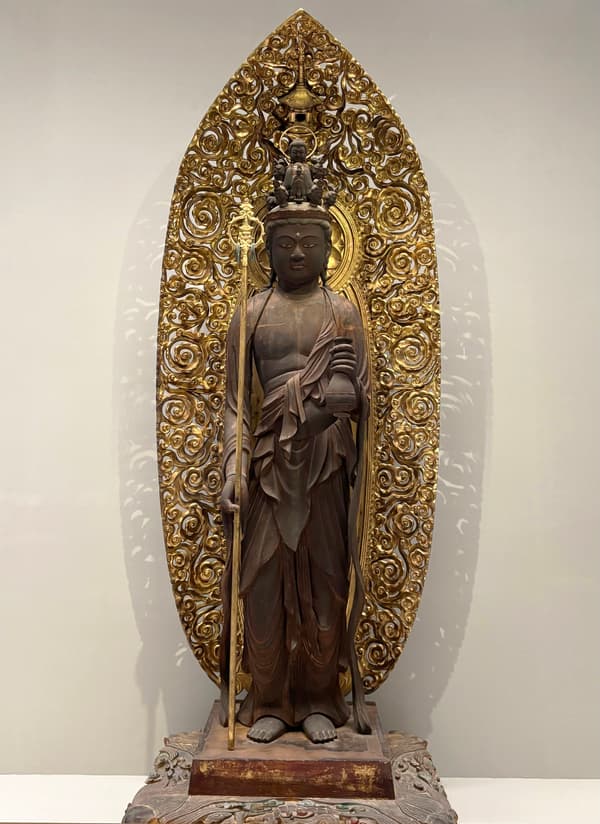
The figure's head and body are constructed using joined woodblock (yosegi-zukuri) technique. When restorers removed the front panel of the torso, they discovered more than 200 ancient documents inside. These inscriptions confirmed that the figure was created in 1268 (Bun'ei 5) in Nara as a one-day constructed Buddha. Previously listed as a provisional Kyoto Prefecture registered cultural property, the statue was subsequently designated an Important Cultural Property of Japan. The recovered documents themselves completed restoration at an hyoso (mounting and repair) workshop this spring.
Fighting the Inevitable — A Silk Painting Turned Sideways
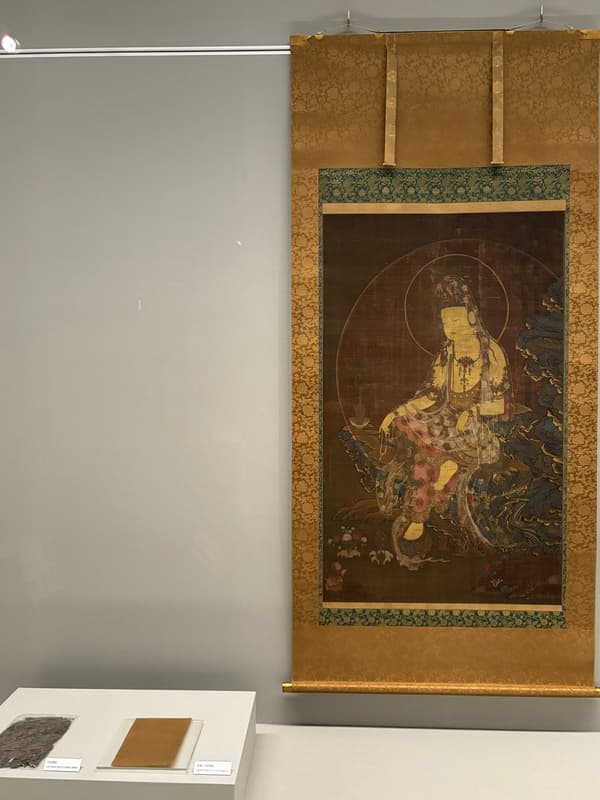
The Water Moon Guanyin (Suigetsu Kannon-zo) was a widely reproduced subject of devotion during the Goryeo dynasty. The example in the Sen-oku Hakukokan collection is a particularly significant benchmark work, confirmed to have been painted in 1323 by court painter Xu Jiufang. However, the silk used for the painting was rotated 90 degrees from its natural orientation, creating a fatal structural weakness. Countless folds and cracks had formed, leaving the pigment at risk of flaking — effectively placing the work in critical condition.
To address this, the restorers applied ore-buse reinforcement (adhering narrow strips of Mino paper over the damaged folds) at several times the standard density. The old backing paper was carefully removed, and a new, lighter-toned backing was applied, bringing out details that had been obscured in darkness.
Sliding Door Paintings: New Scenes from May 19
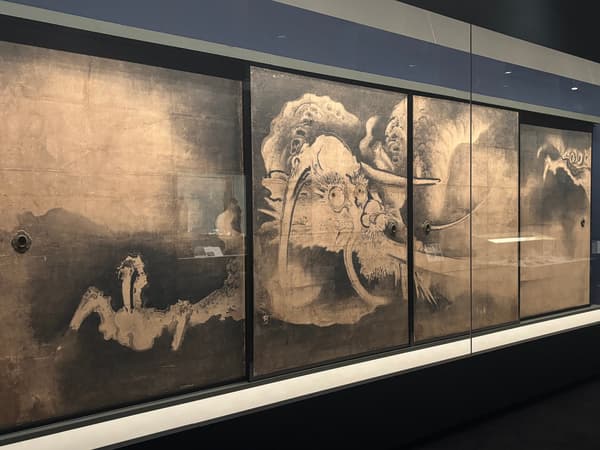
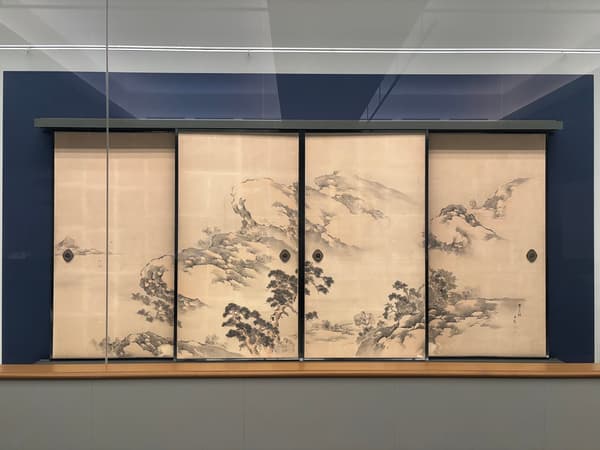
The sliding door paintings on continuous display rotate scenes mid-exhibition, independently of the three phases.
From May 19, the west face of Cloud Dragon (Rinshoin Main Hall sliding door paintings) replaces the east face that was previously shown.
At the same time, Mountain Landscape by Shiokawa Bunrin — from the Hoon-ji Main Hall sliding door paintings (Kyoto Prefecture designated cultural property) — replaces Group of Immortals and is now on view from May 19.
Phase III Highlights: June 2–28
Works spanning painting, craft, sculpture, and ancient documents continue to be presented.
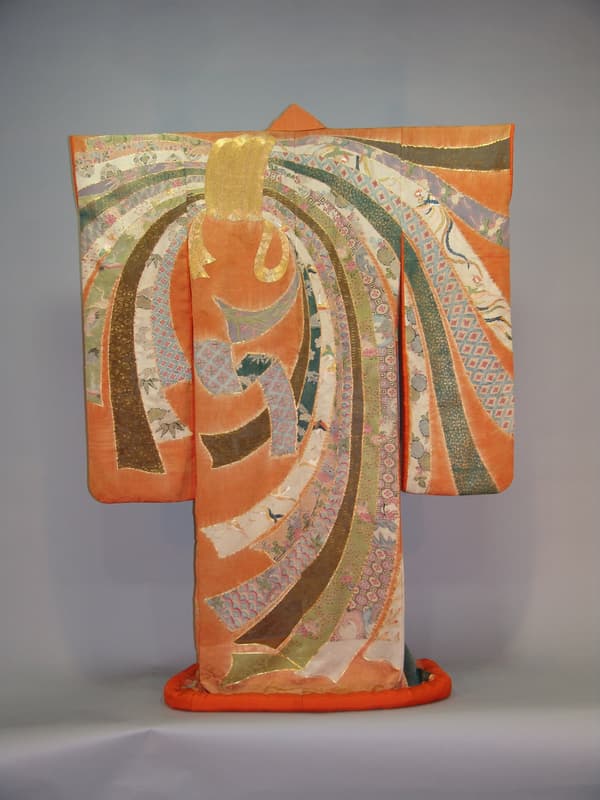
The Important Cultural Property Red Crepe Noshi-pattern Yuzen-dyed Furisode is an exquisite robe encapsulating the dyeing and weaving techniques of the Edo period. It once captivated John D. Rockefeller II, who offered a donation to a Kyoto textile research association, hoping the garment would remain in the city. Kyoto museums and craftspeople subsequently took on its restoration to keep it in Kyoto for generations to come.
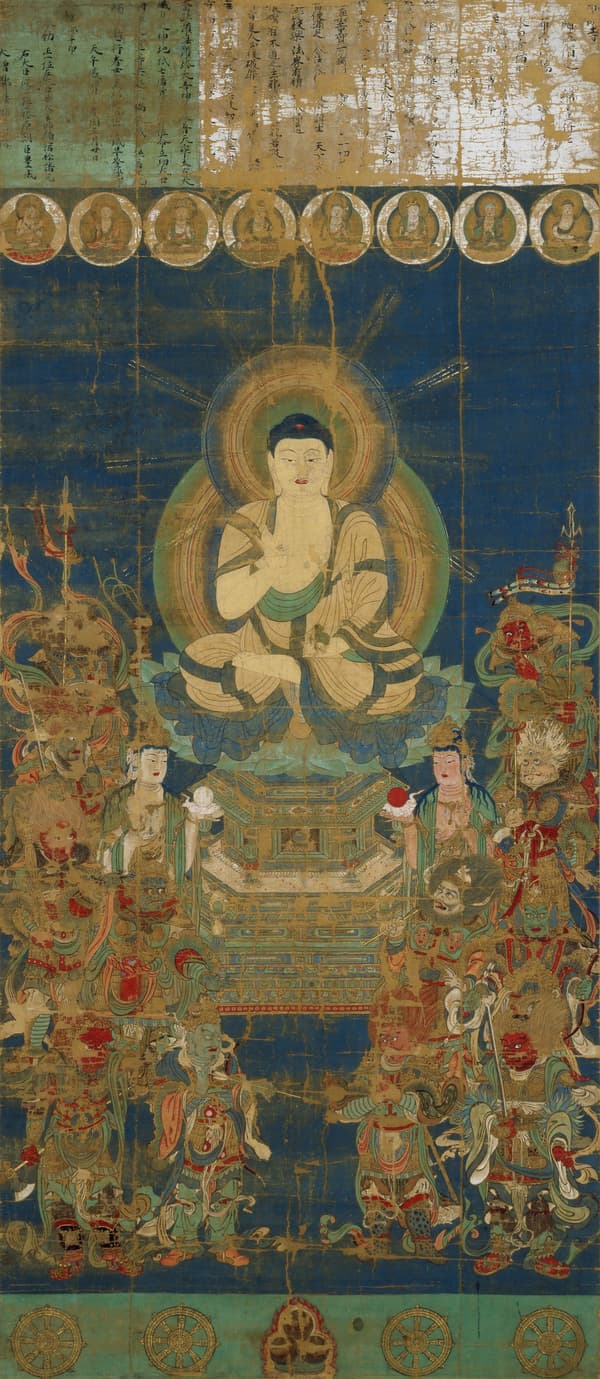
The Yakushi Twelve Divine Generals (Shiga Prefecture designated cultural property) is a hanging scroll treasured at a shrine in Azuchi, Shiga. Dating to the 14th-century Northern and Southern Courts period, its vivid blue pigments remain visually striking. Institutions and restoration workshops across Shiga Prefecture collaborated to address the work's folds, tears, and flaking pigment; the results are best appreciated in person in the gallery.
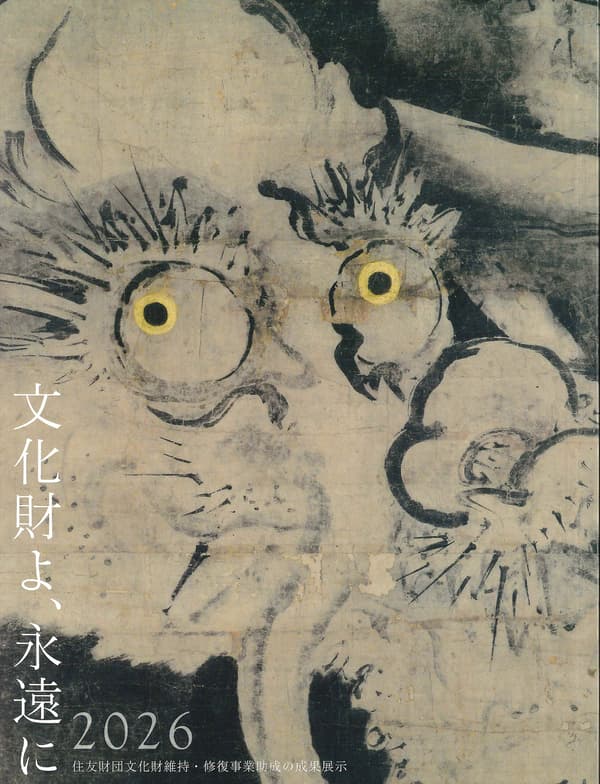
Official Catalogue
The exhibition catalogue covers not only object descriptions but also pre-restoration surveys, the restoration process, and stories about the people involved in the work — a comprehensive volume suitable for permanent reference.
- Size: A4 variant format
- Pages: 196 pages
- Price: ¥3,300 (tax included)
Exhibition Information
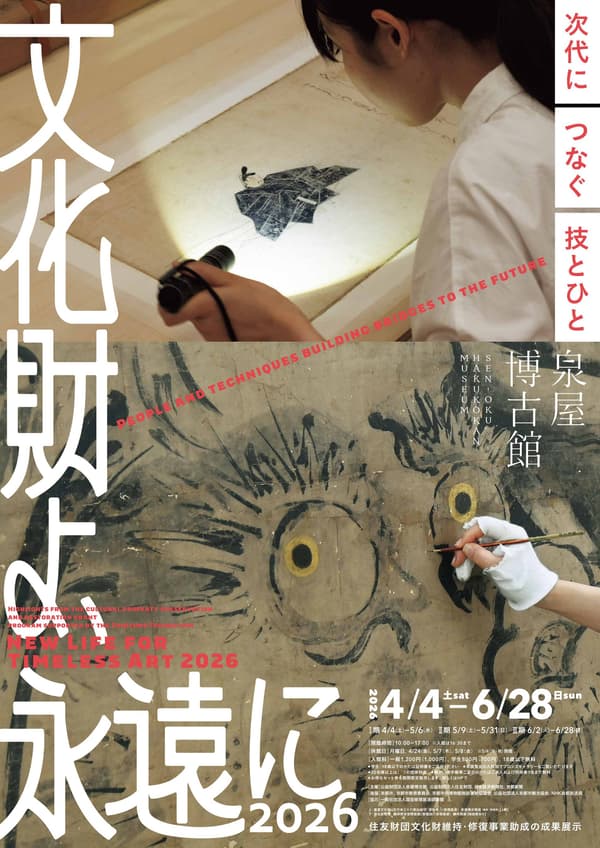
Special Exhibition: Long Live Cultural Properties 2026 — Skills and People Connecting to the Next Generation
Presentation of Results from the Sumitomo Foundation Cultural Property Preservation and Restoration Project
Period: April 4 (Sat) – June 28 (Sun), 2026
| Phase | Dates |
|---|---|
| Phase I | April 4 (Sat) – May 6 (Wed) |
| Phase II | May 9 (Sat) – May 31 (Sun) |
| Phase III | June 2 (Tue) – June 28 (Sun) |
Closed: Mondays
Hours: 10:00 AM – 5:00 PM (last admission 4:30 PM)
Venue: Sen-oku Hakukokan (Kyoto Higashiyama/Shishigatani)
Admission: General ¥1,200 / Students ¥800
A "3-ticket set" is also available at ¥2,800 (tax included).
Organized by: Public Interest Incorporated Foundation Sen-oku Hakukokan, Public Interest Incorporated Foundation Sumitomo Foundation, Nihon Keizai Shimbun, Kyoto Shimbun
Official website: https://sen-oku.or.jp/program/202604_newlifefortimelessart/
Concurrent Exhibition: "Osaka-Kansai Expo — The Legacy of the Sumitomo Pavilion"
The 2025 Osaka-Kansai World Exposition ran from April 13 to October 13, 2025 on Yumeshima Island. The Sumitomo Group's "Sumitomo Pavilion" drew on the forests of the Besshi Copper Mine in Ehime Prefecture — the foundation of the Sumitomo Group's development — to explore themes of coexistence between people and nature, and the pursuit of a sustainable society. After the Expo closed, exhibits and data were distributed to Sumitomo Group companies and affiliated facilities. Sen-oku Hakukokan, selected as one of the repositories, is displaying a selection of materials received from the Sumitomo Pavilion to mark one year since the Expo's opening.
Note: Viewing requires admission to the concurrent special exhibition.
Period: April 21 (Tue) – July 31 (Fri), 2026 (planned)
Exhibits (planned):
- Official Sumitomo Pavilion stamp
- Sumitomo Pavilion merchandise
- Sumitomo Pavilion wooden bench
- Forest diorama ("UNKNOWN FOREST")
- Acorns, lanterns, and other items from "UNKNOWN FOREST" (photography permitted)