A cultural experience tour for international visitors is now being offered in the Shinobazu district of Ueno, where Edo-period culture is still passed down in Ikenohata Nakacho and Yushima. The local group Shinobazu Wa-Meguri no Kai (しのばず和めぐりの会) has put a reception system in place for the tour. Until now the group has held tours for domestic travelers that introduce long-established craft shops and the history and culture of the town. After training interpreter-guides under its own curriculum and trial-running the tours, it has stepped up its program for international visitors. The tour is sold on a request basis through online travel agency (OTA) sites. The official site is https://shinobazu-wameguri.jp/.
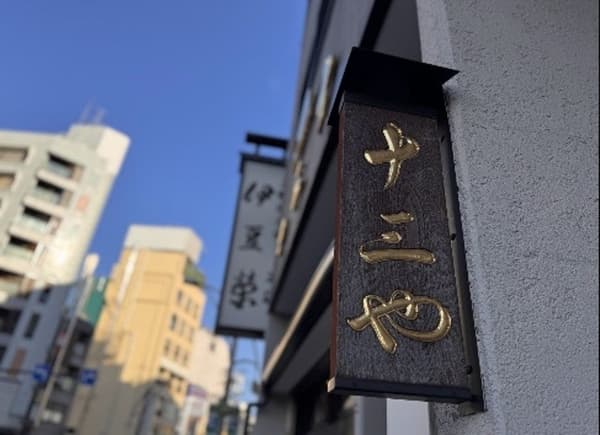
Long-established shops with histories of about 300 years are scattered around the Shinobazu district (Izuei Honten, Jusan-ya comb shop)
The Shinobazu District: A Town Where Edo Culture Lives On
About Ueno Ikenohata Nakacho and Yushima
Shinobazu Pond has long been a popular place for outings. The "Shinobazu district" spreads out on its south side and is a historic town made up of Ueno Ikenohata Nakacho and Yushima. Ikenohata Nakacho flourished in the Edo period as the temple town in front of Kan'ei-ji Temple, the family temple of the Tokugawa shogun family, and Yushima leads to the back approach of Yushima Tenmangu Shrine.
The area has many places tied to its history: the Onari-michi road the shogun took to worship at Kan'ei-ji, Ikenohata Nakacho, where shops lined up as the temple town, Ueno Hirokoji, bustling with ordinary townspeople, and Yushima, where worshippers on their way to Yushima Tenmangu Shrine came and went. A distinctive culture grew up among the many people who gathered here.
Around Shinobazu Pond, which shows a different face in each season, long-established craft shops and restaurants that date back to the Edo period are still scattered about, and traces of that era remain in daily life and trade.
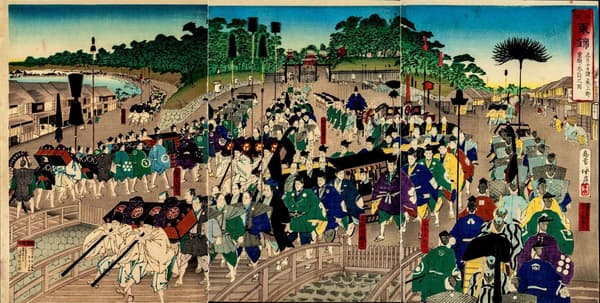
Daimyo processions crossing the Mihashi (three bridges) in Ueno to worship at Kan'ei-ji Temple in the Edo period | 東洲勝月『温古東錦 正月十日諸侯上野霊廟へ参詣之図』(1889). Image: Taito City Central Library Digital Archive (CC BY 4.0)
Walking Among Small, Long-Established Craft Shops
The Shinobazu district has small, long-established craft shops that carry on the tradition of "zauri." Rather than displaying goods at the shopfront, the shop faces the customer inside and sells while talking about the goods. Some shops can look hard to enter at first glance, but behind the door are skills and tools handed down through generations, and the thoughts put into each item.
To convey the appeal of these shops, Shinobazu Wa-Meguri no Kai has created walking tours that include conversations with shop owners and a look at the craftspeople's skills.
Scenes and trade that are ordinary to the local community can be fresh discoveries for visitors. Past tours have been well received for letting participants "enter shops that are usually hard to enter" and "hear directly from the shop owners." What draws people to the tour is the chance to experience the everyday trade of the community itself, not an experience newly created for tourism.
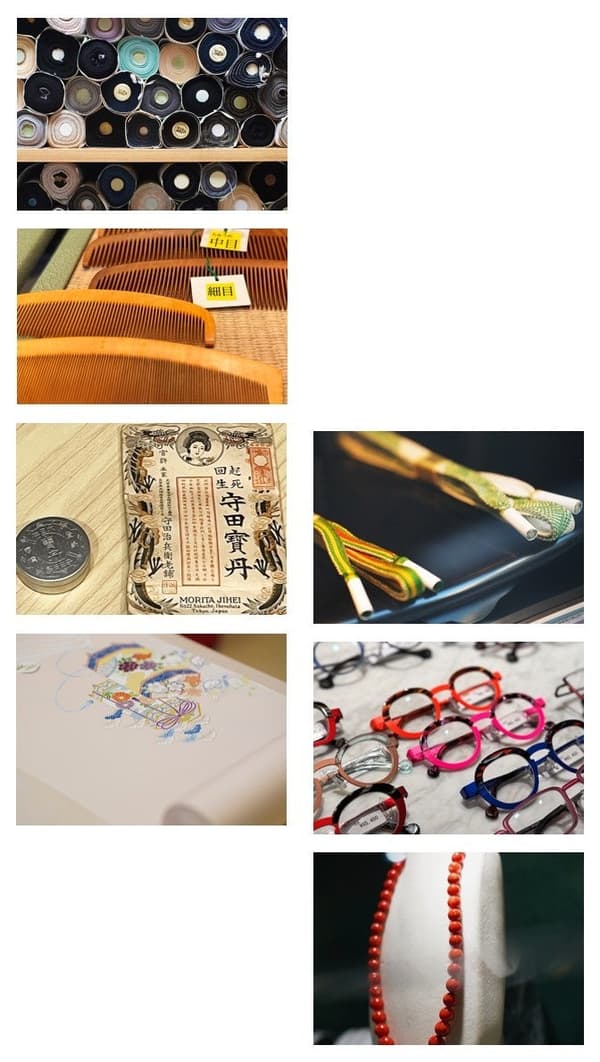
Long-established craft shops in the Shinobazu district
Cultural Experience Tour for International Visitors
For international visitors, a small-group private tour has been created that visits long-established craft shops and other places in the Shinobazu district. An English-speaking interpreter-guide who has completed the group's own training accompanies the tour. Beyond simply looking around, the tour offers a cultural experience of the sense of beauty that lives on in Japanese daily life and the depth of craftsmanship.
Features of the Tour
1. Visits to small, long-established craft shops
Visitors call on craft shops that have been rooted in the area for a long time and learn about traditional skills and the background of the goods.
2. Close exchanges with shop owners and craftspeople
Through the conversations that come naturally in a small shop, visitors can learn about the makers' thoughts on their craft and about local life.
3. An interpreter-guide with specialist training
The guide explains the area's history and cultural background in English and supports the exchange between travelers and the shop owners and craftspeople.
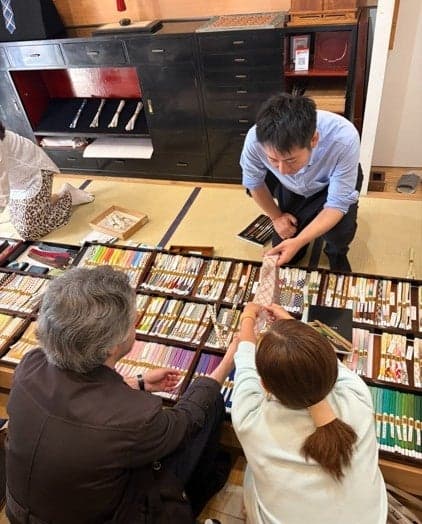
An interpreter-guide who has completed the group's own training accompanies the tour (Yusoku Kumihimo Domyo)
Tour Overview
- Target: International visitors to Japan
- Format: Small-group private tour
- Language: English
- Places visited: Long-established craft shops and other places in the Shinobazu district
- How to book: Request through online travel agency sites; special itineraries are handled individually
- Duration: About 3 to 3 hours 30 minutes
- Price: From ¥110,000 (tax included) per group of 2 to 5 people
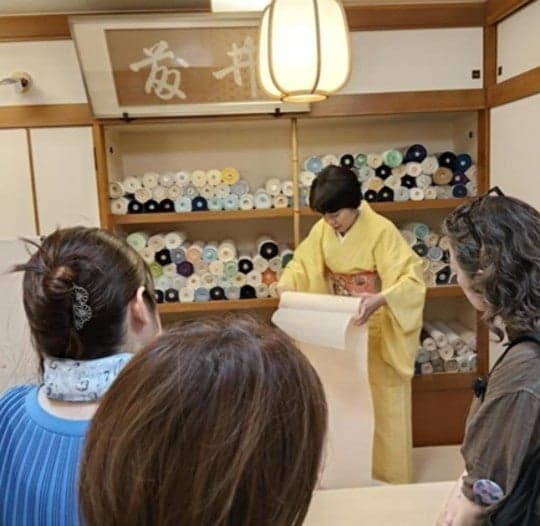
Visitors encounter seasonal outfits and textile techniques from around Japan at a traditional "zauri" kimono shop (Kimono Ikenohata Fujii)
Sample itinerary
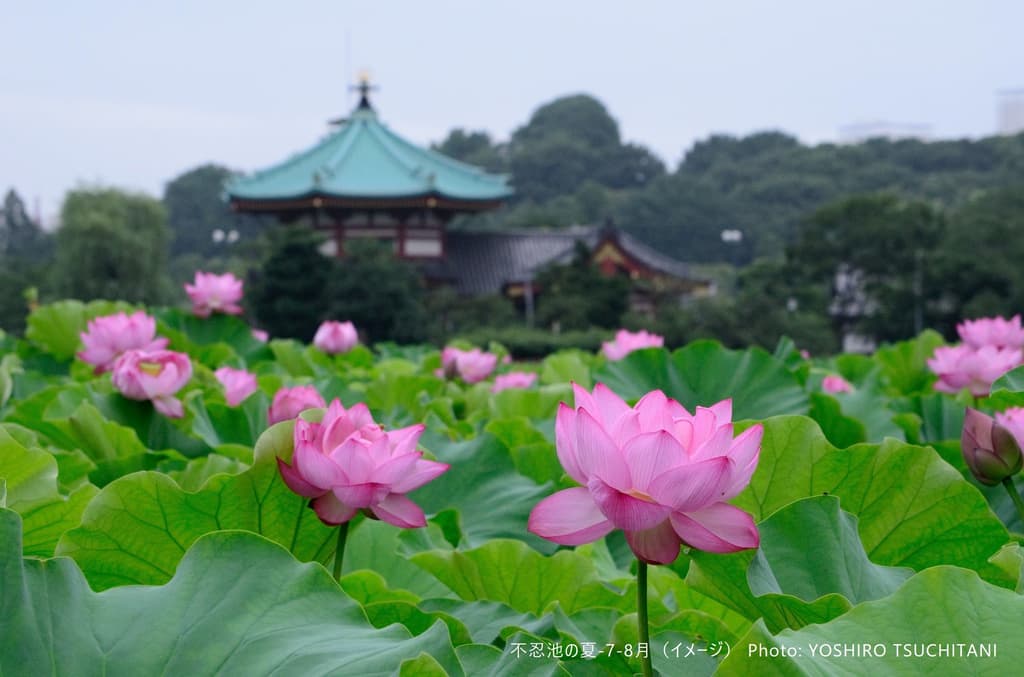
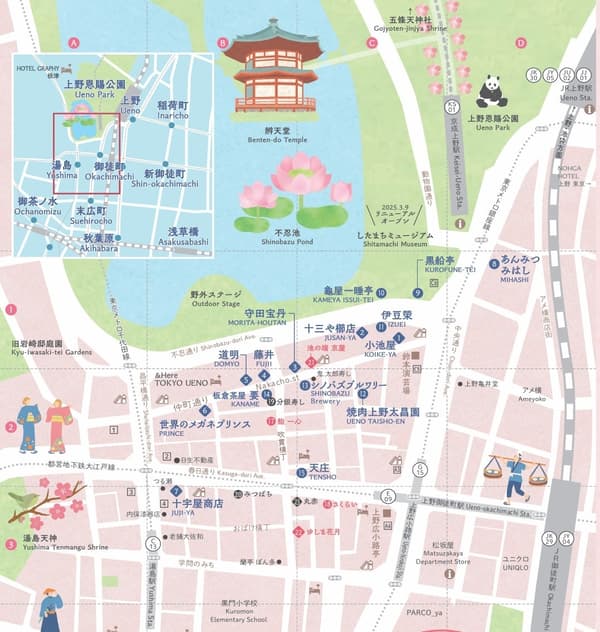
Ueno Park (meeting point) → Kiyomizu Kannon-do → Shinobazu Pond (remains of the Mihashi) → craft shops and alleys of the Shinobazu district (about 30 minutes each at two craft shops) → long-established restaurant (meal) or sweets shop (tea and Japanese sweets) → Hasumi (lotus-viewing) Deck at Shinobazu Pond (end of tour)
A walking map of the district (an English version is also available) has been prepared.
Tour Listing
The cultural experience tour for international visitors, "Hidden Tokyo: A Walk Through Living Heritage," is sold on a request basis on Attractive JAPAN.
- Tour name: Hidden Tokyo: A Walk Through Living Heritage
- Listing and booking site: Attractive JAPAN
- URL: https://attractive-j.com/experiences/PAQPA6
Background: Tours for Domestic Travelers
Cooperation with JR East's "Ueno Dusk Stroll"
In summer 2026, Shinobazu Wa-Meguri no Kai cooperated with "Ueno Dusk Stroll" (上野夕暮れ散歩), a walk organized by JR East and led together with the editor-in-chief of the magazine 散歩の達人 (Sanpo no Tatsujin). The walking tour introduced the history and culture of the Shinobazu district and the appeal of its long-established shops.
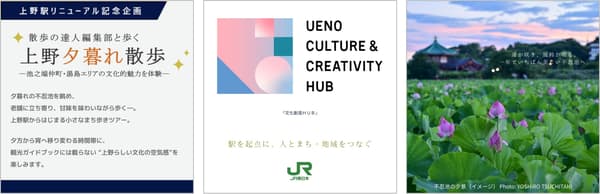
A walking tour held to mark the renewal of JR Ueno Station
"Edo Culture Walk" for Domestic Travelers
The group also runs its own walking tour for domestic travelers, "Edo Culture Walk" (江戸文化散歩). Participants have praised being able to enter shops they rarely have the chance to visit and hearing directly from the shop owners.
Participant comments (excerpt, held in summer)
- "I heard directly from the people at the long-established craft shops and was shown wonderful items."
- "Not knowing is a waste. Knowing broadened my life."
- "I was moved by Shinobazu Pond full of lotus flowers and the wind chimes, the tsuge (boxwood) combs at Jusan-ya, and the conversation with the senior proprietress of Kimono Fujii."
- "The blend of the old streetscape and the new town was unique, and the walk was fun."