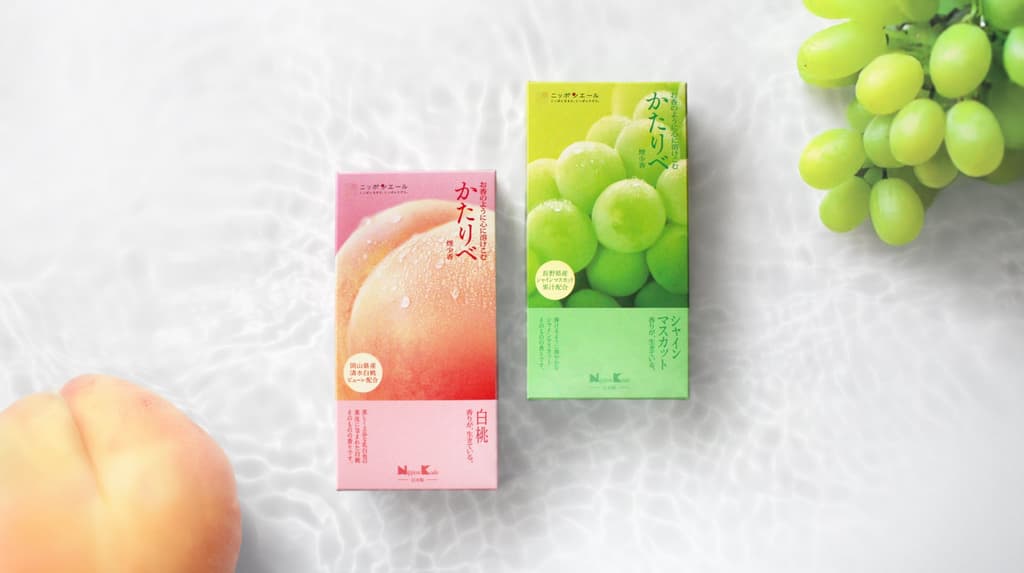
On March 5, 2026, Nippon Kodo's "Kataribe" incense series will expand with two new fragrances: "Kataribe Shine Muscat" and "Kataribe White Peach." Both products incorporate "Ringo Pamis Gururi-ko," an upcycled powder made from apple juice pomace, developed by food-tech startup ASTRA FOOD PLAN Co., Ltd. (Fujimi City, Saitama Prefecture). This marks the first commercial product to use the newly developed ingredient.
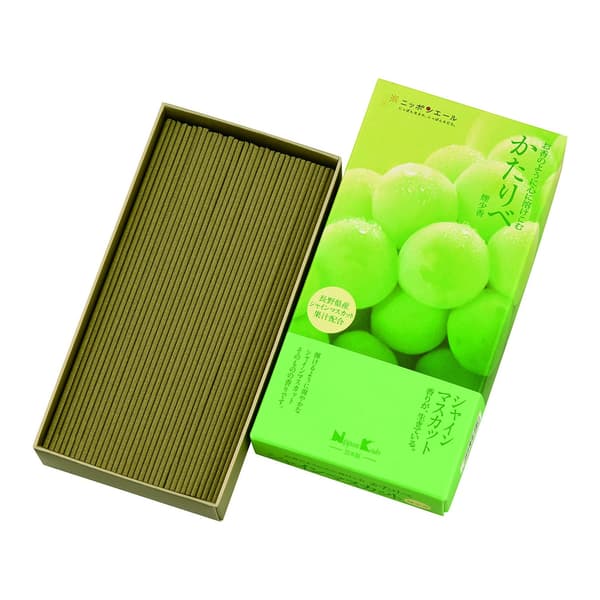
Product Overview: Kataribe Shine Muscat / Kataribe White Peach
Kataribe Shine Muscat
Inspired by the jewel-like beauty of emerald green shine muscat grapes, this fragrance captures the sensation of biting into a plump cluster of grapes — crisp skin giving way to juicy, aromatic flesh, with the characteristic refreshing muscat scent drifting through. The result is a bright, clear green fragrance with a graceful sweetness and a gentle hint of bitterness.
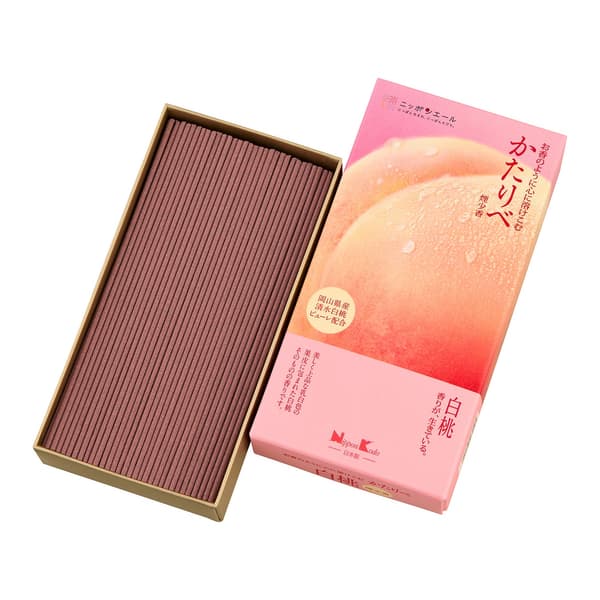
Kataribe White Peach
This fragrance evokes the softly blushed, velvety skin of a white peach. Its aroma is rich and mellow, with a silky smooth quality that gives way to a deep, honeyed sweetness, gently rounded out by a light, refreshing acidity — a lush, juicy rendition of Japanese white peach.
| Item | Details |
|---|---|
| Series Name | Kataribe |
| Product Names | Kataribe Shine Muscat / Kataribe White Peach |
| Launch Date | March 5, 2026 (Thursday) |
For more information on the Kataribe series: https://www.nipponkodo.co.jp/shop/products/list?category_id=2206
Why Apple Pomace Powder Was Chosen
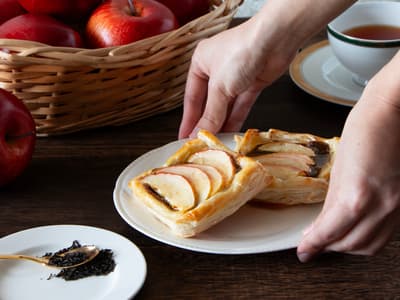
"Ringo Pamis Gururi-ko" was selected for use in incense because it enhances the fruit-like sweetness of a fragrance, enriching the overall scent experience. Being in dried powder form, it is easy to handle as a manufacturing ingredient. In addition, when blended with charcoal — one of the key components in incense production — it was found to mellow the distinctive smell of charcoal, making it a practical and appealing choice for the formulation.
The Story Behind Ringo Pamis Gururi-ko
Apple Pomace Output Reaches Up to 20 Tons per Day at Kotobuki Kogen Foods
At large-scale domestic beverage factories, tens of tons of processing residues — tea leaves, coffee grounds, and fruit pomace — are generated each day. Because these byproducts are produced in large quantities and spoil quickly, they are difficult to repurpose as food ingredients. Most end up being disposed of as industrial waste or incinerated, with only a small fraction converted into compost or animal feed. Even feed applications have struggled with economic viability due to high processing costs and low resale values, hindering upcycling efforts in Japan.
Apple pomace is no exception. At Kotobuki Kogen Foods Co., Ltd., up to approximately 20 tons of apple pomace are generated per day during peak production periods. The portion that cannot be composted is discarded, with transportation and disposal costs posing an ongoing challenge.
Upcycling Project Launched in October 2024
To address these challenges, an upcycling demonstration project for apple juice pomace was launched in October 2024 as part of the Ministry of Agriculture, Forestry and Fisheries' SME Innovation Promotion Project (SBIR). During fiscal year 2024, the project focused on plant design and preparation. In fiscal year 2025, efforts shifted to developing a mass-production model of the superheated steam processing machine and beginning production of "Ringo Pamis Gururi-ko." The ingredient is currently in a test-sales phase.
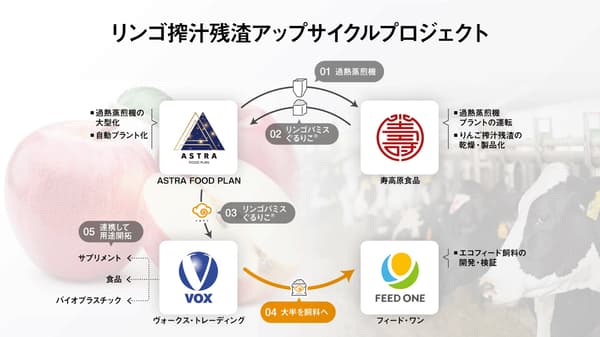
The adoption by Nippon Kodo represents the first use of this demonstration project's output in a non-food application (incense), marking a milestone for upcycling in the household goods sector.
Comment from Nippon Kodo
Miki Nonaka, Senior Researcher, Research & Development Division, Nippon Kodo Co., Ltd.
"We are truly delighted to have been involved in the first-ever commercialization of the upcycled ingredient 'Ringo Pamis Gururi-ko.' The Kataribe series is developed with an ethical approach to product creation, and beyond simply incorporating the ingredient, we were pleased to find that 'Ringo Pamis Gururi-ko' itself brings a naturally sweet apple aroma that adds even more of a fruity character to the fragrance. That quality was a key reason we chose to include it in these new products."
About the Superheated Steam Processing Machine
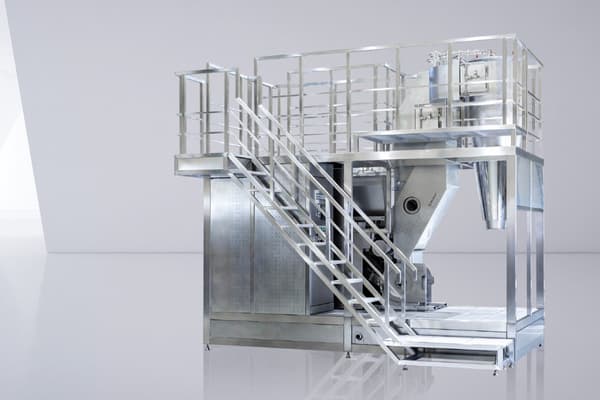
The superheated steam processing machine is a device capable of drying and sterilizing food ingredients simultaneously, while suppressing flavor degradation, oxidation, and nutrient loss. It can upcycle a wide range of materials — from inedible parts of vegetables and fruit pomace to rice bran and beverage residues — into high-value food ingredients.
1. Prevention of Flavor Degradation and Oxidation
By using superheated steam at several hundred degrees Celsius, the device suppresses oxidation, minimizing nutritional loss and flavor deterioration. Some ingredients show increased umami content, and levels of Vitamin E, beta-carotene, and folic acid have been found to be higher compared to conventional hot-air drying.
2. Low Cost and High Production Efficiency
A boilerless superheated steam generator combined with hot-air drying achieves extremely high energy efficiency. The continuous production process delivers superior throughput, overcoming the cost challenges associated with traditional drying technologies.
3. Rapid Sterilization and Drying
Ingredients are exposed to heat for just 5 to 10 seconds in the superheated steam machine. This brief exposure minimizes ingredient degradation while the superheated steam ensures thorough sterilization, enabling safe processing.
About Gururi-ko®
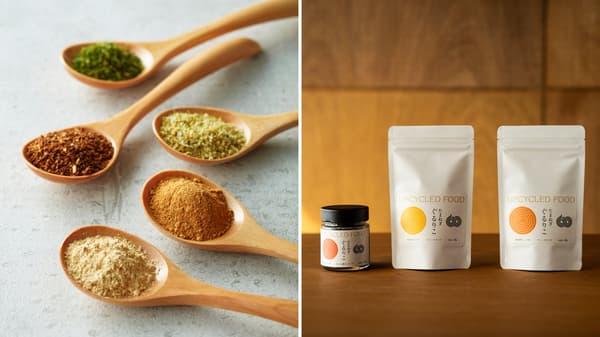
"Gururi-ko®" is ASTRA FOOD PLAN's collective brand name for food powders created by upcycling ingredients — such as misshapen produce, factory trimmings, and food processing residues — using the superheated steam machine. The name combines "gururi" (meaning "circular" or "all around") and "ko" (meaning "powder"), and is a registered trademark of ASTRA FOOD PLAN. Because Gururi-ko® products are dried and sterilized in just 10 seconds, they sustain minimal heat damage, resulting in high nutritional value and exceptionally strong flavor profiles.
In February 2025, the brand was formally launched as a "new-sensation craft seasoning — eat the aroma," with direct-to-consumer sales starting through an online store.