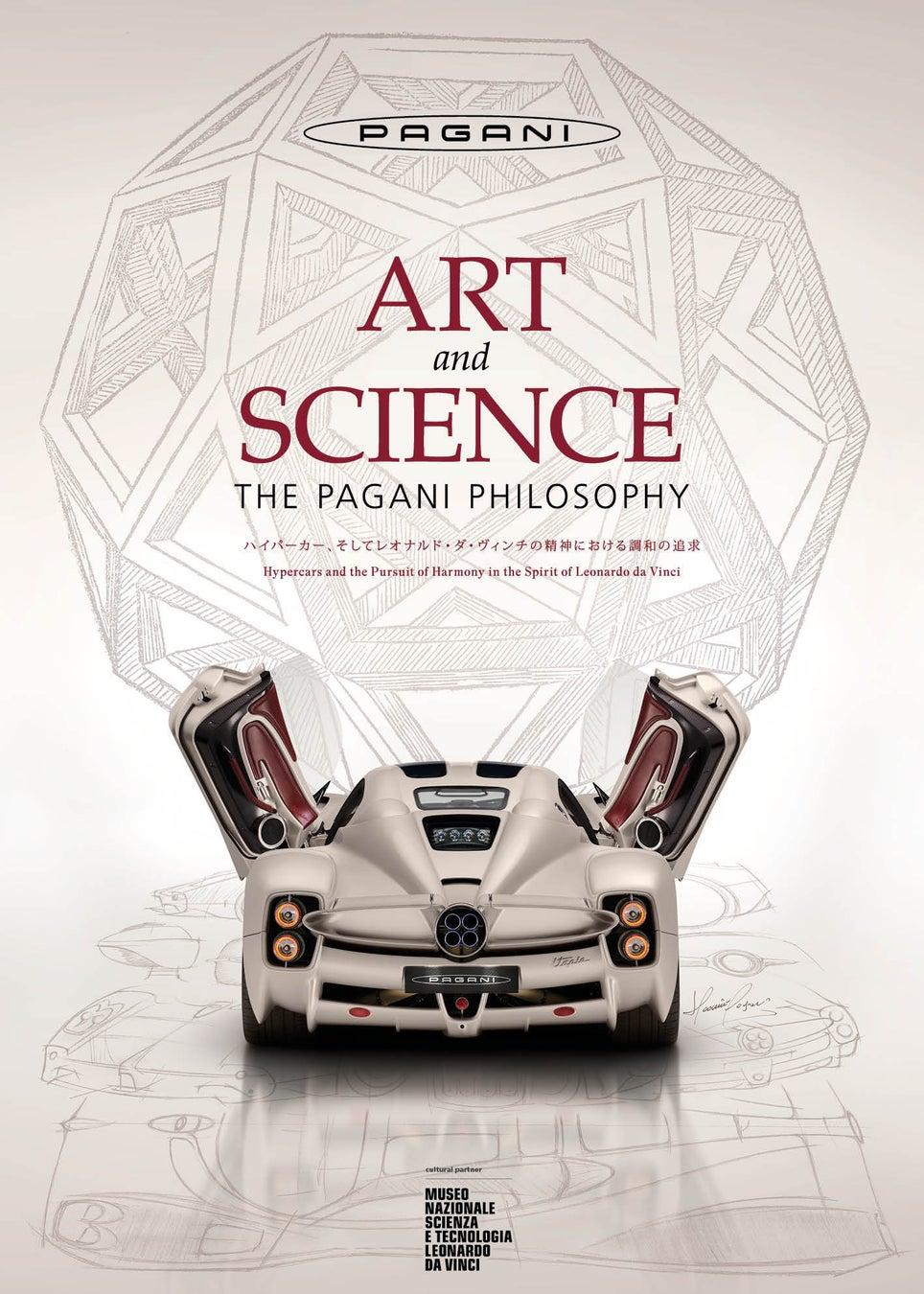
An experiential art exhibition on the harmony of art and science will be held at Tokyo Midtown Hall in Minato-ku, Tokyo, from Thursday, April 29 (a national holiday) to Wednesday, May 5 (a national holiday), 2027. Titled "ART and SCIENCE – THE PAGANI PHILOSOPHY: The Pursuit of Harmony in Hypercars, and in the Spirit of Leonardo da Vinci" (ハイパーカー、そしてレオナルド・ダ・ヴィンチの精神における調和の追求), the exhibition is organized by the Italian hypercar brand PAGANI Automobili S.p.A. The Leonardo da Vinci National Museum of Science and Technology takes part as a cultural partner. NAKED, Inc. is in charge of the co-planning, direction, and production.
The exhibition looks at the "harmony of art and science" embodied by Leonardo da Vinci, and at the aesthetics of Pagani, which carries that thinking on in its craftsmanship. Through historical materials and vehicles, light and sound installations, and participatory art, visitors can follow a story of creativity that spans about 500 years. Da Vinci's original handwritten manuscript and historical models, shown in Japan for the first time, are displayed together with hypercars known as "moving works of art."
Following the NAKED meets Gaudí Exhibition, NAKED, Inc. again creates an exhibition where visitors experience the thinking and creative process behind the works. In collaboration with Pagani and the museum, the exhibition connects viewing the displays, learning the background, and making something yourself, conveying a world of craftsmanship where art and science meet.
From da Vinci to Pagani: "The Harmony of Art and Science" Across About 500 Years
Leonardo da Vinci, known as a painter, was also someone who observed nature and explored the human body, machines, and the movement of air and water. His approach, which treats beauty and structure, and sensibility and technology, as inseparable, strongly influenced Horacio Pagani, founder and chief designer of Pagani, from his boyhood.
In Pagani's cars, beauty and function are pursued as one, from the form of the body to the materials and the details of the mechanisms. The exhibition shines a light on the thinking of da Vinci behind this approach and reads the design and technology that shape a hypercar from both artistic and scientific perspectives.
This is the world's first exhibition of its kind, held in Tokyo. It builds on a dialogue that began in 2022 between the Pagani Museum and the Leonardo da Vinci National Museum of Science and Technology in Milan. Through historical materials, modern craftsmanship, and experiential art, it offers a chance to encounter a creative tradition handed down across eras and fields.
Exhibition Highlights
1. Experience the aesthetics of "moving works of art" surrounded by light and sound
Three models that tell the story of Pagani's history, the Zonda, the Huayra, and the Utopia, are gathered in one place. The Huayra R, a circuit-only hypercar limited to 30 units worldwide, also appears.
In the main area, light and sound installations created by NAKED, Inc. envelop the hypercars. Set to an original suite created together by Japanese and Italian musicians playing traditional instruments, the space lets visitors take in the aesthetic sense found in the shapes, materials, and details of the cars. It portrays Pagani's pursuit of the harmony of art and science as experiential art.
2. Learn da Vinci's ideas from a handwritten manuscript and historical models shown in Japan for the first time
The section on da Vinci as an "observer of nature" and an "engineer" includes an analysis of manuscripts using digital technology in collaboration with the University of Bologna, along with 20 historical models from the collection of the Leonardo da Vinci National Museum of Science and Technology. Visitors can trace how he found structures and mechanisms by observing nature and gave them form.
With the cooperation of the Rossana and Carlo Pedretti Foundation, da Vinci's original handwritten manuscript depicting the stage design for the play Orfeo is shown in Japan for the first time. It is displayed together with the mathematics book Divine Proportion (1509), which da Vinci himself illustrated. Viewing these historical materials up close, visitors can see how his inquiries connect to today's design and craftsmanship.
3. Participatory art to draw your own Pagani and experience the creative process
Inspired by a quote from Horacio Pagani, "When different talents respect one another and share knowledge, ideas that transcend time are born," a digital area is set up where children can enjoy creating through the connection of "hands, head, and heart."
Visitors choose colors and designs and draw their very own Pagani on screen. By experiencing the atelier's creative process of observing, thinking, and giving form, they can link the ideas they encountered in the exhibits to making something themselves.
Pagani's Car Making, Carrying On da Vinci's Thinking
Pagani's approach of pursuing beauty and function as one is reflected in its models over the years.
The Zonda, the first model, announced in 1999, combined carbon fiber, an advanced material, with beautiful form. In the Zonda C12 in particular, a finish that shows the weave of the carbon fiber turned the material itself, which provides lightness and strength, into aesthetic expression while keeping performance a priority.
The Huayra drew on the graceful movement and power of the wind. With its wing-like body and four movable flaps, it is described as the first hypercar to combine form and aerodynamic performance.
The Utopia, announced in 2022, takes da Vinci's Vitruvian Man as one of its sources of inspiration, pursuing a formal beauty that values proportion and harmony. The studies of airflow and form left in the Codex Atlanticus also resonate with a design philosophy that treats beauty and aerodynamic performance as one.
Observing nature and connecting scientific understanding with artistic expression, da Vinci's spirit lives on in Pagani's craftsmanship today.
About Horacio Pagani
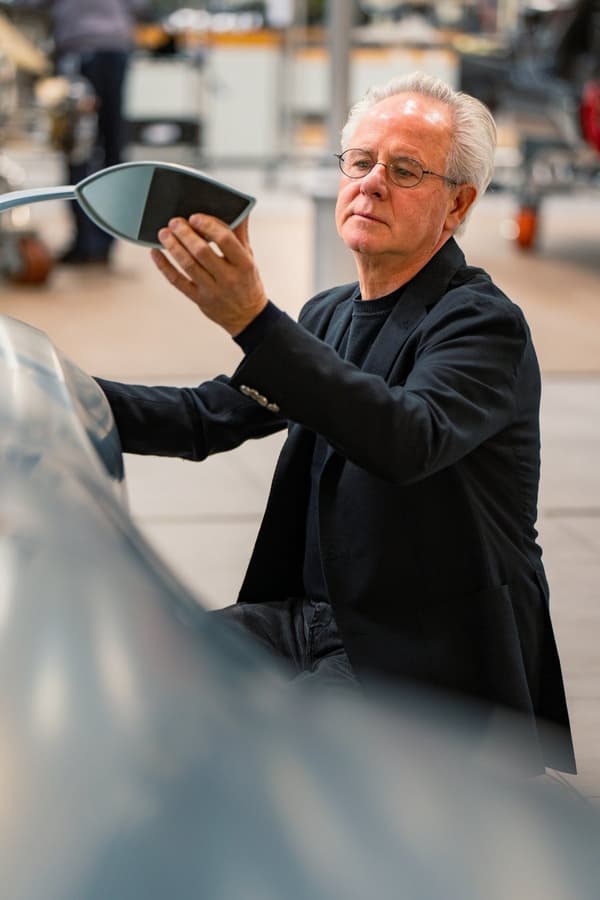
Horacio Pagani, Founder and Chairman of Pagani Automobili
Born in Argentina in 1955, Pagani poured his passion into cars from childhood, repeatedly sketching them and building models. After moving to Italy, he worked on vehicle development and carbon fiber technology at Lamborghini, then pursued his own craftsmanship, creating the Zonda, the Huayra, and the Utopia. Rooted in the ideas of da Vinci, whom he encountered as a boy, he continues to build cars where art and science are in harmony.
Exhibition Details
- Exhibition name: ART and SCIENCE – THE PAGANI PHILOSOPHY: The Pursuit of Harmony in Hypercars, and in the Spirit of Leonardo da Vinci (ハイパーカー、そしてレオナルド・ダ・ヴィンチの精神における調和の追求)
- Venue: Tokyo Midtown Hall, 9-7-1 Akasaka, Minato-ku, Tokyo
- Dates: Thursday, April 29 (national holiday) to Wednesday, May 5 (national holiday), 2027. Details may change without notice.
- Hours: 9:00 AM to 5:00 PM
- Tickets (tax included): To be announced at a later date
- Organizer: PAGANI Automobili S.p.A.
- Cultural partner: Leonardo da Vinci National Museum of Science and Technology
- Sponsors: Mitsubishi Chemical Corporation, Brembo N.V.
- Special cooperation: SKY GROUP / Pagani of Tokyo, Tokyo Midtown Management Co., Ltd.
- Cooperation: Pirelli & C. S.p.A.
- Co-planning, direction, and production: NAKED, Inc.
- Access:
- Directly connected from Exit 8 of Roppongi Station on the Toei Oedo Line
- Directly connected via an underground passage from Roppongi Station on the Tokyo Metro Hibiya Line
- About a 3-minute walk from Exit 3 of Nogizaka Station on the Tokyo Metro Chiyoda Line
- About a 10-minute walk from Exit 1 of Roppongi-itchome Station on the Tokyo Metro Namboku Line
- Official website: https://pagani-artandscience.jp/
- Official Instagram: https://www.instagram.com/paganioftokyo/
- Official X: https://x.com/pagani2027