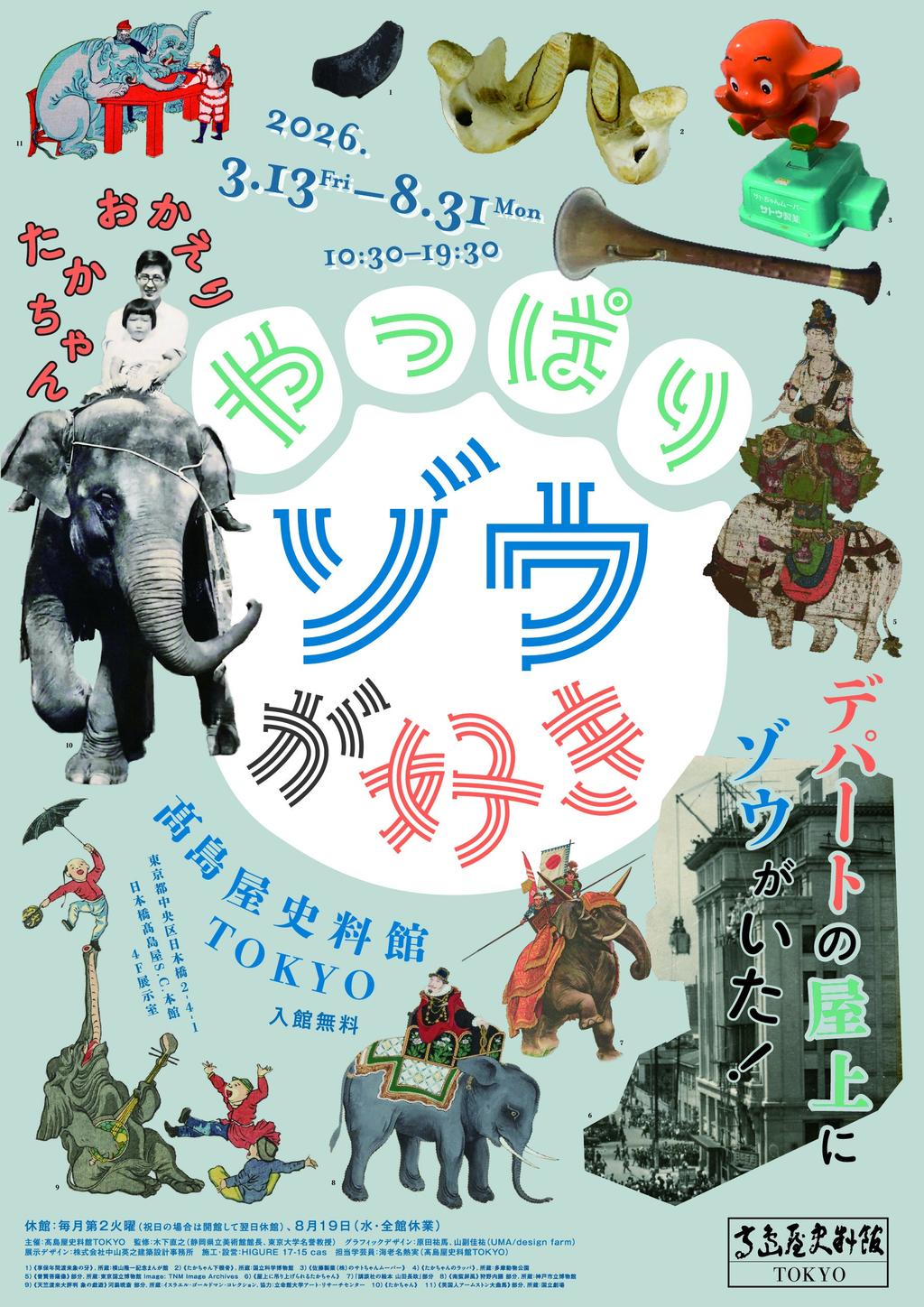
Takashimaya Shiryokan TOKYO will host a special exhibition titled "We Love Elephants — There Was an Elephant on the Department Store Rooftop!" from March 13 to August 31, 2026. Admission is free.
Venue: Takashimaya Shiryokan TOKYO, 4th Floor Exhibition Room (2-4-1 Nihonbashi, Chuo-ku, Tokyo, Nihonbashi Takashimaya S.C. Main Building)
Period: March 13, 2026 (Fri) to August 31, 2026 (Mon)
Opening Hours: 10:30 AM to 7:30 PM
Admission: Free
Closed: Second Tuesday of each month (if a national holiday, closed the following day); August 19 (Wed, full building closed)
Supervised by: Kinoshita Naoyuki (Director of Shizuoka Prefectural Museum of Art, Professor Emeritus at University of Tokyo)
Exhibition Overview
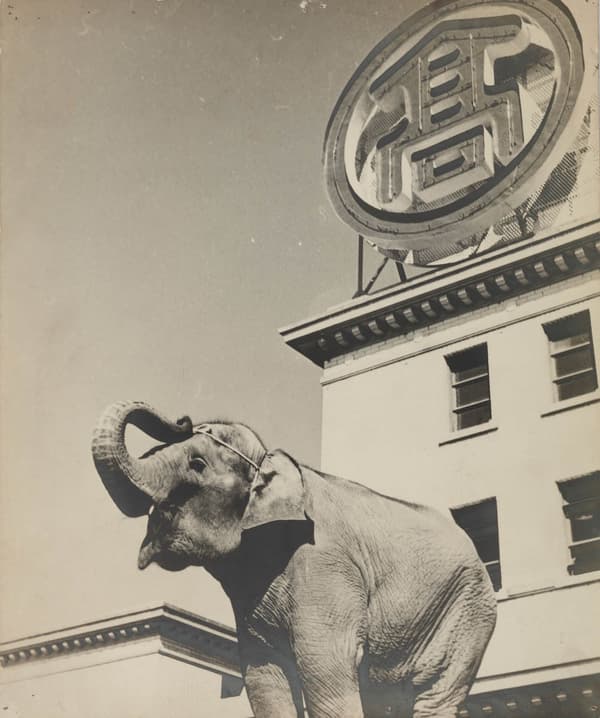
From around 1950 to 1954, an elephant named Takachan lived on the rooftop of Nihonbashi Takashimaya. Although the four years before Takachan was taken in by Ueno Zoo were brief, the elephant's presence was far from insignificant for Japan as it worked to recover from defeat in World War II. Clever, gentle, and full of tricks, Takachan was beloved by many children.
But why was there an elephant on a department store rooftop? The exhibition takes Takachan as its starting point to trace what role elephants have played in Japanese society throughout history.
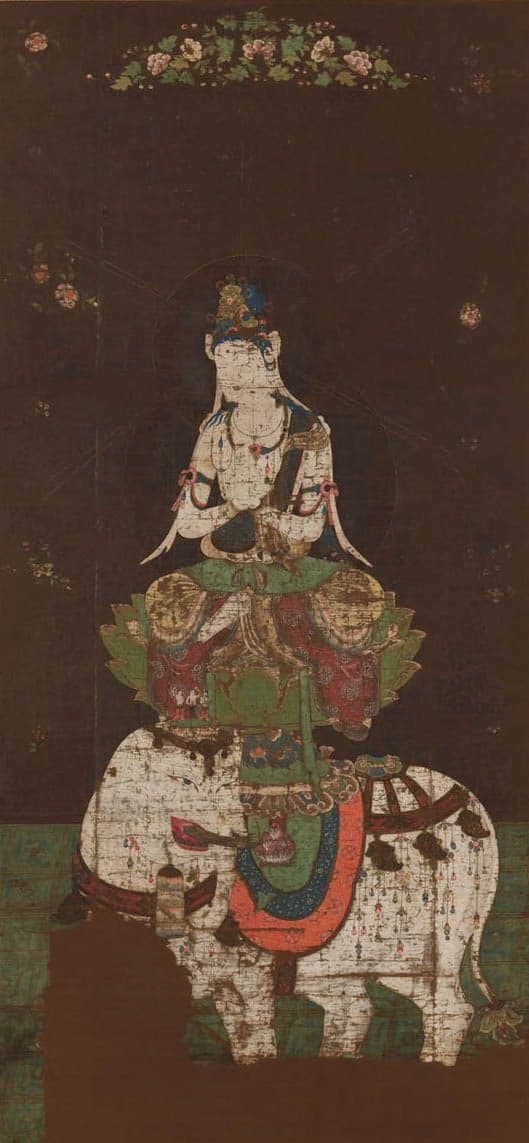
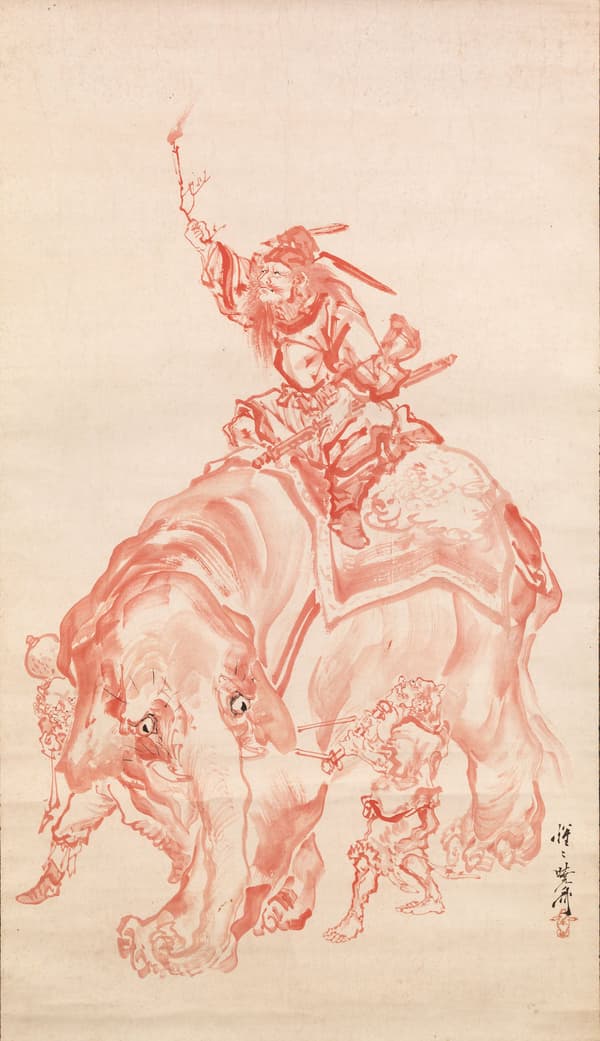
Elephants first appeared in Japan through ivory. Their forms gradually became known through Buddhist iconography — statues of Samantabhadra (Fugen Bosatsu) riding an elephant and Nirvana paintings. Artists such as Ito Jakuchu and Nagasawa Rosetsu depicted elephants as auspicious symbols of good fortune, while Kawanabe Kyosai, having seen a real elephant, transformed the subject into delightful satirical drawings.
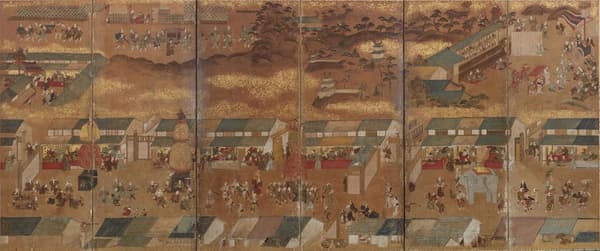
When the shogun Tokugawa Yoshimune received an elephant as a gift during the Edo period, it sparked a major elephant craze, leading to the appearance of giant elephant floats in the Sanno Festival. From the late Edo period onward, elephants became popular attractions at shows, circuses, and zoos. However, the wartime "disposal of wild animals" claimed the lives of many elephants — they, too, were not untouched by war.
That is precisely why Takachan, who arrived on the rooftop of Nihonbashi Takashimaya shortly after the war, was welcomed as a "messenger of peace." The beloved children's song "Zo-san" (Little Elephant), with lyrics by Mado Michio, grew out of the elephant craze of that era.
The exhibition uses keywords such as "Riding an Elephant," "Washing an Elephant," "Gifting an Elephant," "Leading an Elephant," "Controlling an Elephant," "Eating an Elephant," and "An Elephant Brings Good Luck" to unpack the history of elephants and the Japanese people — revealing how what was entrusted to the image of the elephant changed with the times.
A public call for photos of Takachan taken on the department store rooftop drew contributions from over 130 people, who shared precious photographs. These images convey how Takachan served as a symbol of peace and a source of hope during Japan's postwar reconstruction period. Takachan's remains will also make their first return visit to the exhibition, and a life-sized balloon of the elephant will be on display. Visitors are invited to encounter Takachan, the "messenger of peace," at this modern-day "department store with an elephant."
Exhibition Highlights
1) "Elephant Takachan" (c. 1950–1952)
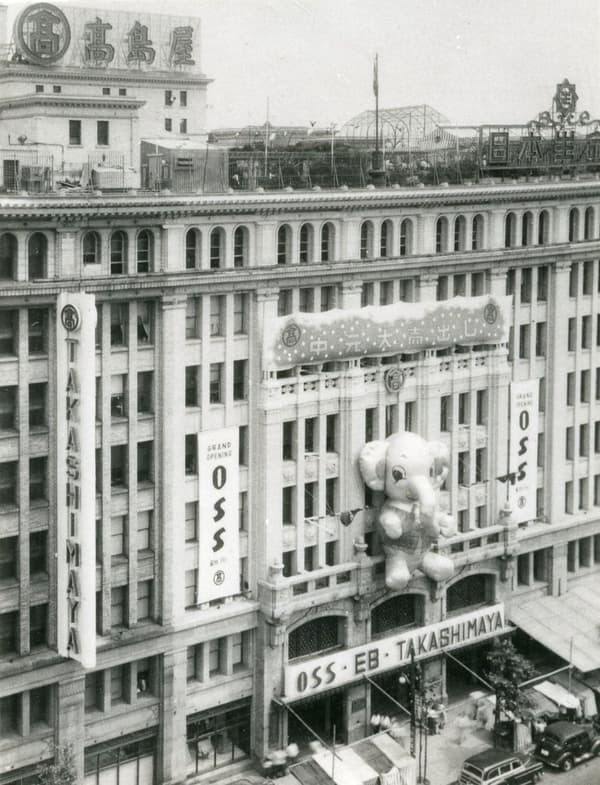
2) "Department Store with an Elephant" Wall Decoration (June 30 – Early July, 1950)
3) "Sanno Festival Folding Screen" (Edo period, 18th century; Collection: Tokyo National Museum, Image: TNM Image Archives) (Reproduction on display)
4) "Samantabhadra Bodhisattva" (Heian period, 12th century; Collection: Tokyo National Museum, Image: TNM Image Archives) (Reproduction on display)
5) "Shoki Riding an Elephant" (Painting by Kawanabe Kyosai, mid-1870s; Collection: Israel Goldman Collection, Photo: Ken Adlard) (Reproduction on display)
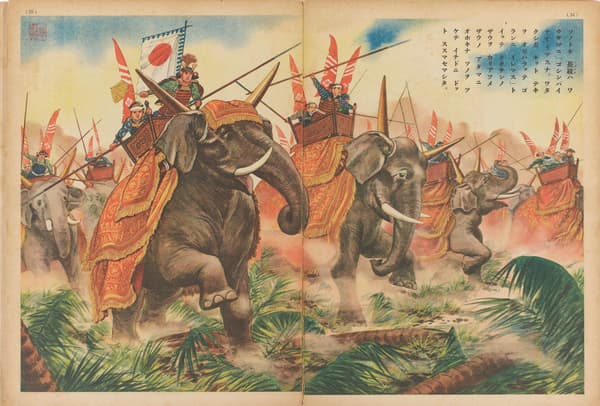
6) Kodansha Picture Book: Yamada Nagamasa (1940)
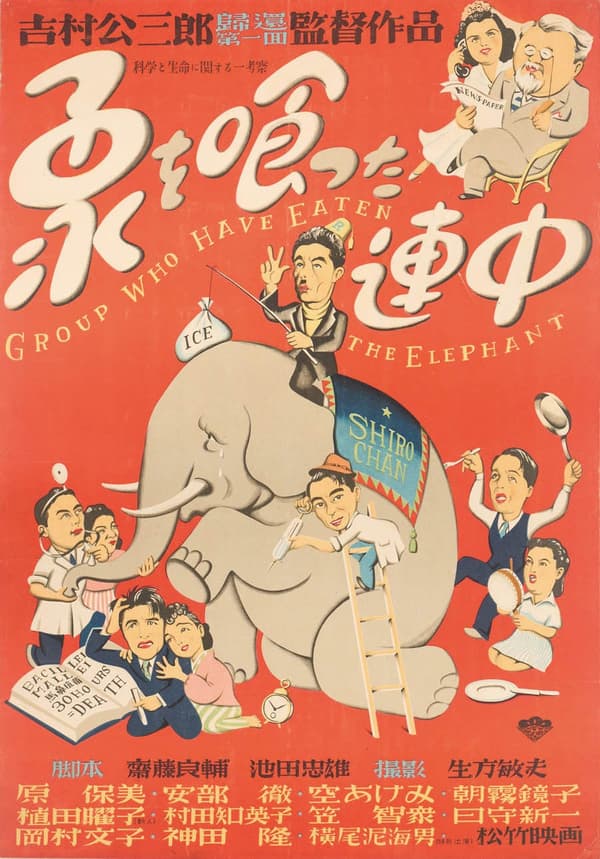
7) Film Poster for "The Men Who Ate an Elephant" (Shochiku, 1947; Collection: National Film Archive of Japan) (Reproduction on display)
Talk Events
Talk events will be held at the 5th Floor Former VIP Room of Takashimaya Shiryokan TOKYO.
① April 11 (Sat) — "The Song of the Circus Drifts Over"
Watanabe Hiroshi (Musicologist, Professor Emeritus at University of Tokyo) × Kinoshita Naoyuki (Exhibition Supervisor)
② June 27 (Sat) — "Talking About Elephants East, West, Past, and Present"
Aramata Hiroshi (Writer, Naturalist) × Kinoshita Naoyuki
③ July 25 (Sat) — "Everything About the Pharmacy Kid and Satochan the Shop Mascot"
Tsuzuki Kyoichi (Photographer/Editor) × Kinoshita Naoyuki
Details will be announced on the museum's website and social media as they are confirmed.
Event details are subject to change.
For details: https://www.takashimaya.co.jp/shiryokan/tokyo/seminar/
Tojin Gyoretsu (Procession of the Tang People) — Participants Wanted!
To commemorate this exhibition, the museum will make a special appearance in the Shinko Festival procession during the June Sanno Festival. Applications are open for 20 participants to join the Tojin Gyoretsu.
For details: https://www.takashimaya.co.jp/shiryokan/tokyo/tojin-gyouretsu/
Application period: March 13 (Fri) to April 15 (Wed)