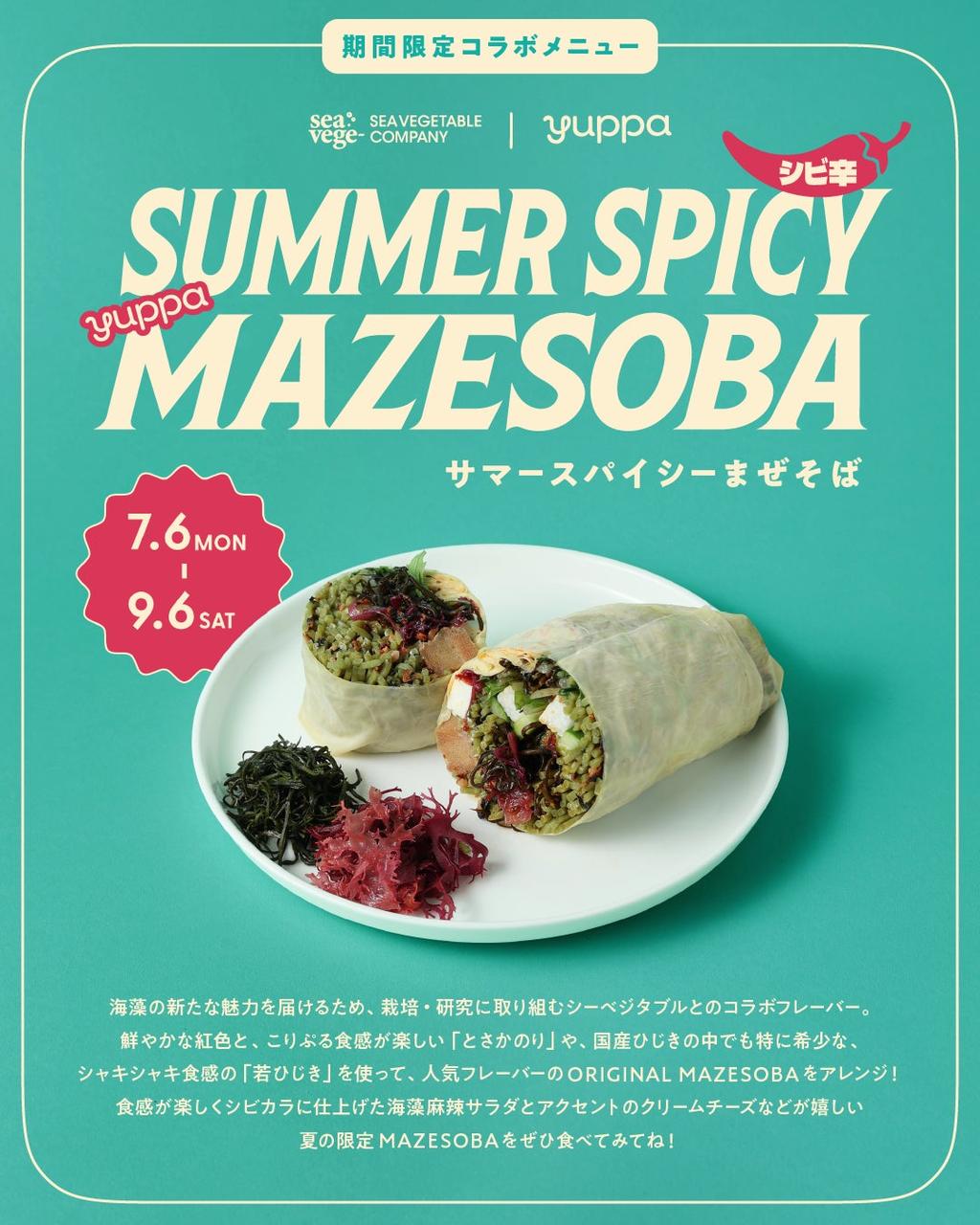
yuppa, a healthy fast-food shop in Tokyo's Omotesando area known for dishes made with Kyoto's fresh yuba (soy milk skin), is launching a new collaboration menu with Sea Vegetable LLC, a company that cultivates and researches seaweed. From Monday, July 6 through Sunday, September 6, 2026, yuppa's Omotesando shop will serve "SUMMER SPICY MAZESOBA," a chilled, spicy mazesoba made with seaweed.
Japan's Increasingly Severe Summer Heat
In recent years, rising summer temperatures driven by global warming have become a growing social issue in Japan, raising health risks and straining daily life. In 2025, extreme heat days of 35°C or higher were recorded across the country, with prolonged high temperatures continuing for an extended stretch. Starting in April 2026, a new heat-risk indicator called "gokusho-bi" (extreme heat day) will also be introduced to flag days with a particularly high risk of heatstroke, underscoring the growing importance of heat countermeasures.
In addition, intense heat has increasingly persisted into September in recent years, extending the length of Japan's summer beyond what was typical in the past. These environmental changes have increased demand for products and services that make it easy to manage heat and health on a daily basis.
Changing Ocean Ecosystems Amid Global Warming
Rising ocean temperatures caused by global warming are also having a major impact on marine ecosystems.
As sea temperatures rise, herbivorous marine life such as rabbitfish, parrotfish, and sea urchins — which would normally be less active during the winter months when seaweed sprouts — have become more active year-round. As a result, seaweed is often eaten before it has a chance to fully grow, and seaweed beds are shrinking year by year, raising concerns about the impact on marine biodiversity and fishery resources.
To address this, Sea Vegetable is working to regenerate disappearing seaweed beds by applying its seedling production and cultivation technology. Rather than simply producing and selling seaweed, the company builds a virtuous cycle for the ocean and local economies by using seaweed cultivation as a foundation for local job creation and sustainable industry.
This collaboration was created from a desire to use the appeal of good food as a way to introduce people to ocean environmental issues, and to make choices that lead to a more sustainable future more accessible.
Two Companies Carrying Traditional Japanese Ingredients Into the Future
yuppa and Sea Vegetable share a common goal: creating new value from traditional Japanese ingredients and passing that value on to the next generation. Yuba and seaweed have long supported Japanese food culture, but changing lifestyles and more diverse eating habits mean they are eaten less often today, while production sites face challenges such as labor shortages and an aging workforce.
yuppa has been working to create new demand for Kyoto's traditional yuba by reimagining it as an easy-to-enjoy, healthy fast food. Sea Vegetable, meanwhile, is working toward a sustainable seaweed industry through the cultivation and research of seaweed while introducing its appeal to a wider audience.
This collaboration is a challenge for both companies to update a traditional ingredient for modern lifestyles, preserving its value while carrying it forward into the future.
SUMMER SPICY MAZESOBA: A Chilled Mala Mazesoba Wrapped in Kyoto Yuba
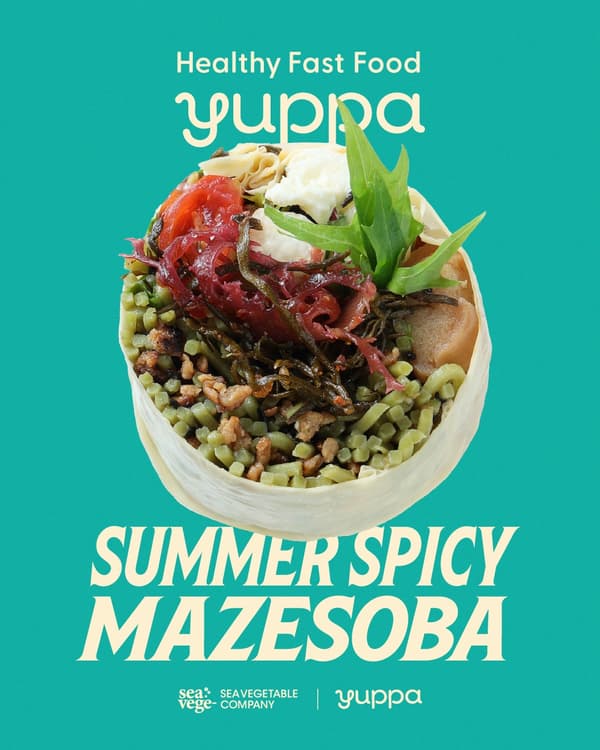
"SUMMER SPICY MAZESOBA" is a chilled mala mazesoba wrapped in smooth Kyoto yuba, designed to be easy to eat even when the summer heat saps your appetite. Inside the soft yuba wrap is a mazesoba made with tea-infused soba noodles as its base, filled with a special mala seaweed salad made using Sea Vegetable's "tosakanori" and "wakahijiki." The springy texture of the vividly red tosakanori and the crisp texture of wakahijiki — made from especially prized young shoots of domestic hijiki — combine with a moderate mala kick, creating a flavor that changes with every bite. Cream cheese adds a mellow accent, rounding out a dish that balances summer freshness with satisfying substance. Through this product, yuppa and Sea Vegetable hope to bring seaweed and fresh yuba's new possibilities, along with the appeal of traditional Japanese ingredients, closer to more people.
*The tosakanori and wakahijiki used in this product are seaweeds that Sea Vegetable produces and distributes; each was chosen for this dish for its distinct texture and flavor.
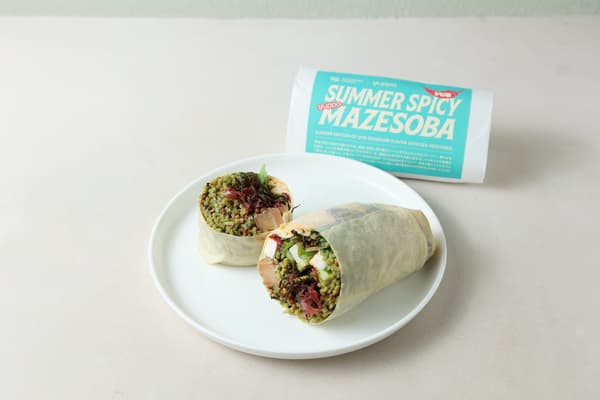
Product name: SUMMER SPICY MAZESOBA
Availability: July 6 (Monday) to September 6 (Sunday), 2026
Price: ¥1,400
Ingredients: Fresh yuba / tea soba mazesoba / crumbled tofu / cucumber / mountain yam / mizuna / cherry tomato / mala seaweed salad / cream cheese / kuruma-fu (wheat gluten) simmered kakuni-style
yuppa Omotesando
Address: Seinan Building 2F, 5-9-21 Minami-Aoyama, Minato-ku, Tokyo 107-0062
Access: 1-minute walk from Exit B3 of Omotesando Station
Hours: 11:00 AM–8:00 PM (planned; subject to change)
Closed: No regular closing days (closed during the New Year holidays)
Website: https://yuppa.co.jp
Instagram: https://www.instagram.com/yuppa_official/