The AMUSE series of porcelain trays, made and sold by Hakusan Porcelain (白山陶器) of Hasami Town, Nagasaki Prefecture, has won the 2026 Good Design Award, organized by the Japan Institute of Design Promotion (公益財団法人日本デザイン振興会). The tray has a tidy form shaped by careful design and a refined look that shows off the dishes placed on it and the space around it. This article takes a closer look at the appeal of this serving tray and the fine details of its form.
AMUSE Product Overview
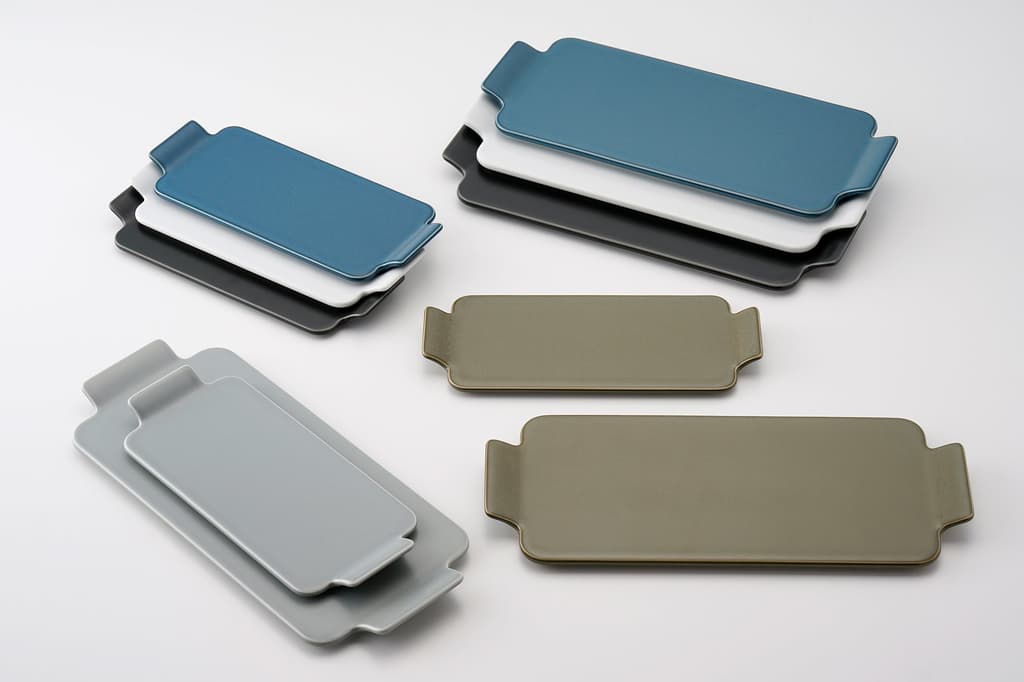
Serving Tray (L)
- Size: about 35 × 15 × 2 cm (usable surface about 30 × 15 cm)
- Price: ¥4,950 each (tax included)
Serving Tray (S)
- Size: about 26 × 11 × 2 cm (usable surface about 22 × 11 cm)
- Price: ¥2,750 each (tax included)
Material: Porcelain
Colors (5 in total): White matte / Gray matte / Charcoal gray matte / Old blue matte / Khaki green matte
From Entertaining to Everyday Meals
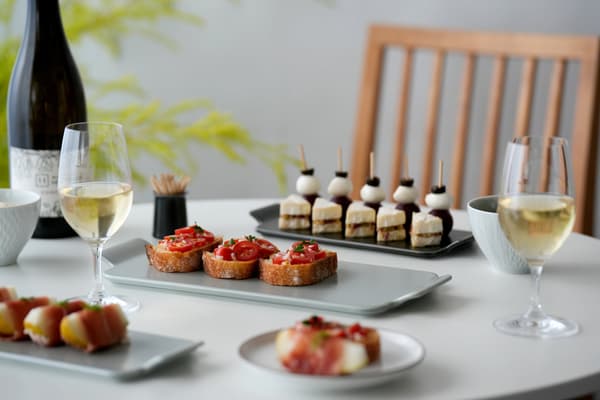
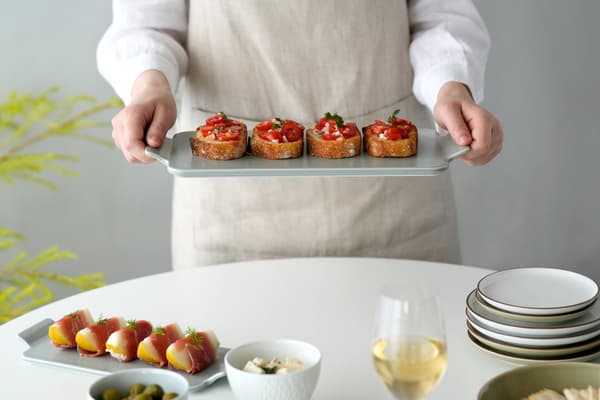
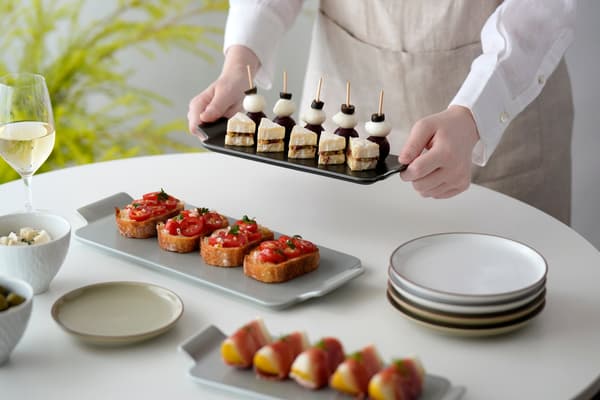
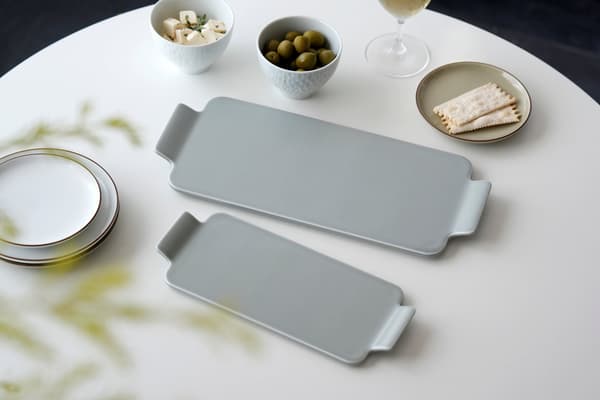
AMUSE is a flat, rectangular serving tray that is not limited to a single use.
On days when people gather, it shows off appetizers such as pintxos and bite-sized snacks. The size is moderate (S: 26 cm / L: 35 cm), and the handles on the left and right let fingertips slip in naturally. Carrying food to the table and serving it both look smooth.
The tray is just as useful at everyday meals. Its simple structure and straightforward form hold ordinary dishes such as dashimaki tamago (rolled omelet), onigiri (rice balls), makizushi (rolled sushi), and sandwiches neatly, and give the table a comfortable look.
A Shape That Is Easy to Cut and Serve From
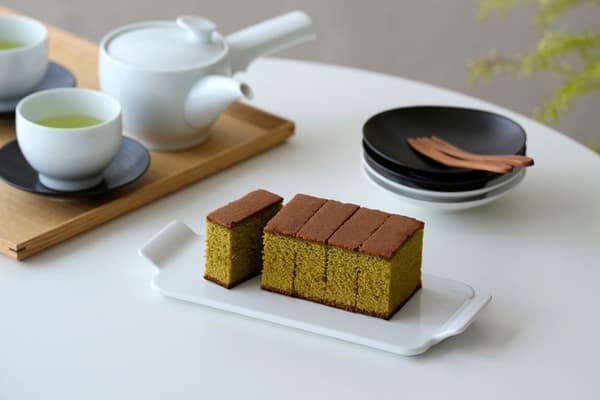
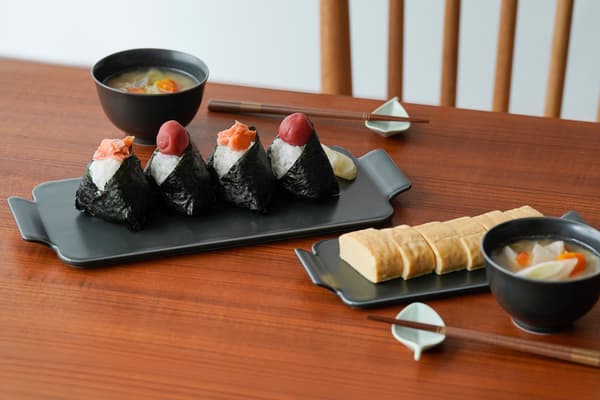
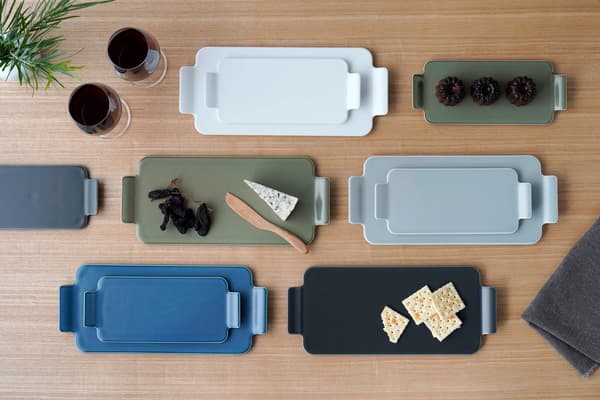
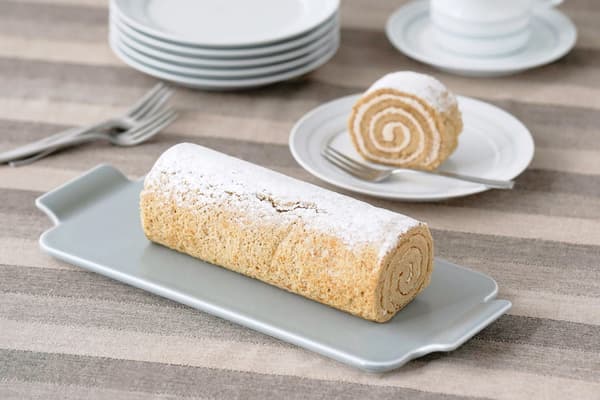
For tea time with close friends, sweets such as roll cake and castella (Japanese sponge cake) can be cut at the table.
The flat shape, with no raised edge, lets a knife or server slide easily under the food. Cut dishes and sweets move to individual plates with ease, and the simple design suits Western sweets and Japanese light snacks alike.
Hidden Details on the Back for Ease of Use
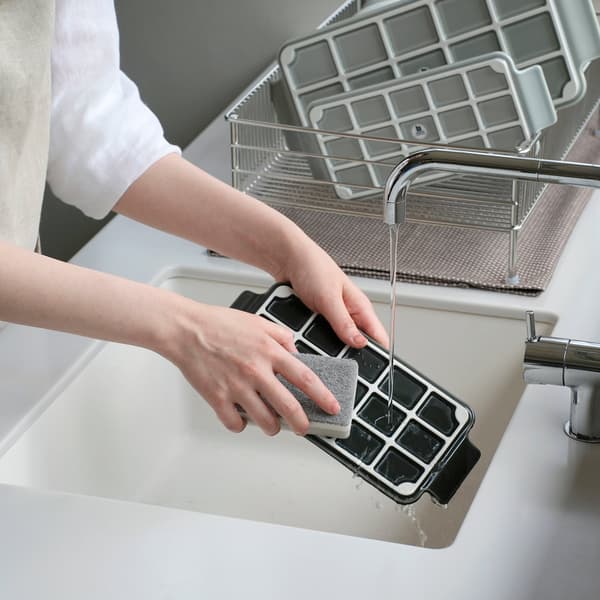
After an AMUSE tray is washed and propped in a dish rack, the first thing that catches the eye is the orderly, grid-patterned foot ring (高台, kodai) on the back.
Most of the back surface is coated with glaze, which keeps the unglazed contact surface of the foot ring to a minimum.
This design makes it harder for oily residue to remain when washing, so the tray stays clean.
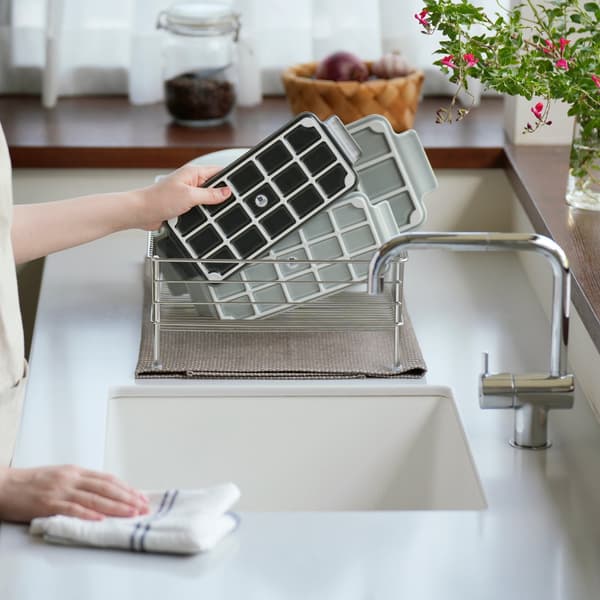
Depending on the shape of the foot ring, warping can easily occur when a piece is fired in the kiln. The lattice structure, arrived at after many trial pieces, helps suppress that warping.
A reassuring stability in the hand, a smooth texture, and easy care. The answer reached by working with the characteristics of ceramics and putting "use" first is expressed on this hidden underside.
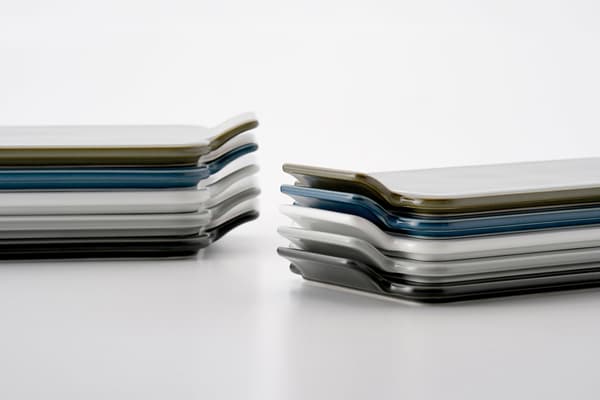
The trays also stack neatly for storage.
2026 Good Design Award: Jury Comments
As regional food cultures and styles diversify, the way tableware is made has also changed significantly. This serving plate is also a product born of today's dining tables. One can naturally imagine appetizers, bread, desserts, and the like piled on it and used where people gather. Other products with similar functions exist, but I found value in how carefully it gives form to fine-grained planning, including shapes, colors, and material selection that take contemporary lifestyles into account. The flat shape made by pressure forming of porcelain, the consideration for stacking, and the feel of the handles all pack in the perspective and technique of someone who knows the production site of the pottery region. It is a highly polished product that links traditional materials and techniques to present-day life without strain, and refines them into something one wants to try using.
(From the jury's evaluation comment)
Details on the AMUSE series are available in the Good Design Award Gallery on the official Good Design Award website: Good Design Award Winners Gallery
About the Good Design Award
The Good Design Award, founded in 1957, is Japan's only comprehensive system for evaluating and recommending design. It covers a wide range of tangible and intangible subjects, including products, architecture, services, systems, and regional initiatives. The "G Mark" symbol given to winners is familiar as a mark that spreads good design through society. 2026 marks the 70th edition of the award.
Good Design Award official website
Hakusan Porcelain and the Good Design Award
Hakusan Porcelain regards the Good Design Award as an objective indicator of design evaluation, and it has continued to enter categories covering household and daily-life goods since 1961.
Where to Buy
The AMUSE series is sold at directly operated stores and the official online store, as well as at retailers nationwide.
- Hakusan Porcelain head office showroom (Hasami, Nagasaki Prefecture)
- HAKUSAN SHOP 白山陶器東京ショールーム (Hakusan Porcelain Tokyo Showroom) (Minami-Aoyama, Minato City, Tokyo)
- Hakusan Porcelain's directly operated online store
- Major retailers nationwide (department stores, specialty stores, interior shops, and others)
Note: Item types and stock vary by store, so please check directly with each store.