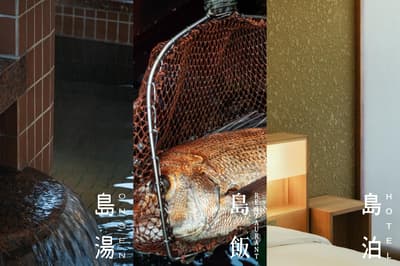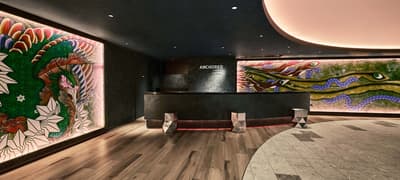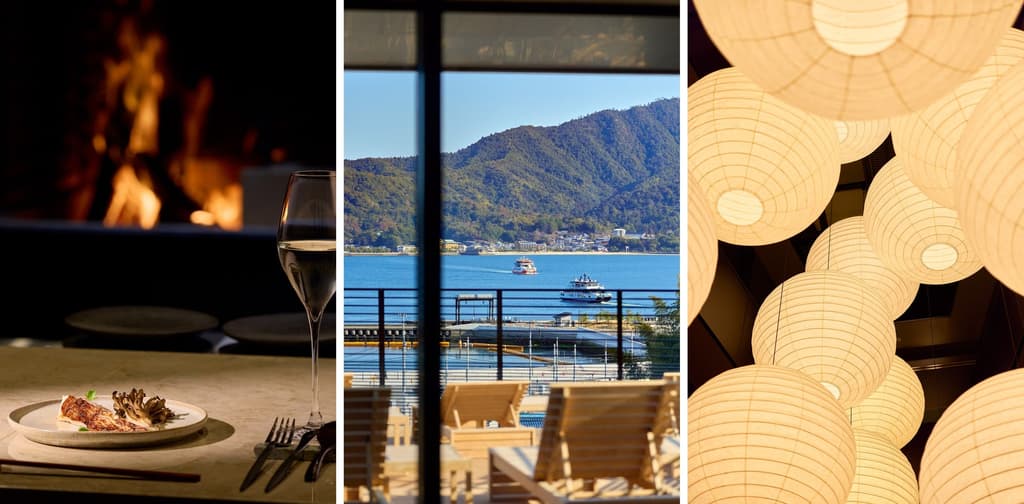
A new brand movie has been released for HOTEL FORK & KNIFE Miyajima, a hotel created jointly by GREENING and FHG HOTELS. The film brings to life the hotel's guiding concept, "Tradition Served Quietly," capturing a stay that quietly engages with the culture and sensibility of the region.
Brand Movie
Opened on March 28, 2026, in Miyajimaguchi, Hiroshima, HOTEL FORK & KNIFE Miyajima centers its stay experience on two pillars, food and art, offering guests time to quietly connect with the culture and history of the land.
Local Gastronomy from Mountain to Sea
Conceived as a place to quietly understand the land of Hiroshima and Miyajima, the hotel places its food experience at the heart of its appeal. Hiroshima is often described as a microcosm of Japan: rain falling on the mountains becomes rivers that carry the nutrients and minerals of the forest down to the Seto Inland Sea. Ingredients grown in this land, rich with the bounty of both mountains and sea, are prepared using the primitive technique of wood-fired cooking, drawing out the full character of each ingredient for a dining experience that engages all five senses.
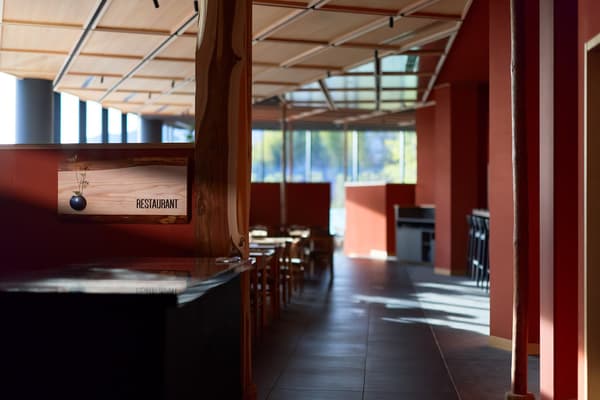
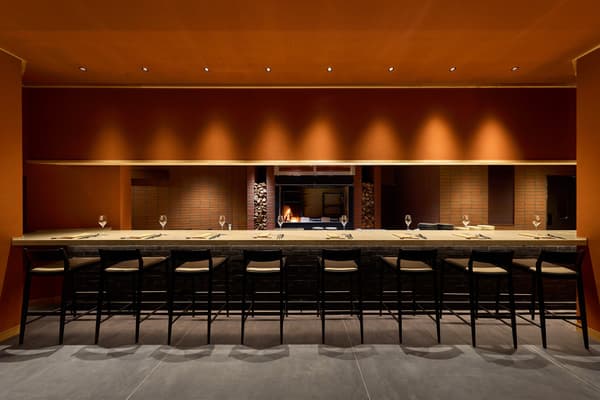
The dishes served at HOTEL FORK & KNIFE Miyajima form an 11-course dinner that traces Hiroshima's landscape from mountain to sea. Inspired by the region's ingredients and the voices of the producers behind them, each dish carries the story of the land as its narrator. Local Hiroshima dishes and traditional Japanese cooking techniques are reconstructed for the present day, with the natural technique of wood-fired cooking drawing out the essential character of each ingredient.
A Sample Dinner Course
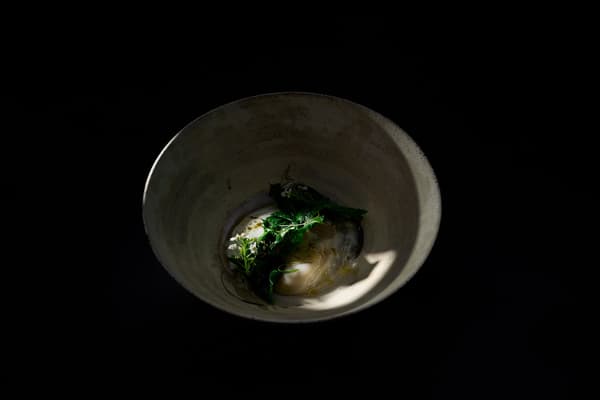
Pacific Oyster, Fermented Lemon, and Pine
A dish built around the Pacific oyster, a signature ingredient of the Seto Inland Sea, paired with yogurt pudding made by Chichiyasu, a local dairy producer. The tartness of the yogurt draws out the oyster's mellow sweetness, with fermented lemon adding a refreshing accent.
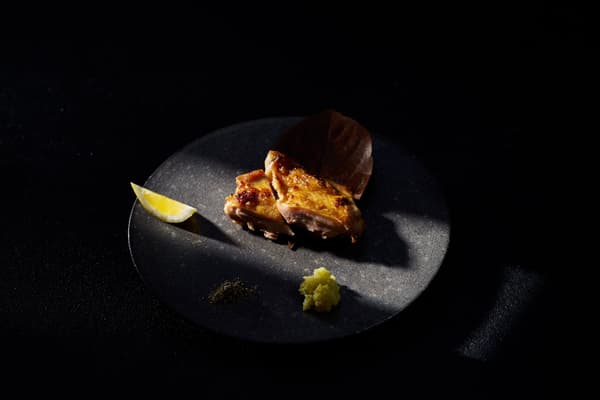
Free-Range Chicken, Lemon Pepper, and Kuromoji
Wood-fired "Koi Jidori," a free-range chicken from Higashi-Hiroshima raised for several times longer than usual, is grilled until the skin turns crisp while the meat stays moist and tender. It is served with salt infused with kuromoji, a fragrant wild spicebush also used in traditional remedies, along with lemon pepper, for a deep, layered flavor.
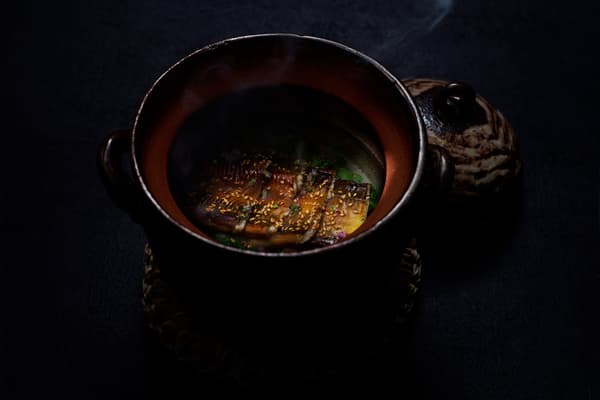
Anago Meshi (Conger Eel Rice)
Miyajima's famous conger eel rice is reimagined in a modern style, cooked together with fragrant hojicha tea and finished with a gentle, sweet sauce made from dashi drawn from the conger eel bones. The rice is milled to order and cooked fresh in a clay pot for each serving.
Design and Art Themed Around "Keihaku"
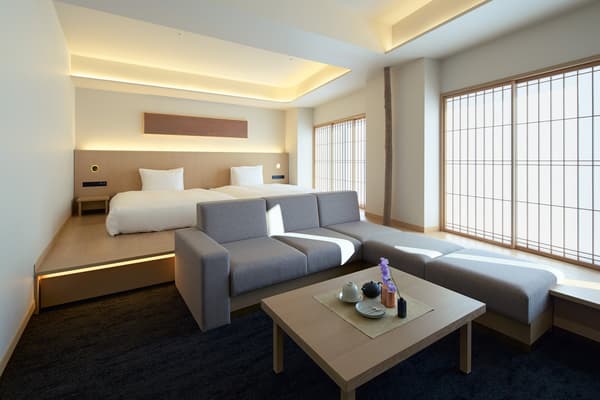
The hotel's design was led by architect and artist Fumihiko Sano. Sano apprenticed as a carpenter at 中村外二工務店, a renowned workshop specializing in sukiya-style architecture, where he learned construction methods, materials, and a sense of proportion on the job before establishing his own practice in 2011. In 2016, he traveled to 16 countries as a Cultural Envoy of Japan's Agency for Cultural Affairs, and has received awards both in Japan and abroad, including the EDIDA 2014 ELLE DECO Young Japanese Design Talent award and the IF DESIGN AWARD 2020. The hotel's lighting, made in Hiroshima Prefecture, was designed with inspiration from Miyajima's lantern processions and casts a soft glow throughout the property. The hotel's 34 rooms, spread across 10 room types, combine traditional Japanese design elements such as raised tatami platforms and shoji screens with contemporary materials and art.
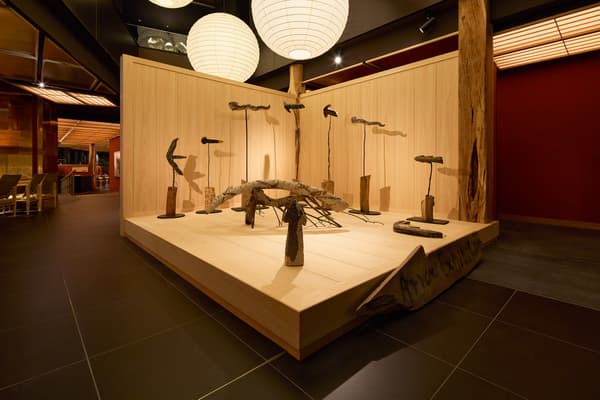
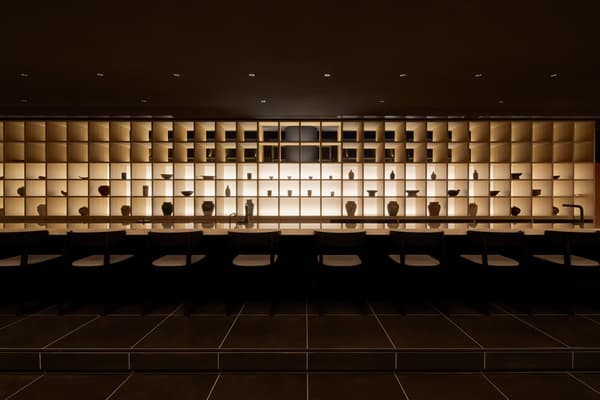
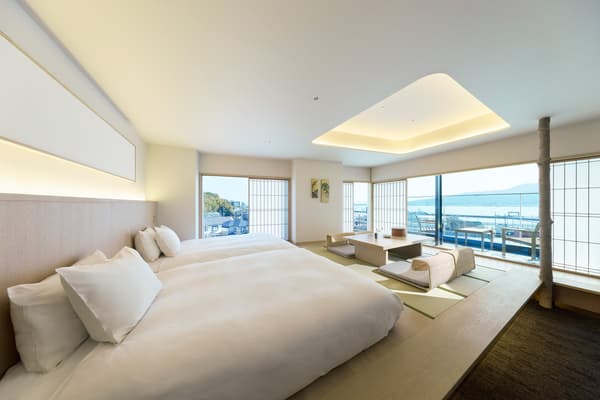
Curated under the concept of "Keihaku" (繋泊), meaning to moor a ship at harbor, the art found throughout the hotel expresses a wish to connect Itsukushima Shrine with Miyajimaguchi, and people with people, through new experiences. Works of calligraphy, ink painting, Japanese-style painting, and ceramics, each reinterpreting traditional Japanese art and craft in a new form, are placed throughout the property, created by up-and-coming artists from across Japan. The hotel aims to become a place of new connection between guests and the artists and creators active in Japan. The curation was handled by Landscape Products Co., Ltd.
Featured Works
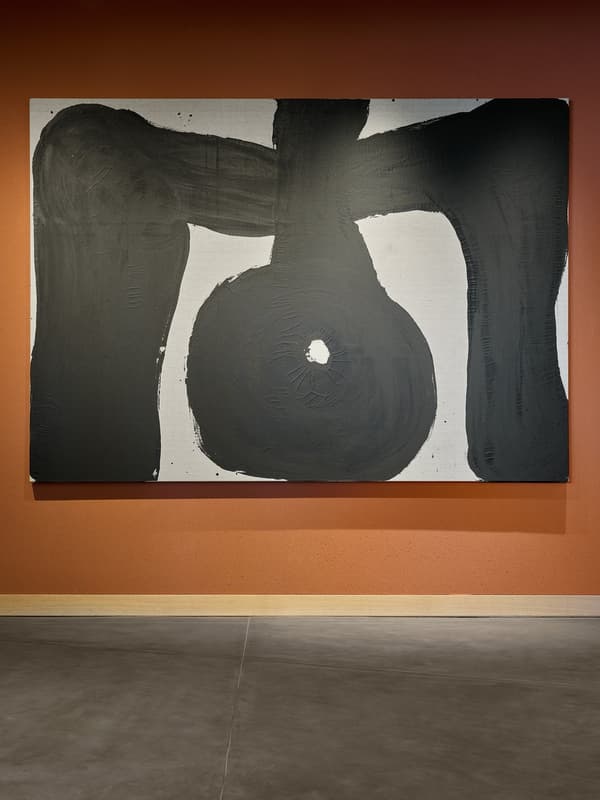
Daichiro Shinjo — Calligraphy, 2F Lobby
Born on Miyako Island, Okinawa. The grandson of a Zen monk and folklorist, Shinjo draws on Zen and Okinawan spiritual culture to pursue a contemporary form of calligraphy unbound by convention. This work is themed around "ma" (間), the interval of tension and shifting emotion felt before crossing to the sacred island of Itsukushima, and the space where body and spirit move in tandem.
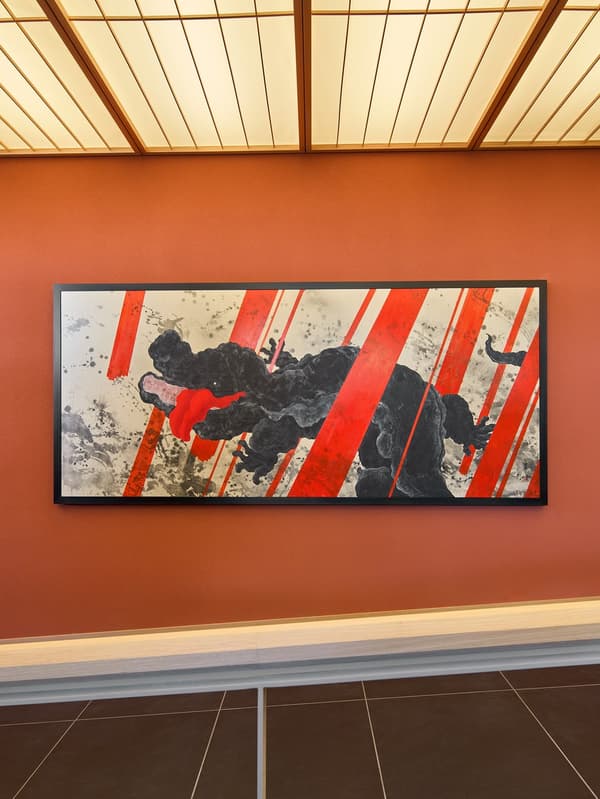
Yuta Niwa — Japanese Painting, 2F Lobby
Born in Kanagawa in 1993. After completing graduate studies at Kyoto University of the Arts, Niwa studied in Beijing and now lives and works at the sub-temple Komyoin of Tofuku-ji. Working in the context and technique of traditional Japanese painting, his work explores unseen calamities and the human prayers that resist them. The piece on display in the 2F lobby, "Sōkai Shuketsu-zu" (滄海朱楔図), depicts the "ōhanzaki" (giant salamander), a symbol of the wild nature said to lie beneath Hiroshima's land, bound by a vermilion wedge. The vertical vermilion lines running through the piece evoke the torii gate of Itsukushima, imagined as wedges driven down from the sky into the sea.
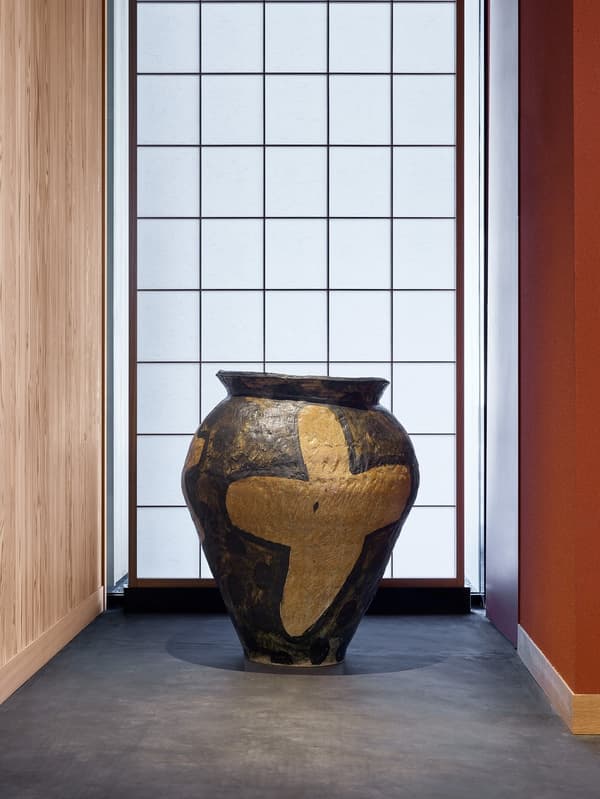
Hiroki Miura — Ceramics, 2F Lobby & Guest Rooms
Born in Hiroshima. After graduating from the Arita Ceramics Junior College (有田窯業大学校), Miura established his own studio in Takeo, Saga Prefecture, in 2020, where he works across techniques from open firing to modern kilns to create expressive ceramic pieces. Large vessels inspired by the design of traditional pottery window paintings are installed in the 2F lobby and in the premium suite "翠."
Facility Overview
| Item | Details |
|---|---|
| Name | HOTEL FORK & KNIFE Miyajima |
| Address | 3-3-15 Miyajimaguchi, Hatsukaichi, Hiroshima |
| Access | 7-minute walk from Miyajimaguchi Station on the JR Sanyo Main Line (a free shuttle bus is also available by advance reservation) |
| Rooms | 34 |
| Facilities | Restaurant, bar, natural hot spring, sauna, library, select shop, fitness gym, laundry |
| Opening Date | March 28, 2026 |
| Website | https://hotelforkandknife.com/ |
| https://www.instagram.com/hotelforkandknife/ |