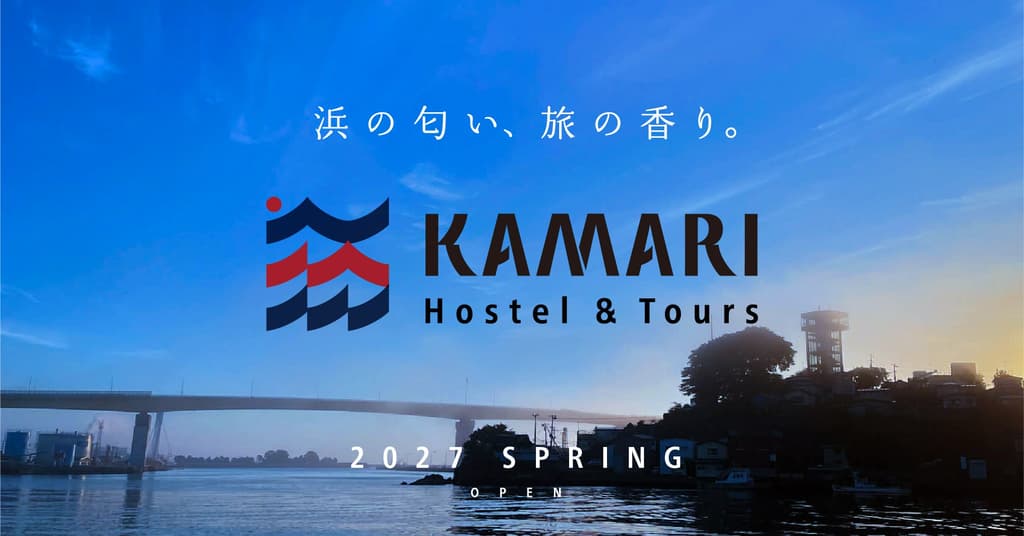
A new hostel is set to open in the Mutsu-Minato district of Hachinohe, Aomori in spring 2027. Called KAMARI Hostel & Tours (カマリホステル&ツアーズ), the facility is located near Mutsu-Minato Station and will serve as a base for travelers looking to experience the everyday life and culture of the Hachinohe area in depth. Construction is scheduled to begin in July 2026.
About KAMARI Hostel & Tours
Background
The Mutsu-Minato district of Hachinohe has long been one of Tohoku's prominent port towns. Since the early morning hours, the voices of the "isaba no katcha" — the energetic women who sell fresh fish at the market as boats arrive in port at dawn — have resonated through the streets. The word "isaba" comes from the historical fish traders, while "katcha" means "mother" in the Nanbu dialect of the region. Together, the phrase describes the lively women who have long been a symbol of Mutsu-Minato's spirit.
The name "KAMARI" comes from the Nanbu dialect word for "fragrance" or "scent," and the hostel is designed with the idea of letting travelers experience the distinctive terroir of the area through all five senses, sparking fresh curiosity about travel.
The facility aims not just to provide accommodation, but to serve as a starting point for guests to engage more deeply with the town — a place where their next journey begins with a sense of excitement.
Facility Overview
- Name: KAMARI Hostel & Tours (カマリホステル&ツアーズ)
- Address: 25-2, 25-5, Azamachi Kubo, Minato-machi, Hachinohe, Aomori Prefecture
- Structure: Wooden 2-story building
- Total floor area: 655.86 m²
- Rooms: 3 private rooms / 40 dormitory beds (capacity: approx. 52 guests)
- Amenities: Lounge, tour reception desk, shared kitchen, laundry
- Construction start: Scheduled for July 2026
- Opening: Spring 2027
- Website: https://www.kamari-hostel.com
Interior and Design
The two-story wooden building features a modern roof design with sharp angles and straight lines, inspired by the "tents" of the local morning market and the "waves" of Mutsu-Minato.
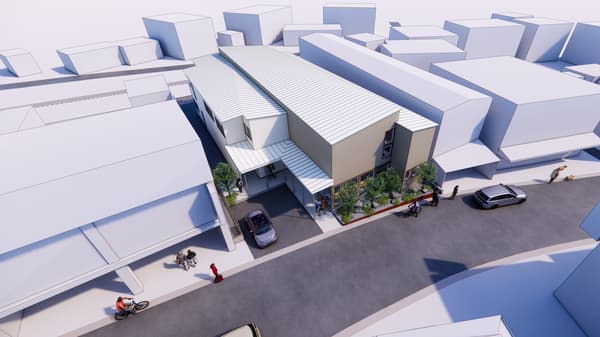
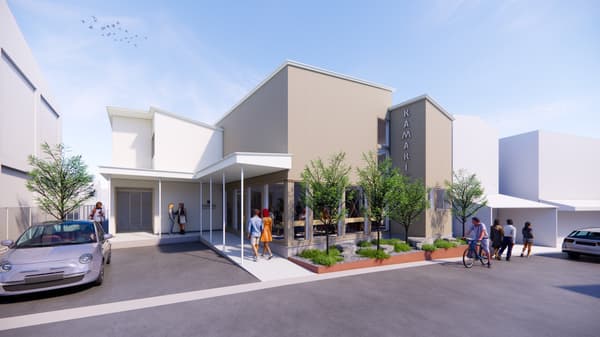
Large glass windows on the ground floor face the street, allowing the warmth and activity inside to flow outward. The entrance approach is ramped for easy access with large luggage. The front garden features a pine tree, symbolizing the resilient natural life found along the Tanesashi coast of Hachinohe.
Shared Kitchen: A shared kitchen will be available so guests can cook fresh ingredients purchased at the Mutsu-Minato market — described as "the kitchen of Hachinohe" — right on site. This makes the hostel suitable for longer stays with a more residential style of travel.
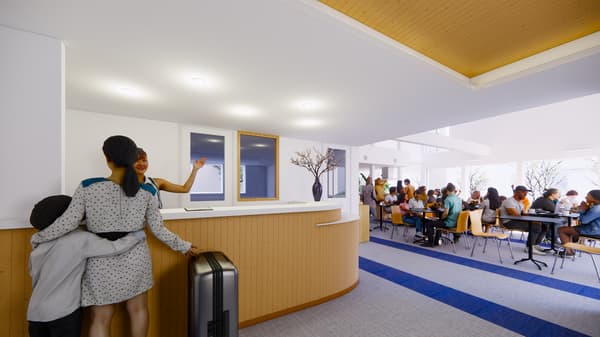
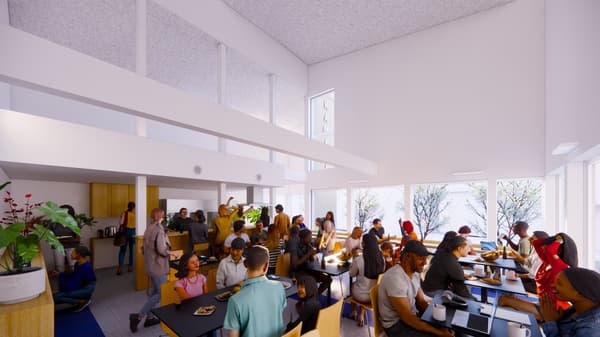
Community Lounge: The lounge includes a relaxation space for meals, board games, and socializing, as well as desks with power outlets for work or study.
Room Types
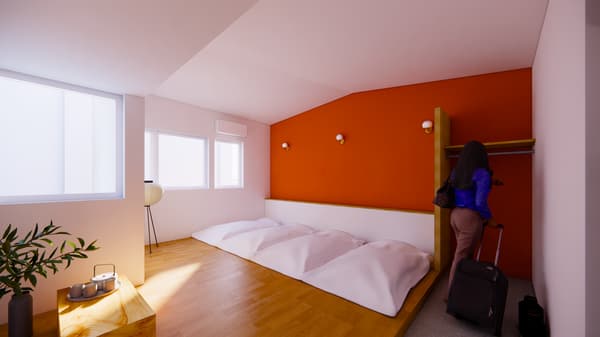
Private Rooms: Three private rooms are available for groups, families, or couples seeking a more personal stay, with natural light from windows creating a restful atmosphere.
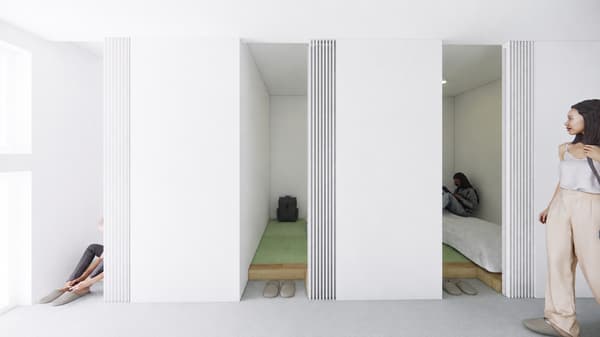
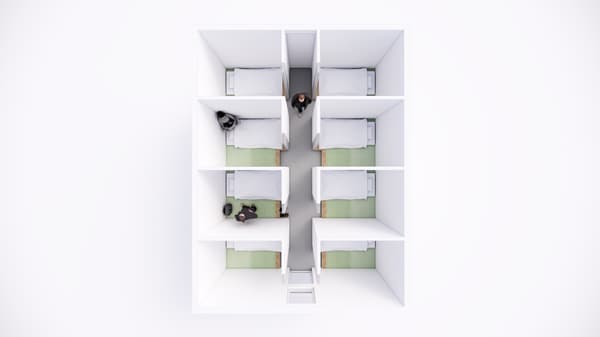
Dormitory Cabins: The dormitory floor offers 40 semi-private cabin beds arranged in rooms of 8 cabins each. The cabins feature tatami flooring for a touch of Japanese comfort. A women-only cabin area is also available, along with keycard access and luggage lockers in the hallway.
Logo Design
The KAMARI logo, designed by local creative studio asobis, incorporates three "kamari" (fragrances) representing the sea, culture, and travel of Mutsu-Minato.
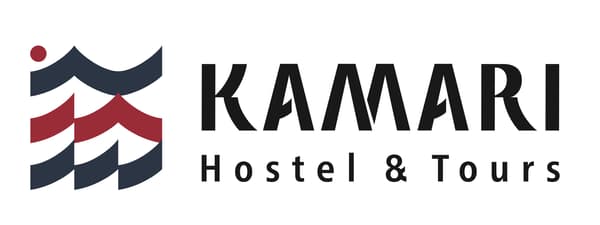
Sea: Three lines at the base of the logo represent the sea breeze, the Pacific Ocean waves, the Niida River, and the boats docked in port.
Culture: The middle section of the logo, when partially cropped, reveals the kanji character for "person" (人). The use of vermilion references the energy of the morning market — the sunlit tents, rising steam, and the voices of the traders.
Travel: A red circle at the top represents the sun that marks the start of a journey. The lines below it trace the silhouette of Mount Kamikodate, the Tanesashi coastline, and Kabushima island.
Tours and Unique Experiences
A key feature of KAMARI Hostel & Tours is a guided experience program, led by staff described as "storytellers," who take guests to various corners of the Mutsu-Minato area and beyond. The focus is not only on well-known sights, but also on local izakayas and interactions with residents that visitors would not typically discover on their own.
Hachinohe Unlocked (planned): A sightseeing-style rideshare service between Hachinohe Station and the hostel, designed to address the limited public transportation options in the area. During the ride, staff guide guests through the sights visible from the vehicle, sharing history and local knowledge so that guests arrive with a better understanding of the city before they even start exploring.
Community and Inbound Tourism
KAMARI Hostel & Tours is also designed as a space for local residents to visit and interact with guests. Regular events are planned to bring the community and travelers together.
The hostel also plans to support inbound tourism across the wider Hachinohe area by employing internationally experienced staff and offering multilingual assistance and street-walking tours to help foreign visitors connect with local shops and residents throughout the Mutsu-Minato district.