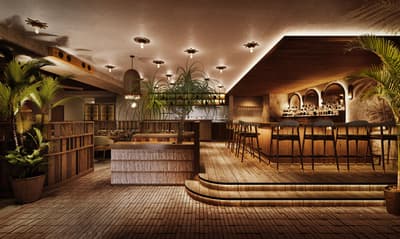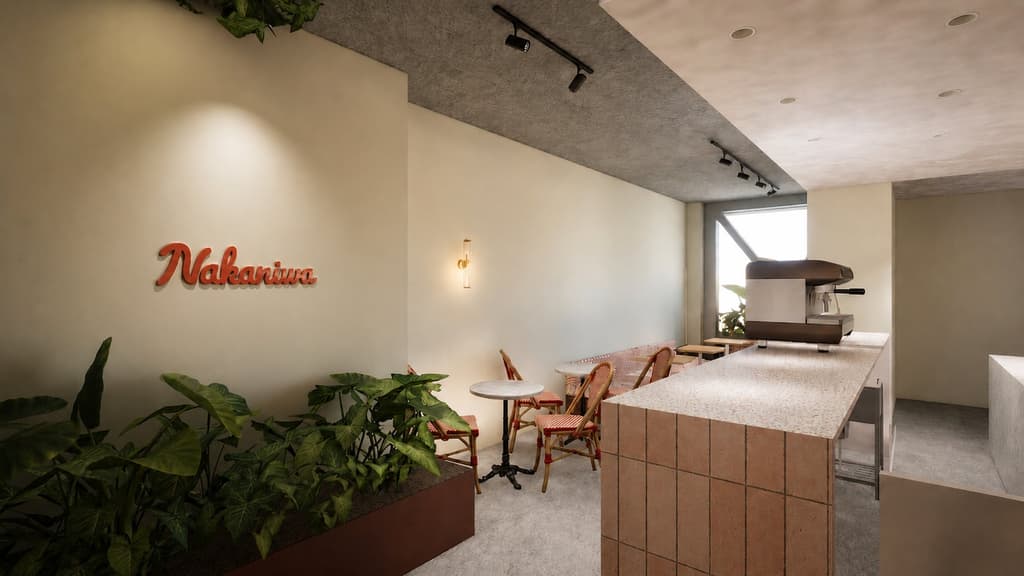
A new cafe lounge called Nakaniwa is opening in a corner of the planned development area in Shibuya's Miyamasuzaka district on Monday, August 10, 2026, positioned as a new base that re-edits the city's open space. The lounge comes from a collaboration between ANCR Inc. (headquartered in Shibuya-ku, Tokyo), which works across branding, spatial design, commercial development, and restaurant and lodging operations within the field of lifestyle design, and Tokyu Corporation (headquartered in Shibuya-ku, Tokyo).
This is not simply the development of another cafe lounge. In Shibuya — a frontline of consumption and information — the project attempts to redefine the "quality of a stay" and the "density of relationships," qualities that have long been overlooked, and to put into practice a place where time without a fixed purpose becomes valuable in itself.
Cities have long been designed around the question of how efficiently they can move people. Nakaniwa deliberately goes against that current. It sets up another axis of time within the city, functioning as a "courtyard" that keeps people in place, lets thoughts wander, and gives rise to chance encounters.
Here, acts like working, resting, talking, and thinking are not clearly separated from one another. Conversations that begin over a cup of coffee can become the starting point for new projects, and a brief stay can re-weave into a new community. Nakaniwa functions as this kind of "device for generating relationships."
By combining the urban development that Tokyu is advancing with the lifestyle design expertise that ANCR has cultivated, the project goes beyond simply providing physical space, aiming to update the very way the city is used, software included.
The aim is for this small courtyard at the heart of Shibuya to eventually become the starting point for changing the very nature of the city itself.
Background
Shibuya is a district where new culture and business are constantly emerging, yet as modern society accelerates, places where people can simply stay without any particular purpose are rapidly disappearing.
Places to work, places to shop, places to meet someone — the city holds many functions, but most of them are designed around the premise of "consuming something."
Yet cities should hold value beyond that. A chance conversation can spark a new challenge; time spent alone can help clear one's thoughts; simply sensing another person's presence nearby can bring quiet comfort. The relationship between people and the city may originally have been more ambiguous and full of open space. This project started from that question.
If there were a place that offered some breathing room for the mind amid the busyness of everyday life, more encounters and more culture would likely follow.
That is where the concept of "Nakaniwa" was born.
Nakaniwa functions as a cafe, lounge, and community space, without being limited to any single one of those roles.
It is designed as an "urban courtyard" where people of different backgrounds — creators, businesspeople, students, travelers, and local residents — can naturally cross paths and spend their own time.
Value that cannot be measured by efficiency or turnover rate alone. A stay that doesn't end with consumption. And the re-weaving of relationships between people within the city.
Nakaniwa is one proposal for the city of Shibuya, and also a challenge toward new possibilities in urban development going forward.
Contents
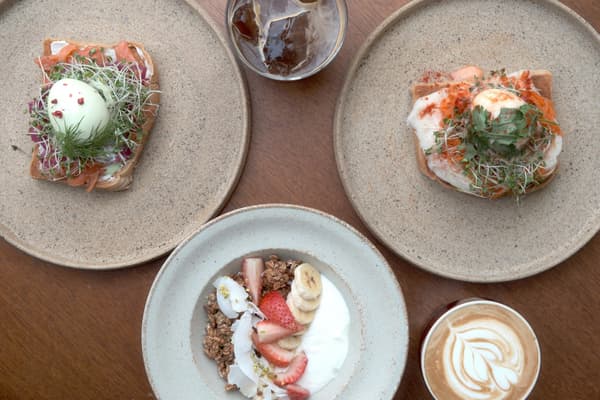
Food & Drink
For workers in Shibuya, the menu offers nutrient-rich breakfast and lunch options — including customizable granola bowls and open sandwiches — alongside catchy sweets featuring an original "crocodile" character. To pursue coffee quality, the cafe uses FAEMA, an Italian espresso machine from Milan trusted by cafes and baristas worldwide; its stable extraction and precise temperature control draw out the full character of the beans, resulting in cups with carefully considered aroma, richness, and finish.
The alcohol menu features a wide, rare selection of gins, along with "Shibunama -shibunama- YEAST DIVERSITY ALE," a craft beer certified by the Shibuya City Tourism Association and brewed to evoke the image of Shibuya, one of Tokyo's leading districts, as well as wine brewed by "Shibuya Winery Tokyo" inside MIYASHITA PARK, known for its label featuring the Hachiko dog.
Plants
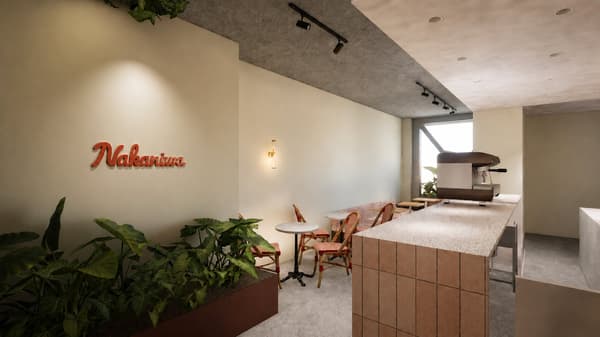
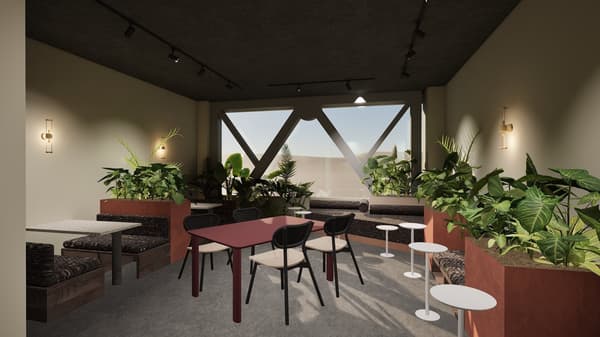
The interior fills the indoor space at the heart of Shibuya with greenery, adding a sense of extraordinary natural comfort to busy daily life.
All the plants are available for purchase and can be taken home or to the office. By selling plants for people to bring back to their own spaces, the project also aims to physically create a movement that increases greenery across the city.
As Nakaniwa's greenery grows in the hands of each business and user, the aim is also for visitors to take home and nurture the "seeds" of culture and knowledge gained at the Nakaniwa lounge.
Play Back "Heisei"
CD players reminiscent of a certain CD shop that once led Shibuya's music scene are installed at the seats. Guests can even choose their own music while they're there, adding a layer of content that makes the time and space feel more personal.
By deliberately experiencing music through analog CDs, the space evokes the Shibuya of that era and restores an emotional connection to the city, while also offering younger visitors who never knew that time a tactile experience of Heisei-era retro pop.
Brand & Spatial Design
The name Nakaniwa carries the idea of creating "another garden" within the city.
Rather than bringing nature directly into the city, the concept re-edits the "blank space" and "sense of breathing room" that is gradually disappearing from urban life.
Rather than a simple cafe or lounge, the space is conceived as an "urban courtyard" where people's emotions and relationships loosely intersect.
As a symbol of this idea, Nakaniwa adopts a "crocodile" character.
The "crocodile" functions as a wordplay association with "niwa" (garden) — a slightly humorous, unassuming presence at first glance, but that playfulness is considered the very kind of blank space that urban environments need.
Modern cities tend to be highly functional, rational, and filled with correctness. That is precisely why Nakaniwa intentionally avoids over-explaining its meaning and mixes in a touch of relaxed, slightly off-kilter texture into the space, aiming to gently release people's senses.
Before being a brand character, the crocodile also symbolizes the atmosphere that flows through this place.
Familiar, yet somehow hard to fully grasp. Quiet, yet memorable. Nakaniwa values that kind of "ambiguous charm."
In the spatial design as well, the theme of "garden" was deliberately not expressed directly.
Rather than foregrounding the greens and natural tones typically associated with the word "garden," Nakaniwa adopts brick color and light blue as its key colors.
A warm-toned brick that evokes soil and clay bricks. A light blue that conveys sky, light, and a sense of breeze.
Neither is a literal expression of nature; instead, each color functions to abstractly reconstruct the memories and sensations that evoke a garden.
Design here is treated not as "providing an answer" but as "designing the blank space" that draws out each person's own memories and sensations.
That is why Nakaniwa does not strongly define itself as "this is a garden," but instead aims for a state in which visitors can freely imagine the idea of a garden through their own experiences and sensibilities.
The graphic design follows the same approach: rather than presenting a fully finished brand image, it favors expression that feels a little rough, spacious, and somewhat unfinished.
From typography, illustration, and signage planning to print media and digital creative work, every expression is designed to connect to "a sense of being able to breathe deeply within the city."
Rather than separating space and graphics, the aim is to integrate the experience as a single atmosphere.
That is the brand design philosophy behind Nakaniwa.
The goal is not only visual beauty, but for the time spent in this place itself to remain quietly in people's memories.
Future
Future plans include live events featuring invited artists and exhibition programs, as well as private rental bookings for parties.
Comment
ANCR Inc. — Producer Miyu Ariga
This project began after Tokyu Corporation reached out asking for an interesting concept — one striking enough to make people say, "Tokyu actually did it!"
Pondering the question of how people, knowledge, and culture can mix together, the project was launched to create and offer a place where young people, office workers, and creators can gather around content centered on plants, food, and music, nurturing the "seeds" that connect to the next era — deliberately building a "courtyard, or Nakaniwa," indoors at the heart of the city.
The concept: "The seeds of the future spread from here."
With the wish that this courtyard-like space at the center of Shibuya becomes a place where the "seeds" of ideas are planted, grown together with companions, and eventually bloom into ventures that move society.
Nakaniwa was created as a new base that deliberately re-edits the city's open space, in a Shibuya that continues to evolve.
Overview
Facility Overview
Name: Nakaniwa
Address: 2F, Shibuya Serumo Building, 1-15-22 Shibuya, Shibuya-ku, Tokyo
Opening: Monday, August 10, 2026
Hours: 9:00 AM to 11:00 PM (closes at 9:00 PM on Sundays only)
Official Instagram: https://www.instagram.com/nakaniwa_shibuya/