A graphic exhibition by graphic designer and art director Naonori Yago (矢後直規), titled "Pangraphics" (パングラフィクス), opened on Sunday, November 1, 2026 in the Main Entrance Hall (大玄関) of Higashi Honganji (東本願寺) in Kyoto, a nationally designated Important Cultural Property. The exhibition runs through Sunday, November 8, and admission is free.
The exhibition is an attempt to look at graphic design anew through traditional Japanese expression and ideas, and to elevate it into art. Set in a historic building constructed in 1867, it displays a group of works created in collaboration with craftspeople from various fields, including folding screens, hanging scrolls, kimono, and uchiwa fans.
Photographs of the exhibition by photographer Mikiya Takimoto (瀧本幹也) were released to mark the opening.
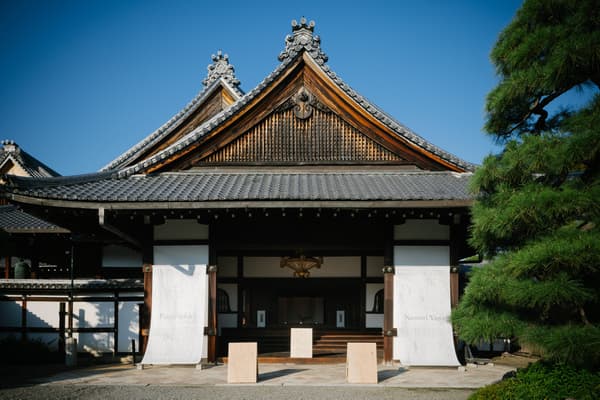
Photo: Mikiya Takimoto (瀧本幹也)
Set in the Main Entrance Hall of Higashi Honganji, a Nationally Designated Important Cultural Property
The venue, the Main Entrance Hall of Higashi Honganji, was built in 1867 and is a nationally designated Important Cultural Property.
Unlike an ordinary gallery or museum, this religious and historic space hosts works by Yago featuring motifs such as cherry blossoms, autumn leaves, peacocks, and flowers of the four seasons.
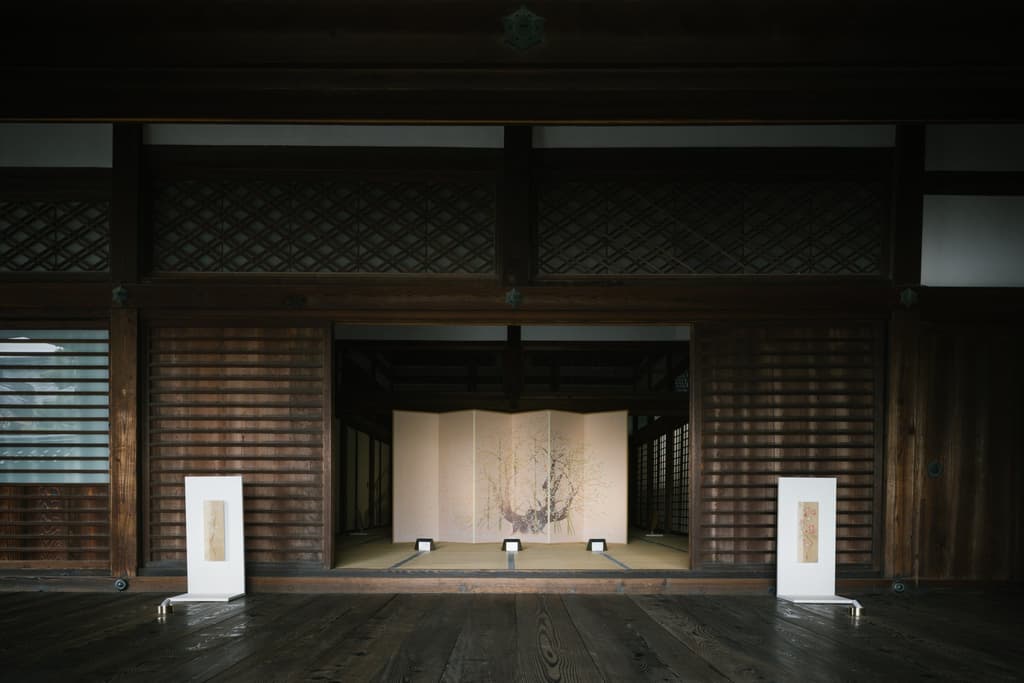
Works shaped by a range of craft techniques, including mounting, textile dyeing and weaving, and woodworking, are displayed in the traditional Japanese architectural space. The exhibition invites visitors to see in person how the works, the architecture, the materials, and the light interact with one another.
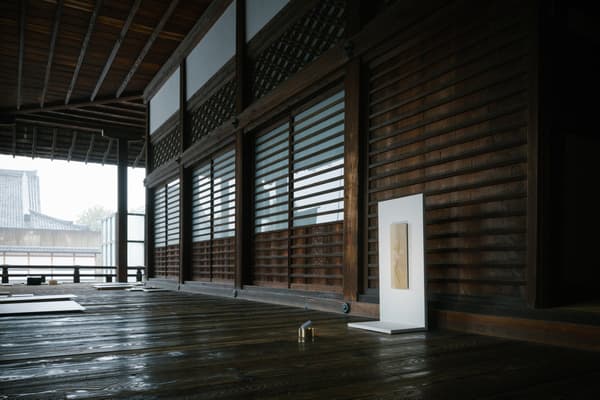
Photo: Mikiya Takimoto (瀧本幹也)
Expanding the Possibilities of Graphic Design Through Collaboration with Traditional Japanese Crafts
Starting from Yago's hand-drawn imagery, the exhibition presents a variety of works created in collaboration with craftspeople and workshops from across Japan.
Usuzumi-zakura Yoka-zu Byobu (淡墨桜余花図屏風) takes as its motif the "Usuzumi-zakura" (淡墨桜) cherry tree associated with the novelist Chiyo Uno (宇野千代). It is a large six-panel half-pair (六曲半双) folding screen made in collaboration with 京表具井上光雅堂, and across its surface of about 3.8 meters it expresses both the fragility and the vitality of cherry blossoms.
The same Usuzumi-zakura imagery was also developed into a one-of-a-kind visiting kimono (訪問着) using traditional hand-painted Yuzen dyeing, in collaboration with Ginza Motoji (銀座もとじ). In turning a flat image into a kimono that is completed when a person wears it, the designs and expression were refined through repeated conversations with textile craftspeople.
The exhibition also includes Yoka-zu (余花図), which depicts flowers in mineral pigments (岩絵具), as well as hanging scrolls, uchiwa fans, and works inspired by protective swords (守り刀).
By extending graphic design beyond visual expression on paper or on screens into works with materials, techniques, and physical presence, the exhibition explores its new possibilities.
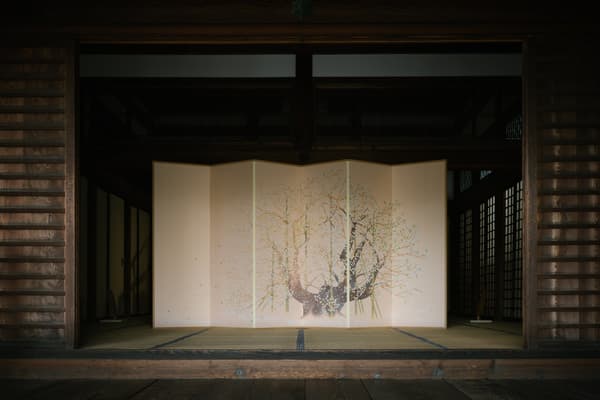
Usuzumi-zakura Yoka-zu Byobu (淡墨桜余花図屏風) (Photo: Mikiya Takimoto, 瀧本幹也)
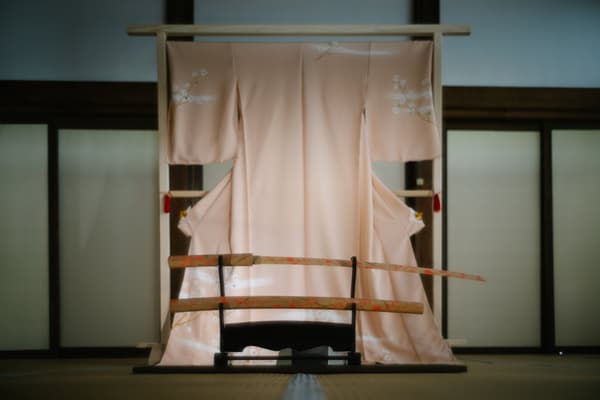
Usuzumi cherry blossom pattern visiting kimono (淡墨桜文様訪問着) (Photo: Mikiya Takimoto, 瀧本幹也)
紅守|朴造 (Photo: Mikiya Takimoto, 瀧本幹也)
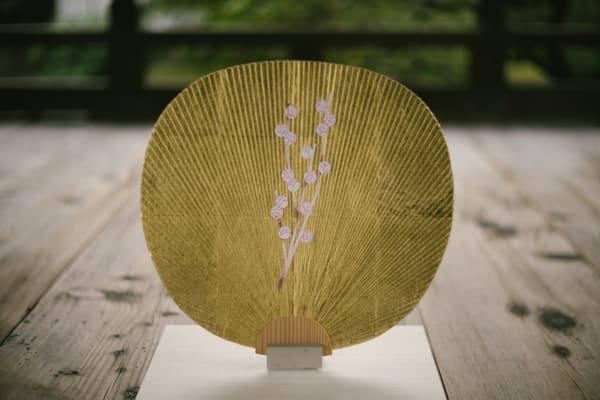
Peach bud design uchiwa fan (桃蕾図団扇) (Photo: Mikiya Takimoto, 瀧本幹也)
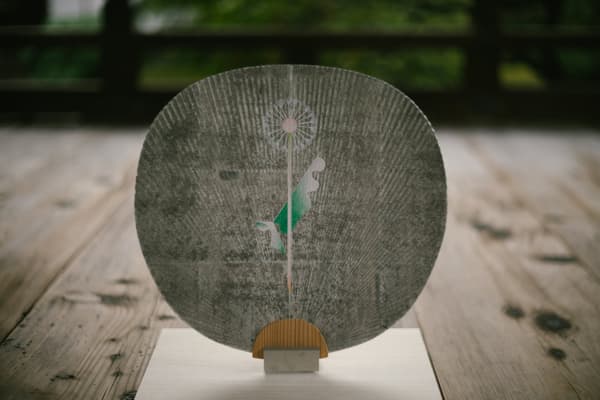
Dandelion design uchiwa fan (蒲公英図団扇) (Photo: Mikiya Takimoto, 瀧本幹也)
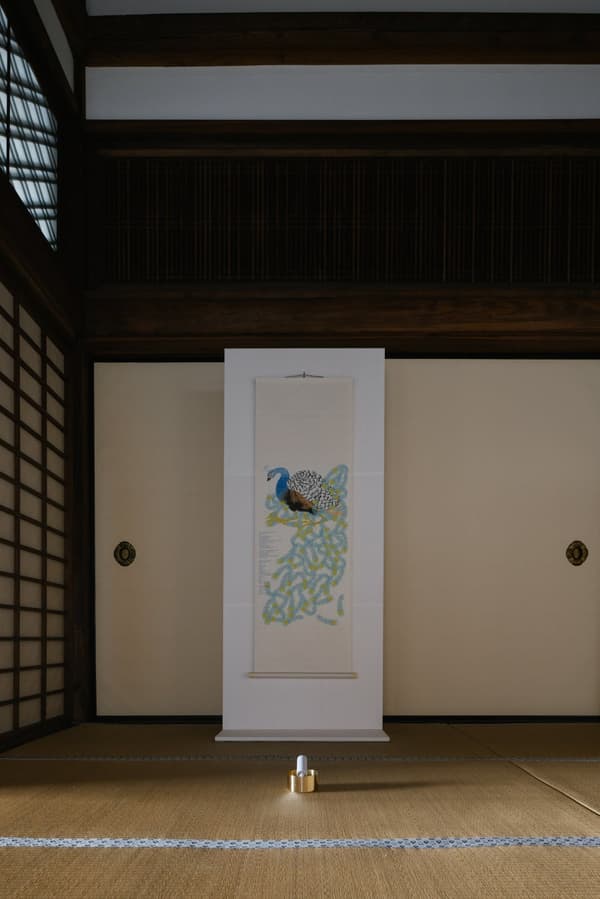
New Birds and Beasts | Blue Peacock (新鳥獣図|青孔雀) (Photo: Mikiya Takimoto, 瀧本幹也)
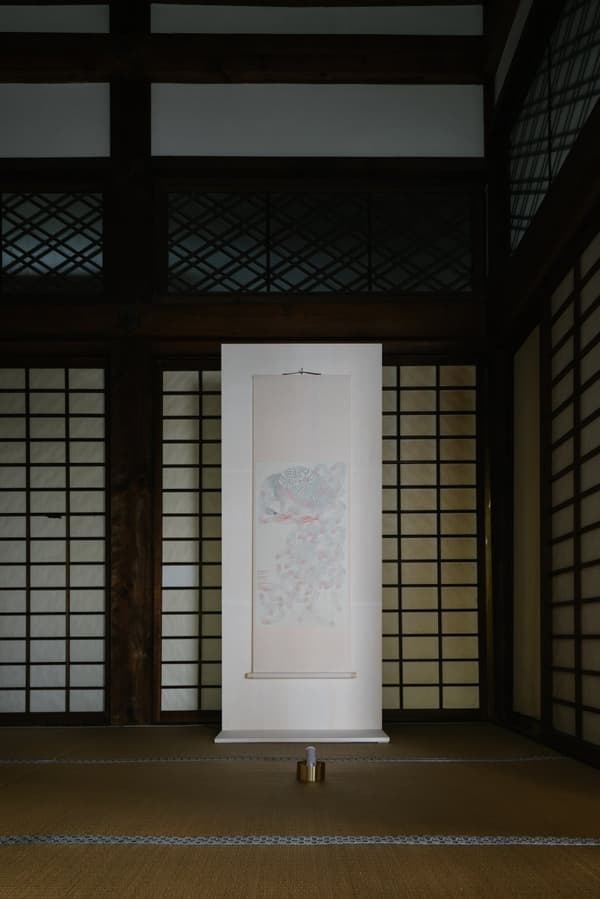
New Birds and Beasts | White Peacock (新鳥獣図|白孔雀) (Photo: Mikiya Takimoto, 瀧本幹也)
Rethinking Graphic Design Through the Theme of "Acceptance of Imperfection"
The theme of the exhibition is "Acceptance of Imperfection."
"Humane Error" (ヒューメインエラー) is a concept Yago has consistently held in his work. It is an approach that deliberately incorporates human mistakes and errors into design, such as bleeding, stains, and the guidelines left over from the production process.
It also resonates with the Jodo Shinshu idea of "bonbu-sei" (凡夫性), which accepts human beings as imperfect.
At a time when contemporary graphic design is becoming increasingly uniform, the exhibition turns its attention to expression made by human hands, chance, and the relationship between nature and people, and reexamines the original possibilities of graphic design.
The exhibition title "Pangraphics" means "all of graphic design."
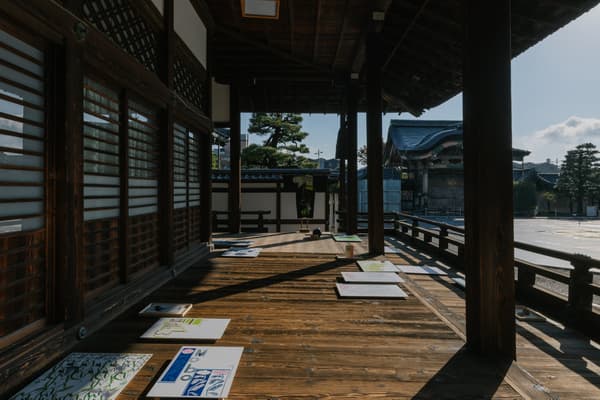
Photo: Mikiya Takimoto (瀧本幹也)
Exhibition Details
Naonori Yago Graphic Exhibition "Pangraphics"
Dates: Sunday, November 1 – Sunday, November 8, 2026
Venue: Higashi Honganji (東本願寺), Shinshu Otani-ha (真宗大谷派), Main Entrance Hall (大玄関) (nationally designated Important Cultural Property)
Address: Karasuma-dori Shichijo-agaru, Shimogyo-ku, Kyoto, Kyoto Prefecture (京都府京都市下京区烏丸通七条上る)
Hours: 10:00 AM – 4:00 PM (last admission 3:30 PM)
Admission: Free
Organizer: Pangraphics Inc. (株式会社Pangraphics)
In cooperation with: Shinshu Otani-ha (Higashi Honganji), 京表具井上光雅堂, Ginza Motoji (銀座もとじ), 東山堂, 蜂屋うちわ職店
Endorsed by: Kyoto City, Kyoto City Board of Education
Official website: https://pangraphics.jp/exhibition2026
About Naonori Yago
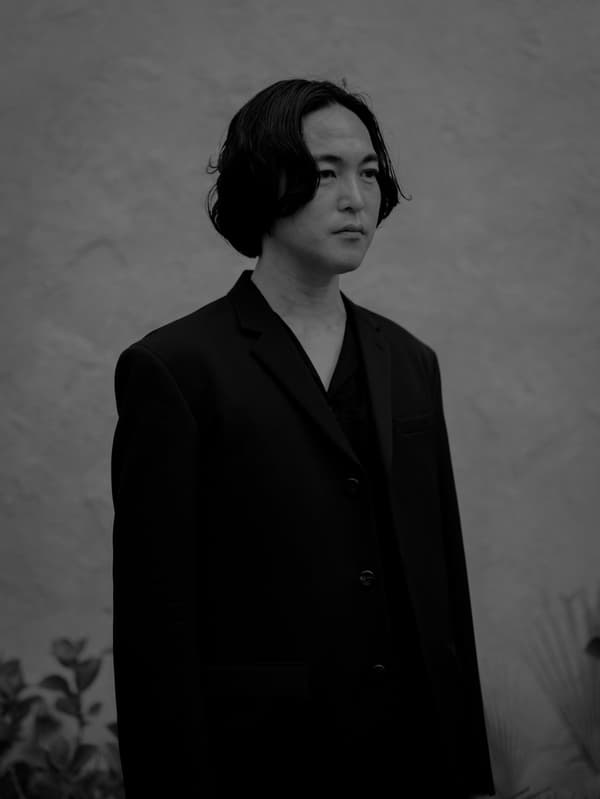
Naonori Yago (矢後直規) is an art director and graphic designer.
Born in Shizuoka Prefecture in 1986, he graduated from the Department of Visual Communication Design at Musashino Art University (武蔵野美術大学). After working at Hakuhodo (博報堂), he joined SIX, and he founded Pangraphics in 2025.
He has won awards in Japan and abroad, including the Tokyo ADC Award, the JAGDA New Designer Award, D&AD, the New York ADC, and the One Show. Alongside his art direction for ZIPAIR, SENSAI, Laforet HARAJUKU, and others, he presents artworks. He has held exhibitions in Japan and overseas, including the 2020 solo exhibition "婆娑羅" (Basara) at Laforet Museum Harajuku and "Imitative Behaviour" at PMQ in Hong Kong.
He is in charge of the title logo and visual design for the NHK morning serial drama (連続テレビ小説) "ブラッサム," scheduled to air in autumn 2026.
Instagram: https://www.instagram.com/yagonaonori/