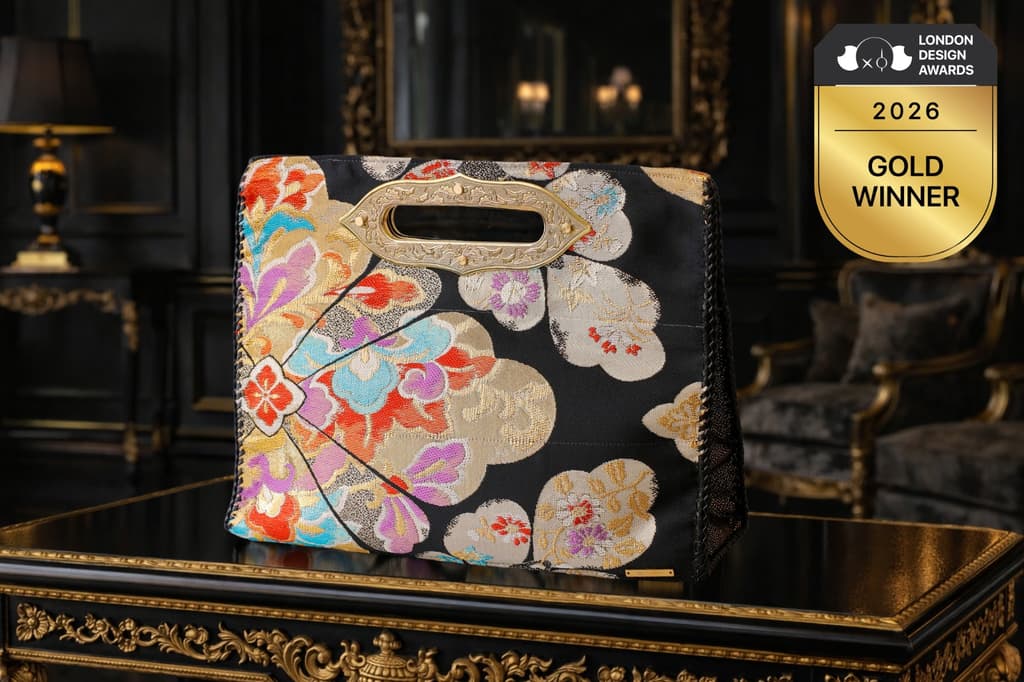
The MIKOSHI Bag, the latest series from Hiroshima-based ethical fashion brand Re:ADY B, has won the Gold Winner award in the Fashion Design category at the international design competition London Design Awards 2026. This is the first time a Japanese company has received recognition in the Fashion Design category at this award.
About London Design Awards 2026
London Design Awards is an international design competition organized by the International Awards Associate (IAA), attracting entries from more than 124 countries worldwide. The IAA has received over 100,000 entries to date. Judging is conducted anonymously (blind judging), with evaluation based on design quality, innovation, and social impact rather than the scale of the submitting organization.
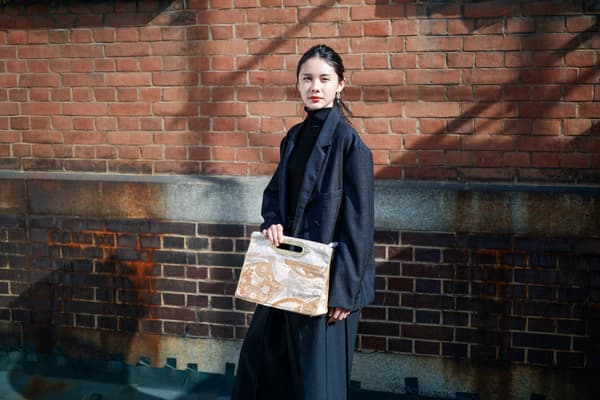
About the MIKOSHI Bag
The name "MIKOSHI Bag" is inspired by the mikoshi (portable shrine) carried through the streets during Japanese festival processions. Just as the mikoshi is created using metalworking techniques shared with Buddhist altars and temple ornamentation, the bag was designed not simply as a functional carrier, but as something that carries the stories embedded within its materials.
The series combines two distinct handcraft traditions: the intricate metal chasing techniques passed down through Hiroshima's Buddhist altar craftspeople, and leather stitching skills from workers at a Type-B continuous employment support facility. Obi sashes that were on the verge of being discarded are upcycled and given new meaning through collaboration with welfare facilities — an approach that was recognized for combining Japanese traditional techniques with inclusive manufacturing.
Rather than cutting the obi as a raw material, the bag structure uses the original obi width as its foundation. This approach preserves the continuity of the woven pattern without interruption, and even the subtler, unornamented sections are incorporated as side panels.
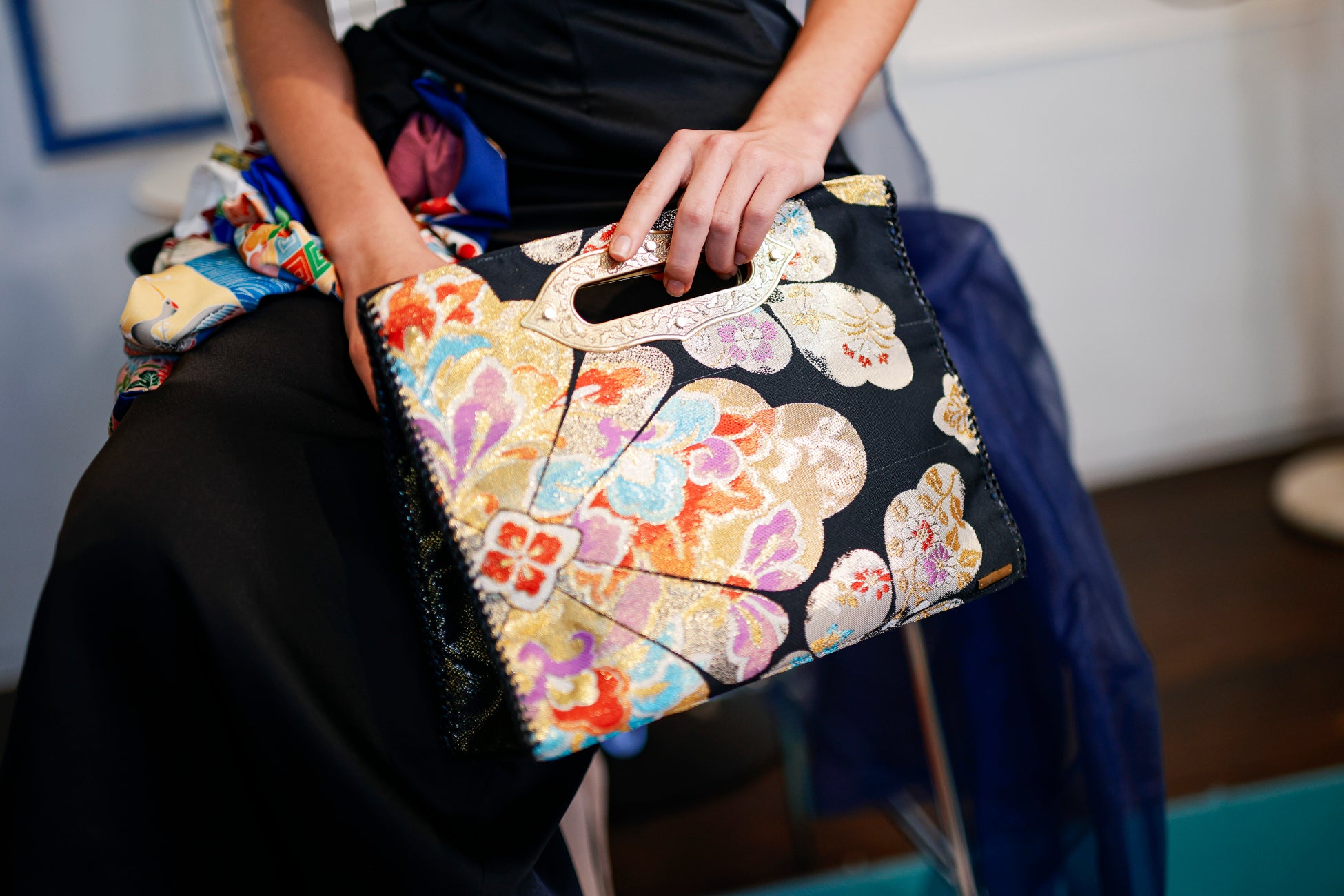
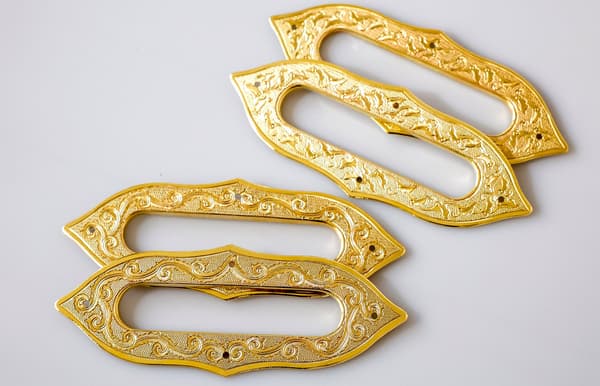
The hand-engraved brass handles were crafted one by one by Kuninobu Yoshida, the fifth-generation head of Yoshida Butsudan Kanamono Seisakusho, a metalwork studio founded in Hiroshima in 1890. Yoshida is considered the last remaining craftsperson preserving the hand-engraving metalwork techniques passed down through Hiroshima's Buddhist altar tradition. The arabesque pattern carved into the handles symbolizes "eternity," "prosperity," and "rebirth."
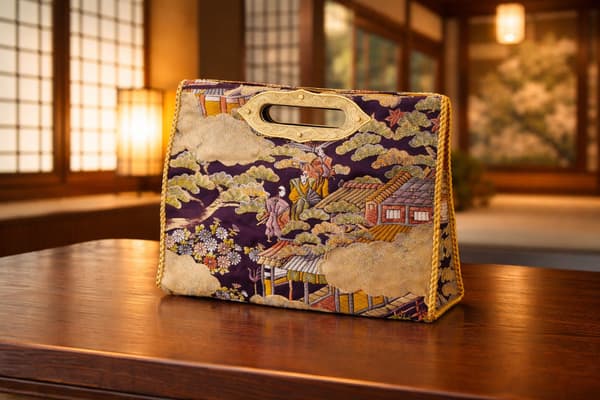
The leather edging is hand-stitched piece by piece by workers at Yassa Kobo Nishimachi, a Type-B continuous employment support facility in Mihara City, Hiroshima Prefecture. The MIKOSHI Bag is a product that can only be completed through the combined skills of three organizations, making each piece truly one of a kind.
Re:ADY B's approach goes beyond presenting surface-level Japanese aesthetics, instead shining a light on the techniques, philosophy, and handcraft rooted in the background — recontextualizing values that were once a natural part of everyday Japanese life as a contemporary standard to carry forward to the next generation.