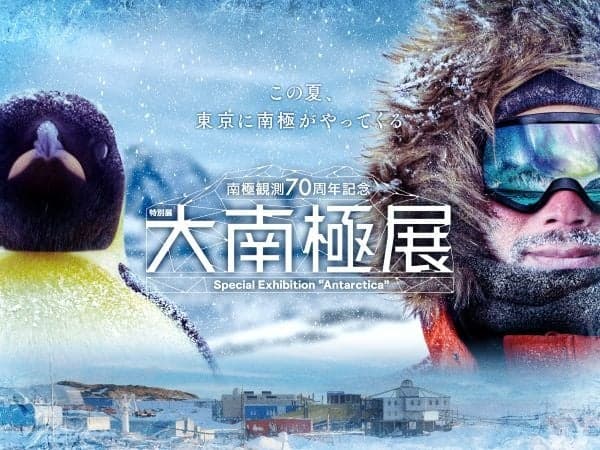
Special Exhibition "Antarctica" (大南極展), co-organized by Miraikan - The National Museum of Emerging Science and Innovation, the National Institute of Polar Research, Dream Studio, TV Asahi, and the Asahi Shimbun, opens on Wednesday, July 1, 2026.
Held to commemorate the 70th anniversary of Japanese Antarctic observation, this exhibition brings visitors face-to-face with the extreme frontier landscape of Antarctica and the cutting-edge research activities conducted there. The venue features large-screen immersive video, a blizzard experience that recreates observation team conditions under high winds, an ice core containing a record of Earth's environment from 340,000 years ago, and real meteorites discovered in Antarctica on display.

Antarctica has minimal impact from human activity, making it an ideal place to directly measure changes in the Earth's environment, and it is an indispensable field for observing the interactions between ice sheets, atmosphere, ocean, and living organisms. Japan has continued observations there for approximately 70 years, and its long-term data has contributed significantly to understanding climate change and making future predictions.
Exhibition Highlights
Touch Real Antarctic Ice
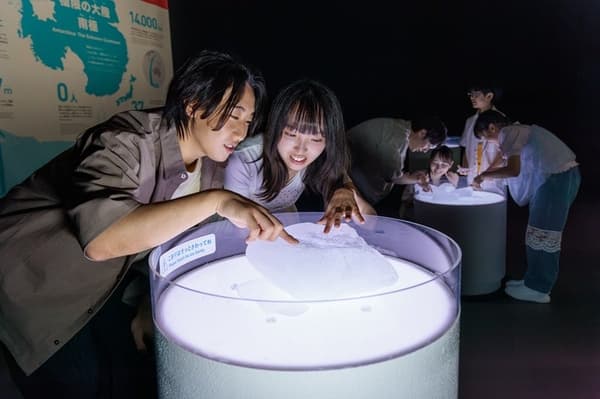
Visitors can touch real ice collected from Antarctica with their own hands — ice made from snow that fell thousands or tens of thousands of years ago. Along with feeling the cold, visitors can closely observe the transparency of the ice and the way fine air bubbles are trapped within.
Deep Ice Core Up Close
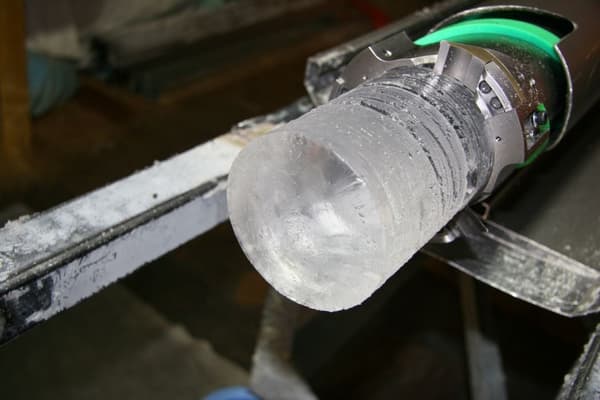
Ice cores drilled from deep within the Antarctic ice sheet go on special display. These are precious samples stored under strict temperature control at the National Institute of Polar Research and are rarely made available for public viewing. Trapped within the transparent ice is evidence of Earth's past conditions — air, temperatures, and precipitation from when the snow originally fell — making them "time capsules" for reading Earth's climate history. The actual ice core drilled from a depth of 2,499 meters, containing air from 340,000 years ago, will be on display, along with the drill used to extract it.
Experience a Blizzard
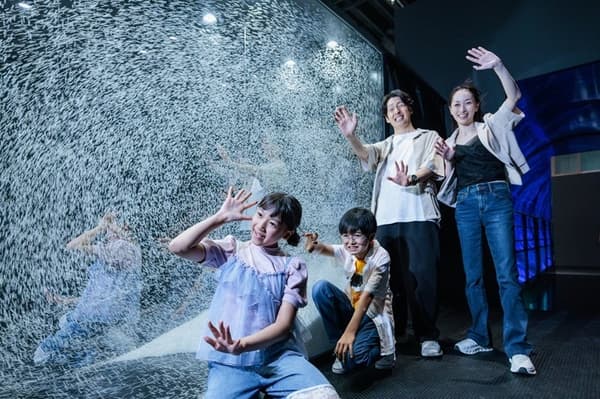
Antarctica's blizzards are meteorological phenomena where strong winds and swirling snow rapidly reduce visibility. Because surface snow is whipped into the air, even when it is not actively snowing the surroundings turn completely white, creating near-whiteout conditions where landmarks right in front of you become invisible. Blizzards are classified as Class A, B, or C depending on wind speed and degree of reduced visibility, and severe blizzards are dangerous enough to halt the movements of observation teams entirely. At this exhibition, the harsh natural conditions are recreated safely, with strong winds and poor visibility simulated separately.
Touch and Hold a Real Meteorite
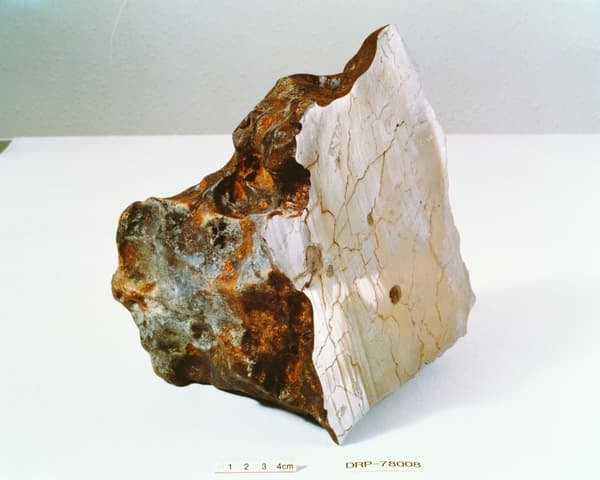
Real Antarctic meteorites are on display from what is known as "the sacred ground of meteorite collection." In Antarctica, dark meteorites stand out clearly against the white ice surface, making them easy to spot, and glacial movement concentrates them in specific locations over many years. This has led to approximately 60% of all meteorites registered with the Meteoritical Society having been collected in Antarctica. Japan's observation teams have gathered approximately 17,400 meteorites since 1969. At this exhibition, more than 30 carefully selected specimens will be on public display, including iron meteorites that visitors can touch and hold, and rare meteorites believed to have originated from the Moon and Mars. An actual "touchable Mars meteorite (slice)" that drew attention at Expo 2025 Osaka Kansai will also be featured.
Antarctic Wildlife
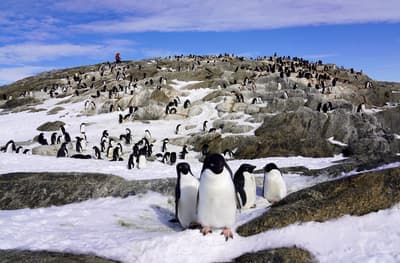
An area where visitors can observe in three dimensions the ecology of penguins and seals living in Antarctica's harsh environment, through specimen displays and observation domes. The "penguin census" introduced alongside this exhibit involves recording penguin numbers at nesting sites each year and tracking changes in breeding and population — an important long-term monitoring effort carried out by observation teams.
Earth's Geological Mysteries
Antarctic rocks retain evidence from hundreds of millions of years ago, when Antarctica was part of the Gondwana supercontinent together with Africa, South America, Australia, and India. Through collected rocks and fossils as well as tools used in field surveys, visitors can explore the history of continental drift and the geological mysteries encoded in Antarctica's landscape.
Tracking Changes in the Antarctic Sea
The latest surveys tracking changes in the Antarctic Sea are introduced. A scale model of the autonomous underwater vehicle (AUV) "MONACA" and moored observation instruments are on display. A mini-experience of searching for a moored instrument floating among the waves through binoculars lets visitors share in a researcher's moment of discovery.
Atmospheric Observation Zone
Sonde balloons and observation instruments for studying Antarctica's skies are on display. Visitors can learn how ozone holes and climate change are "read from above."
Aurora Observation Zone
Spectacular aurora footage captured at Showa Station is screened. Visitors can learn about the mechanism that produces curtains of light and the connection between space and Earth.
Showa Station Zone
This zone introduces the daily lives of observation team members in Antarctica's harsh environment, including station facilities and meals, offering a glimpse into the ingenuity required to live and work in the polar region.
Mission Sheet
At the exhibition entrance, visitors receive a "Mission Sheet." By moving through the venue and taking on missions related to Antarctic observation and research, the exhibition is structured as a participatory experience. Completing all missions results in recognition as a "Special Antarctic Observation Team Member" of this exhibition.
As the Observation Experience Draws to a Close
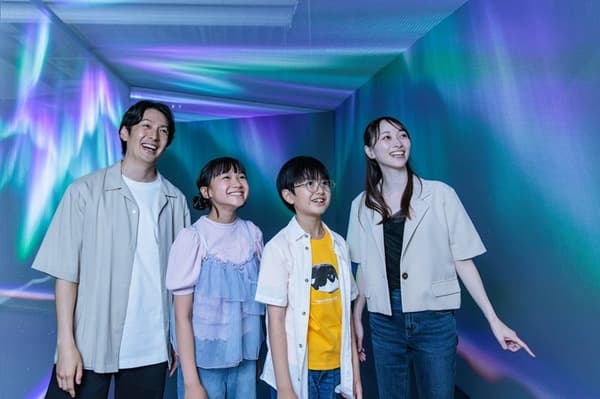
At the end of the exhibition area, a special "path home" awaits, where visitors walk surrounded by auroras that fill the space overhead. The swaying green curtains light the way, creating a fantastical space as if Antarctica's polar night belongs to you alone.
Special Programs
Win a Piece of Real Antarctic Ice
Visitors whose cumulative attendance number ends in "777" (e.g., visitor 1,777, visitor 20,777, etc.) will receive a piece of real Antarctic ice as a gift. When placed in water, the air trapped inside over thousands of years quietly rises, and the gentle crackling sound conveys the time accumulated in Antarctica.
*The method for determining eligible recipients may change; updates will be posted on the official X account.

Original Merchandise
The exhibition gift shop features original merchandise with official character Sumikko Gurashi, as well as "Special Exhibition Antarctica Original Penguin Observation Team Series" items using Adelie penguin illustrations, and special item "frozen monster Pegira" merchandise. Please check the exhibition's official website for product details.
Collaboration Drink
The 7th floor restaurant "CAFETERIA BLUE" offers a collaboration drink to commemorate the exhibition.
- Product: Antarctica Cream Soda
- Price: ¥1,000 (tax included)
- Available at: Miraikan - The National Museum of Emerging Science and Innovation, 7th Floor Restaurant "CAFETERIA BLUE"

Related Events
A range of events will be held, including special classes for elementary school students taught by teachers who participated in the Teachers Antarctic Assignment Program based on their own experiences, talk sessions featuring researchers, and workshops held in collaboration with companies that support observation activities — all perfect for summer research projects. Please check the official website for details.
Exhibition Overview
| Item | Details |
|---|---|
| Exhibition Name | Special Exhibition "Antarctica" |
| Dates | Wednesday, July 1, 2026 to Sunday, September 27, 2026 |
| Venue | Miraikan - The National Museum of Emerging Science and Innovation, 1F Special Exhibition Zone (2-3-6 Aomi, Koto-ku, Tokyo) |
| Hours | 10:00 AM to 5:00 PM (last entry 30 minutes before closing) |
| Closed Days | Tuesday, July 7; Tuesday, July 14; Tuesday, September 1; Tuesday, September 8; Tuesday, September 15 |
| Admission (tax included) | Adults (age 19 and over): ¥2,000 (group ¥1,800); Ages 18 and under (elementary school age and above): ¥1,300 (group ¥1,100); Preschoolers (age 3 and over): ¥900 (group ¥700). Group rate applies to groups of 8 or more. Ages 2 and under free. Holders of disability certificates and one accompanying person admitted free with documentation. Permanent exhibition access included. |
| Organizers | Miraikan - The National Museum of Emerging Science and Innovation, National Institute of Polar Research, Dream Studio, TV Asahi, Asahi Shimbun |
| Special Sponsor | KDDI |
| Official Website | https://dainankyokuten.jp/ |