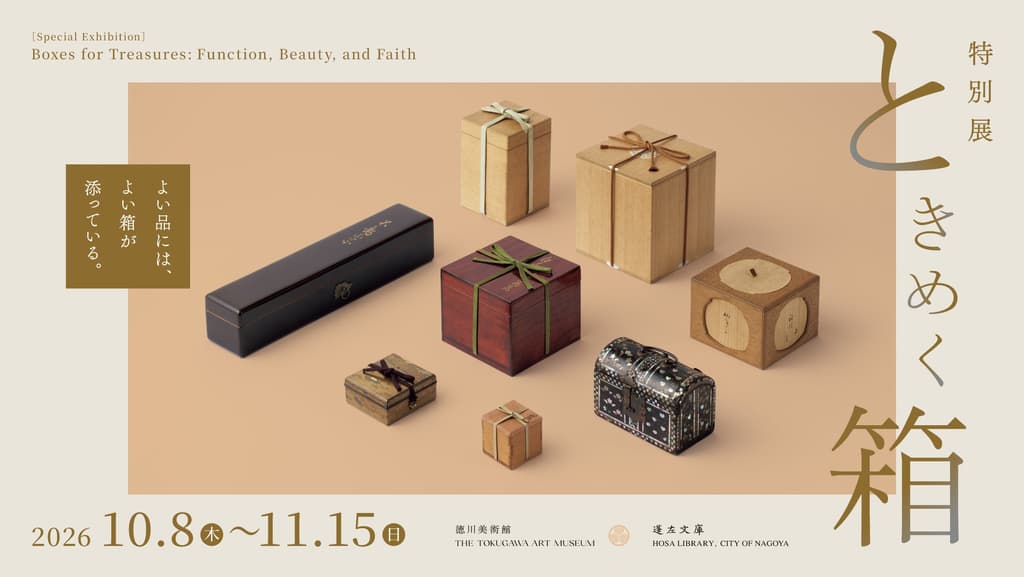
The Tokugawa Art Museum in Nagoya will hold the special exhibition "Tokimeku Hako" (ときめく箱) from October 8 (Thu) to November 15 (Sun), 2026.
As expressions like tamatebako (a magical treasure box) and hakoiri musume (a sheltered daughter, literally "a girl in a box") suggest, the box, a container for keeping things, has been deeply connected to people's daily lives, faith, and art from ancient times to the present. Beyond practical roles such as protecting, organizing, and transporting what is inside, boxes have sometimes served as a medium that holds the feelings of their owners and speaks across the ages, through elaborate decoration, symbolic designs, and the hakogaki (inscriptions) written on the front and back of the lid.
This exhibition takes the box, which has played an important behind-the-scenes role for artworks, and makes it the star. It invites visitors to take a fresh look at the function and beauty of boxes that have protected and handed down works together with them, and at the part boxes have played in passing cultural properties on to the future.
Highlight 1: Tracing the History of Boxes, From Their Shapes to Their Techniques
The history of boxes goes back to prehistoric baskets woven from plant vines, stems, and bark. In Japan, early examples of square boxes can be seen in the wooden and stone coffins of the Yayoi to Kofun periods. From the Heian period onward, boxes made of wooden boards took many forms as tools and techniques developed.
The paulownia (kiri) box, widely used in Japan today, appeared around the 16th century, against the backdrop of the spread of the oga, a large saw for splitting big timber lengthwise, and the dai-kanna, a plane for finishing surfaces flat. The changes in boxes also trace the path of Japanese craftsmanship.
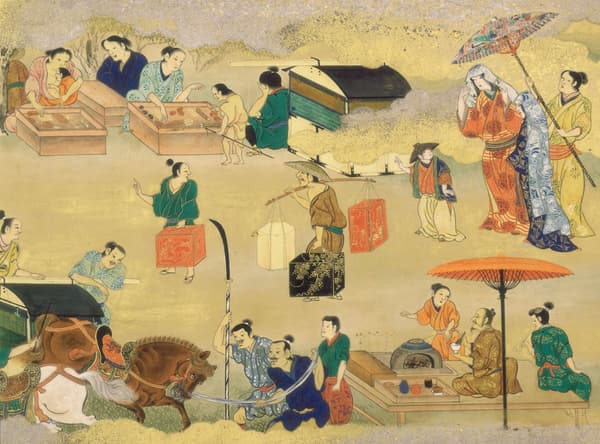
Important Cultural Property, Kabuki Zukan (Kabuki Picture Scroll), text attributed to Karasumaru Mitsuhiro, lower scroll of two (detail), Edo period, 17th century, Tokugawa Art Museum collection. On view in the first half of the exhibition. Boxes of various forms are depicted on the scroll, showing that boxes have filled people's lives since long ago.
Highlight 2: To Protect, to Conceal, to Pass On, the Roles Boxes Have Played
Boxes protect their contents from damage and dirt, help with organizing and transporting them, and show that what is inside is something special. They have played a variety of roles.
In particular, boxes that housed treasures serving as objects of worship fulfilled a role called shogon, visually expressing the sacredness of their contents, and so they were given gorgeous decoration such as maki-e lacquer. The hakogaki inscribed on a box also tells the story of an item's origins and how it was passed down.
With roles that go beyond simply putting things away, it is easy to see why boxes fill our everyday surroundings.
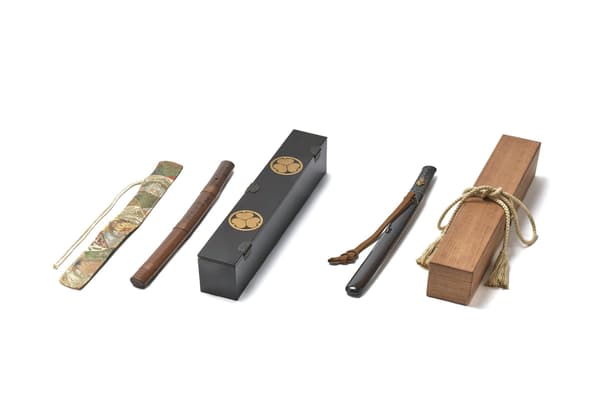
Black-lacquered aikuchi mounting, sword bag, sword box, and mounting box (accompanying the Important Cultural Property wakizashi, unsigned, by Sadamune, known as "Monoyoshi Sadamune"), Edo period, 17th century, Tokugawa Art Museum collection. The blade and white scabbard are not on display. When a new head of the Owari family took over, a ceremony was held in front of his retainers in which he inspected this sword in person, confirmed that he had inherited it, and sealed it again.
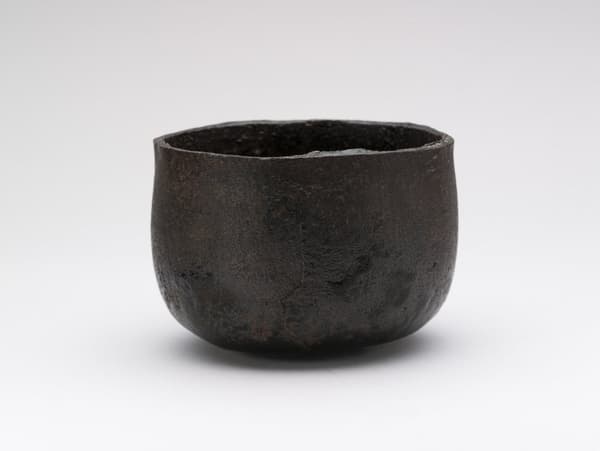
Important Cultural Property, Black Raku tea bowl, named "Shigure," by Hon'ami Koetsu, Edo period, 17th century, Nagoya City Museum collection. A masterpiece among Koetsu's tea bowls.
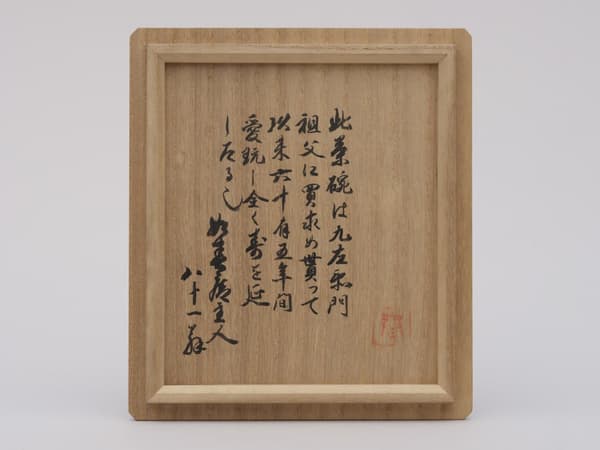
Important Cultural Property, Black Raku tea bowl, named "Shigure," by Hon'ami Koetsu. Outer box: paulownia lidded box with cleats on four sides, underside of the lid. In his later years, Morikawa Joshun-an, a tea master of modern Owari, wrote that his grandfather bought the bowl for him when he was 16.
Highlight 3: Custom-Made Boxes That Reflect the Owner's Sense of Beauty
Boxes made to order for treasured items are designed with great care in their shape, materials, and design. They show the ingenuity that goes into protecting a work, as well as the owner's tastes and discerning eye. In the modern era in particular, the boxes themselves also became objects of appreciation. Looking at a box together with what it holds offers a glimpse into the history of how an item was loved and handed down.
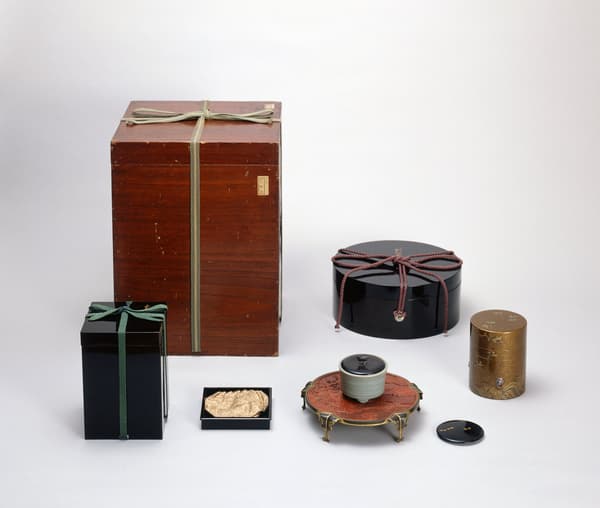
Celadon incense burner, named "Chidori," Great Meibutsu (Omeibutsu), Southern Song to Yuan dynasty, 13th to 14th century, Tokugawa Art Museum collection. The many boxes are typical of a celebrated tea ceremony utensil.
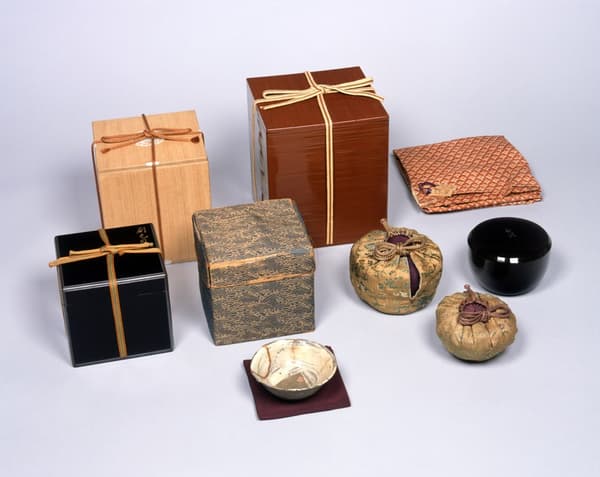
Hakeme tea bowl, named "Shiranami," Joseon dynasty, 16th century, donated by the Okaya family, Tokugawa Art Museum collection. A gorgeous presentation commissioned by a modern tea master.
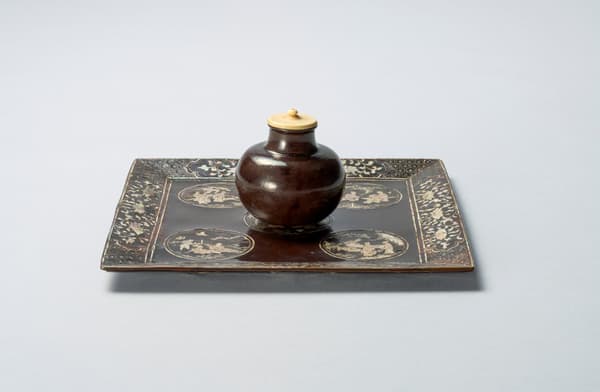
Karamono (Chinese-made) round-jar tea caddy, named "Karamaru-tsubo," once owned by Katagiri Sekishu, Yuan to Ming dynasty, 14th century, private collection. First public display. A newly discovered tea caddy that belonged to Katagiri Sekishu, founder of the Sekishu school.
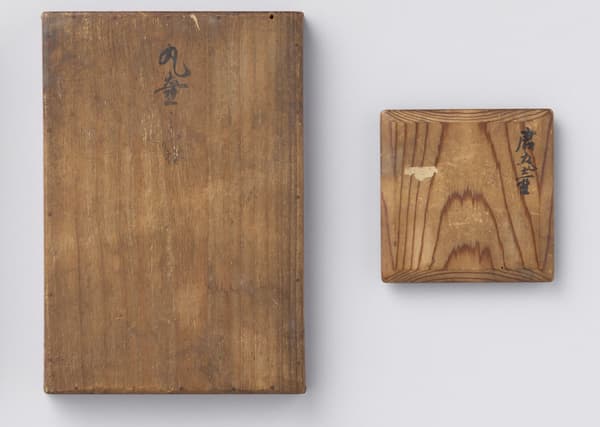
Karamono round-jar tea caddy, named "Karamaru-tsubo," private collection. Inner box for the pouch: paulownia lidded box, top of the lid. Inner box for the tea caddy: cedar lidded box with cleats on two sides, top of the lid. The lid tops bear Katagiri Sekishu's own handwriting.
Highlight 4: Boxes Are Beautiful, Too
Visitors' eyes tend to be drawn to the artworks, but the boxes that have housed them are beautiful as well. Carefully selected wood, meticulous work by box craftsmen, vivid cords, and more: every detail of a box is worth a look.
The way Japanese culture has made containers so beautifully and treated them with such care is impressive.
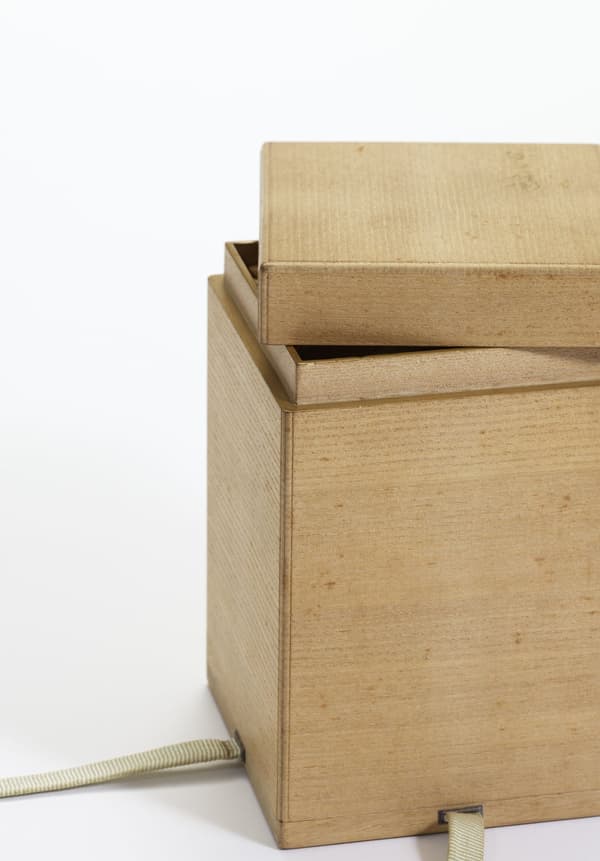
Karamono shoulder-ridge (katatsuki) tea caddy, named "Somu," Great Meibutsu (Omeibutsu), inner box for the tea caddy, Edo period, 17th century, Tokugawa Art Museum collection.
Related Event: Saturday Lecture "Hako o Himotokeba" (箱をひもとけば)
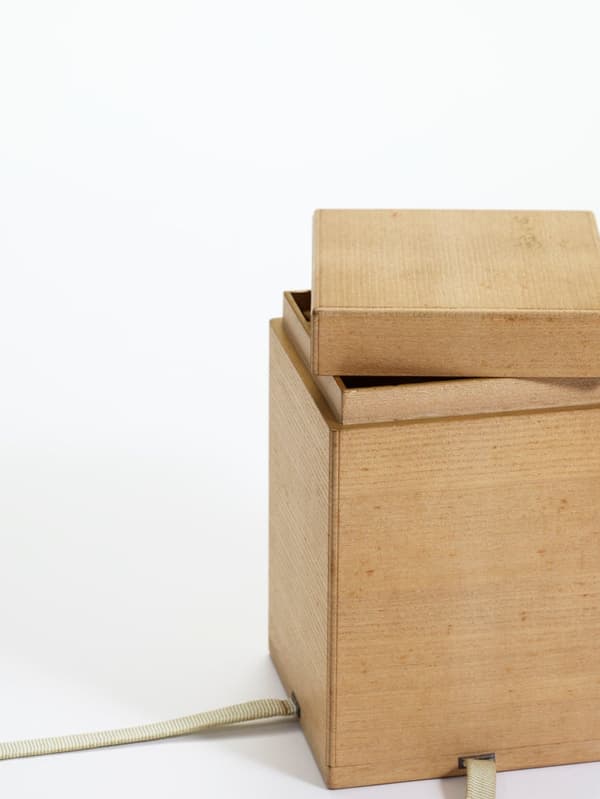
Karamono shoulder-ridge tea caddy, named "Somu," Great Meibutsu (Omeibutsu), inner box for the tea caddy, Edo period, 17th century, Tokugawa Art Museum collection.
Date: November 7, 2026 (Sat)
Time: 1:30 PM to 3:00 PM (doors open at 1:00 PM)
Venue: Tokugawa Art Museum, Auditorium
Speaker: Shohei Kato (加藤祥平), Curator, Tokugawa Art Museum
Capacity: 100 people (advance registration; already full). Only if cancellations occur, seats will be available to walk-ins on the day on a first-come basis.
Fee: ¥1,000 lecture fee; museum admission is required separately.
Exhibition Details
Exhibition: Special Exhibition "Tokimeku Hako" (ときめく箱)
Dates: October 8, 2026 (Thu) to November 15, 2026 (Sun)
Hours: 10:00 AM to 5:00 PM (last admission at 4:30 PM)
Closed: Mondays (the museum is open on Monday, October 12, a national holiday, and closed on Tuesday, October 13)
Venue: Tokugawa Art Museum, Main Building Exhibition Rooms
Admission:
- General: ¥2,000
- University and high school students: ¥1,200
- Junior high school students and younger: Free
- Visitors with disabilities and one companion receive a ¥200 discount upon presentation of a disability certificate.
- There are no group rates or senior discounts.
Online tickets are available at https://www.e-tix.jp/tokugawa-art-museum/.
Tokugawa Art Museum Information
Address: 1017 Tokugawa-cho, Higashi-ku, Nagoya-shi, Aichi 461-0023
Phone: 052-935-6262 (10:00 AM to 5:00 PM, except Mondays)
Hours: 10:00 AM to 5:00 PM (last admission at 4:30 PM). Closed on Mondays (the following weekday if Monday is a national holiday).
Access:
- 8-minute walk from the south exit of Ozone Station on the JR Chuo Main Line
- 3-minute walk from the "Tokugawaen Shindeki" stop on Nagoya City Bus and Meitetsu Bus Kikan Route 2
- Right by the "Tokugawaen, Tokugawa Art Museum, Hosa Bunko" stop on the Nagoya Sightseeing Route Bus Meguru
- Free parking for 17 cars on the south side of the museum
Official website: https://www.tokugawa-art-museum.jp/