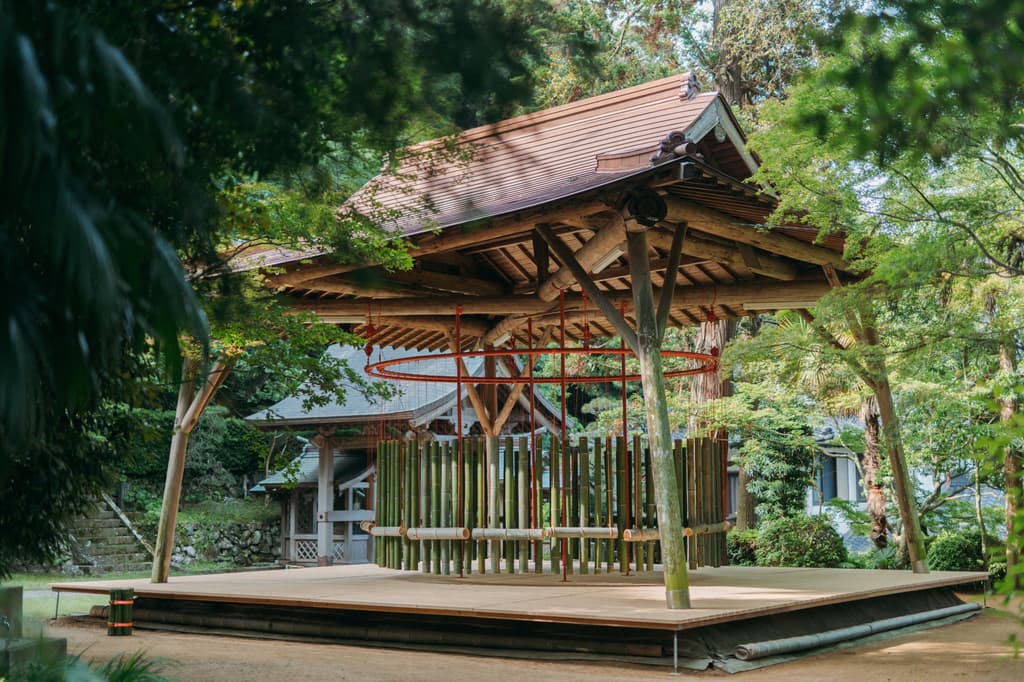
Tomimatsu Shrine in Omura, Nagasaki, has unveiled "Circulating Bamboo Wind Chimes," a new installation made from bamboo grown on the shrine grounds, created in collaboration with architecture firm Schemata Architects. The installation opened to the public on July 1, 2026. Rather than a simple seasonal decoration, it is designed as a circulating system meant to nurture an ongoing relationship between the shrine, the local community, and visitors.
Rethinking What a Shrine Can Be
The first documented record of Tomimatsu Shrine dates back to 1364, the 19th year of the Shohei era. At the time, Shinto and Buddhist practice were still closely intertwined, and the shrine appears under the name "Tomimatsu-gu" in a sutra dedicated by a nearby temple. It later fell into disrepair after being burned down by Christian forces, but was restored with the reverence of the local feudal lord.
Its history reflects a place that has generously welcomed every set of values that has passed through this land.
Japan is home to an estimated 80,000 shrines, each of which has long served as a guardian deity for its local area, watching over the prayers offered there. Shrines once stood close to everyday life, nurturing community ties not only through prayer but through festivals and events.
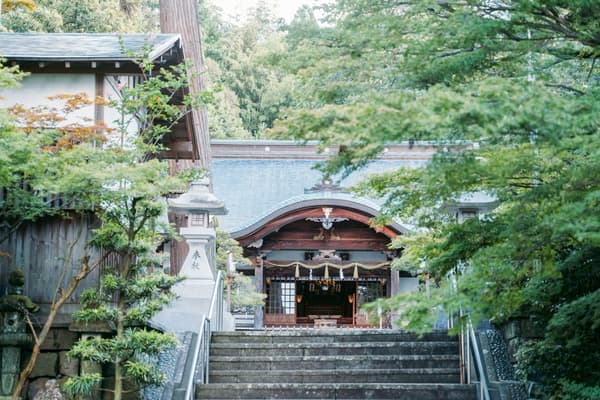
As society has changed, however, opportunities to visit a shrine as part of daily life have become fewer.
Tomimatsu Shrine is no exception to this trend.
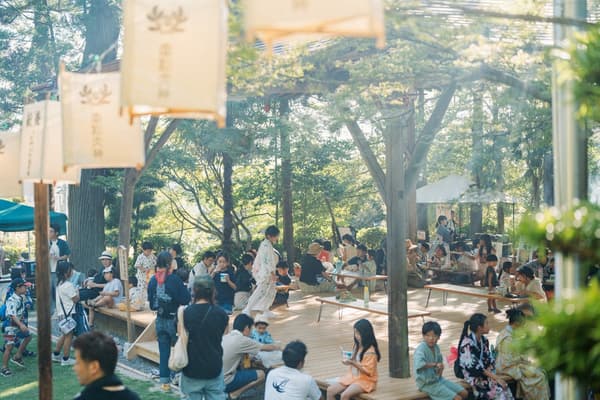
This initiative is an attempt to open the shrine to the community as an everyday gathering place, not just a setting for festivals and special occasions.
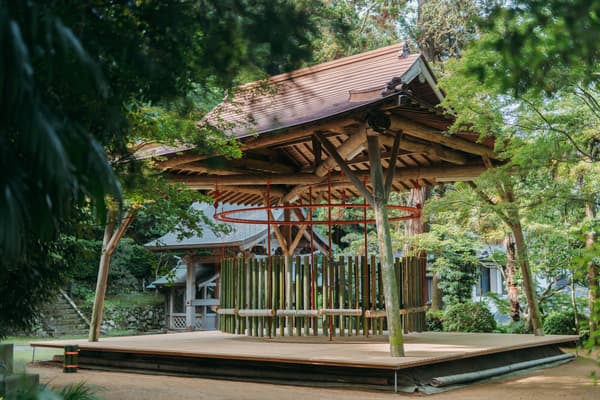
The setting for the project is the shrine's dohyo (sumo ring), a sacred space traditionally used only during the annual festival's rites. For 364 of the year's 365 days, this ground has otherwise stood quietly at rest. By opening it up for people to gather and spend time here in ordinary, unremarkable moments, the shrine hopes to cultivate a new point of connection with the surrounding town.
The bamboo wind chimes are the first step in that effort.
By opening this particularly scenic corner of the grounds, where the changing seasons are especially vivid, and layering the sound of wind chimes over everyday life, the shrine aims to deepen its relationship with the community and its visitors.
The goal is for this dohyo to become something like the town's engawa (veranda) — a welcoming, in-between space for the people who live nearby.
Two Goals: More Visitors, and More People Involved
Looking ahead, the project centers on two priorities for what the shrine can become.
Increasing visitors
The aim is for the shrine to become a place people feel like stopping by on a whim, as part of everyday life.
Not only for festivals, New Year's visits, or life milestones, but also midway through a walk, to notice a change in the season, to meet up with someone, or simply to steady one's mind — the shrine wants to connect with these small, natural movements of daily life.
Increasing visitors is not simply about raising a headcount. It means returning the role the shrine has long played in people's lives to their everyday routines, in a form suited to the present day.
Increasing the people involved
The second goal is increasing the number of people who get involved with the shrine.
A shrine is not a place maintained by its priests alone. Its strength grows when many people — local residents, visitors, makers, younger generations, and those who travel from afar — each contribute a little.
Beyond simply visiting, helping prepare for festivals, supporting events, taking part in making things, and sharing the enjoyment with others — these accumulated forms of involvement are what should help people come to feel the shrine is "their own place."
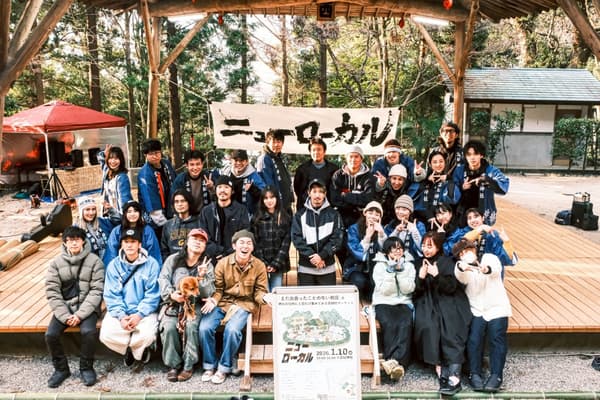
Building a Circulating Landscape
At the heart of the project, the bamboo wind chimes are designed as a system that circulates over time.
From spring through summer, large bamboo wind chimes are installed on the grounds, their sound in the breeze creating a pleasant space.
At the end of summer, that same bamboo is reused in a workshop where participants make their own small wind chimes to take home and enjoy in daily life.
The following year, bamboo is cut and crafted again, and new wind chimes are installed on the grounds.
Building on the rest area within the grounds that this project has opened up, the shrine also plans to host seasonal workshops and other opportunities for people to connect throughout the year. Beyond wind chime making, these accumulating experiences with local culture and daily life are meant to open up a new way for the shrine to be a place people keep returning to and engaging with.
By repeating this cycle, the shrine hopes to expand both the soundscape centered on the shrine and the connections among people, giving rise to a new kind of scenery within the community.
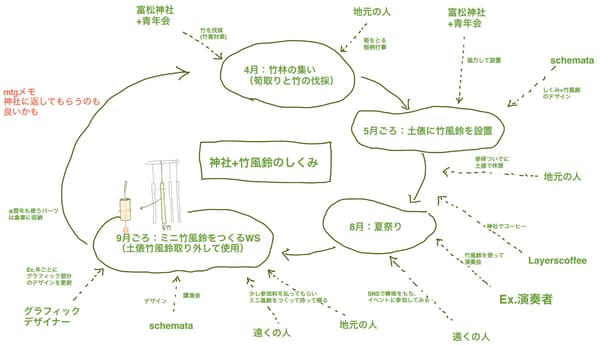
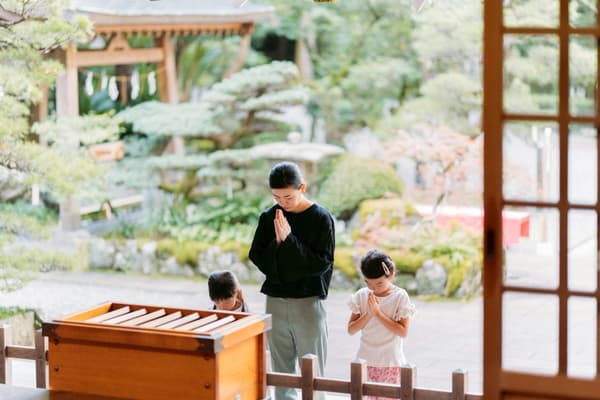
An early rough sketch from the planning stage
About the Design
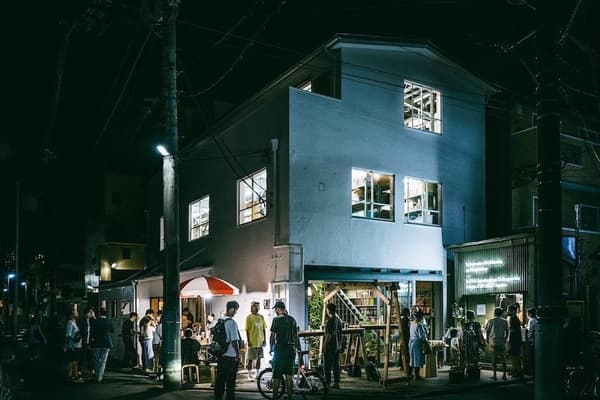
The design for this project was handled by architecture firm Schemata Architects. The connection began when its representative, Jo Nagasaka, mentioned on the podcast "Ryutsu Kuron" that he had an interest in shrines. Tomimatsu Shrine decided this was an opportunity not to be missed, reached out to him directly, and the conversation grew into the current project.
The firm works across a wide range of fields, from architecture to furniture and spatial design, and is known for designs that make the most of familiar materials and surroundings.
The bamboo wind chimes likewise make use of bamboo as a local resource, with the design covering not just their form but also the way people engage with them.
Comments From the Project Team
Jo Nagasaka (Representative, Schemata Architects)

Photo: Yuriko Takagi
Nagasaka established his own studio after graduating from Tokyo University of the Arts in 1998, and now runs an office in Sendagaya. His work spans a wide range of scales and genres, from furniture to architecture to town-making, taking on houses, cafes, shops, hotels, public bathhouses, and more. Working at a 1:1 scale regardless of size, he begins each design by exploring materials, and has expanded his practice both in Japan and abroad. Finding new perspectives and values within everyday, existing environments, he has put forward distinctive concepts such as "subtraction," "misuse," "renewing knowledge," "invisible development," and "half-architecture," establishing a singular identity as an architect.
Selected works: Sayama Flat, Okusawa House, FLAT TABLE, ColoRing, LLOVE, Aesop, Blue Bottle Coffee, Kuwahara Shoten, DESCENTE BLANC, HAY, Musashino Art University Building 16, Kogane-yu, DOKUBO + EL AMIGO, D&DEPARTMENT JEJU, Teshima Factory, and others.
"There are more shrines across Japan than there are convenience stores, yet I had heard that many face challenges such as a shrinking base of parishioners and a lack of successors. Even so, shrines rooted in the character of each region, long built on some of the best sites in the land, still hold great potential. I thought that by making use of two resources commonly found on shrine grounds — bamboo groves and open space — it might be possible to create new relationships between the shrine and the community, and between people, giving the shrine new value and bringing it back to life for the present day. Through the conversations and connections that naturally arise from those relationships, I hope this can become a chance to imagine and think about what shrines can be going forward, and it's with that hope that I took part in this project."
Uzuhiko Kudamatsu (Shinto Priest, Tomimatsu Shrine)
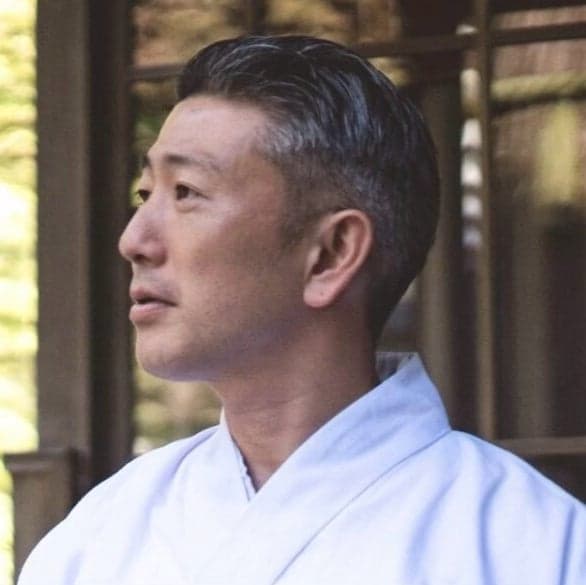
Born in 1982, Kudamatsu earned his qualification as a Shinto priest at Kokugakuin University, then worked in the restaurant industry and store development in Tokyo, where he learned the appeal of spaces where diverse people and cultures intersect. After about 15 years in Tokyo, he returned to his hometown at age 36, and came to appreciate anew the shrine's "circulation of goodwill" and its role as a hub for the community. He is now exploring, through craftsmanship and the passing down of culture, how the shrine can become a source of local pride and a familiar part of everyday life.
"About 20 years ago, the term 'third place' was heard often. It referred to a comfortable third space that was neither home nor school or work. The idea helped drive the cafe boom of the time, and caught up in that momentum, I spent more than ten years working in the restaurant industry myself.
Having returned to my hometown as a Shinto priest and looking at the shrine again with fresh eyes, I've come to think a shrine might be the original third place.
Even as the place and the means have changed, what I wanted to do all along doesn't seem to have changed much.
Still, all the detours I took along the way taught me the richness of having even just one favorite place within everyday life.
Through this project, I hope the shrine can become one such place of comfort for everyone in the community."
How the Bamboo Wind Chimes Are Made
Behind the scenes
Making the bamboo wind chimes begins with digging bamboo shoots. Every April, the shrine holds a gathering called "Bamboo Grove Meetup," where parishioners join in digging bamboo shoots and maintaining the bamboo grove.
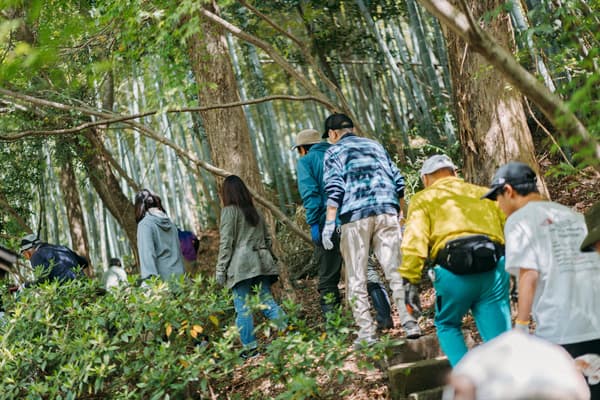
Close to 100 parishioners typically take part each year. Harvesting the bamboo shoots properly also helps keep the hillside healthy.

The bamboo shoots that are dug up are shared among everyone, distributing the mountain's bounty. Bamboo that has grown too dense is thinned out and used as material for the wind chimes.
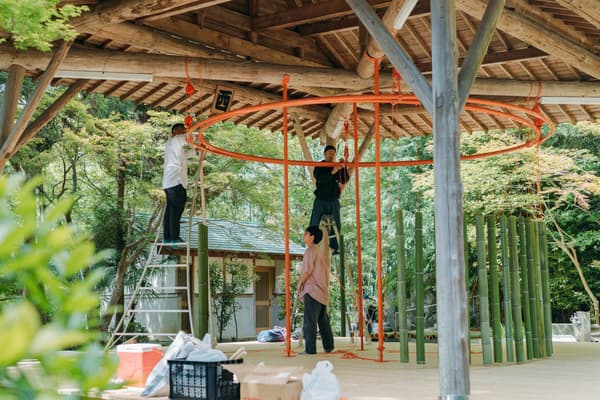
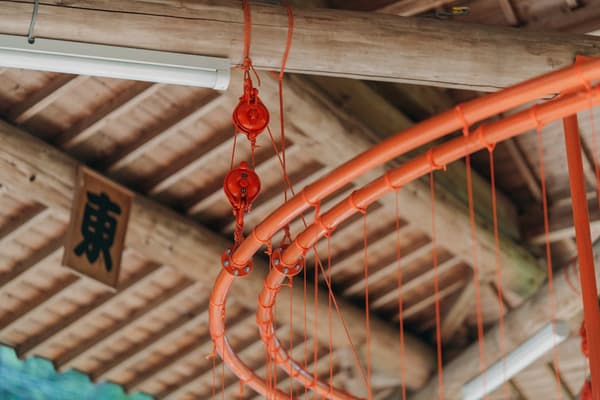
The harvested bamboo was then processed and the wind chimes were installed.

The finished installation
Looking Ahead
Through this project, Tomimatsu Shrine hopes to expand what a shrine can be — from a place people visit to a place people keep engaging with.
The shrine also hopes this initiative can serve as one example of how to address challenges shared by shrines across Japan, and become a starting point for thinking about what shrines can be going forward.