Ueno Station and Genichiro Inokuma's Freedom Exhibition Opens March 1 at Marugame Genichiro-Inokuma Museum of Contemporary Art
A new exhibition focusing on one of Japan's most iconic public artworks opens at the Marugame Genichiro-Inokuma Museum of Contemporary Art (MIMOCA) on March 1, 2026. The exhibition explores the history and significance of Freedom, a monumental mural painted by artist Genichiro Inokuma at JR Ueno Station in 1951.
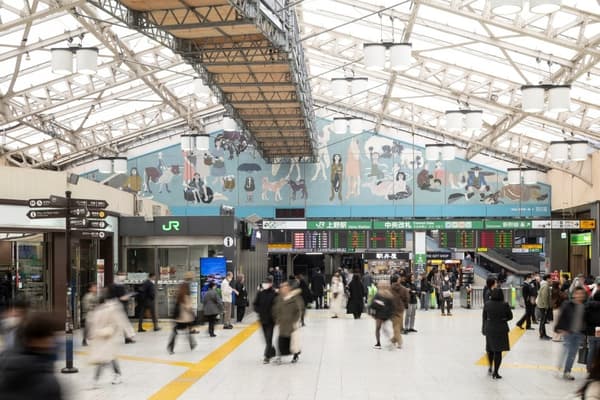
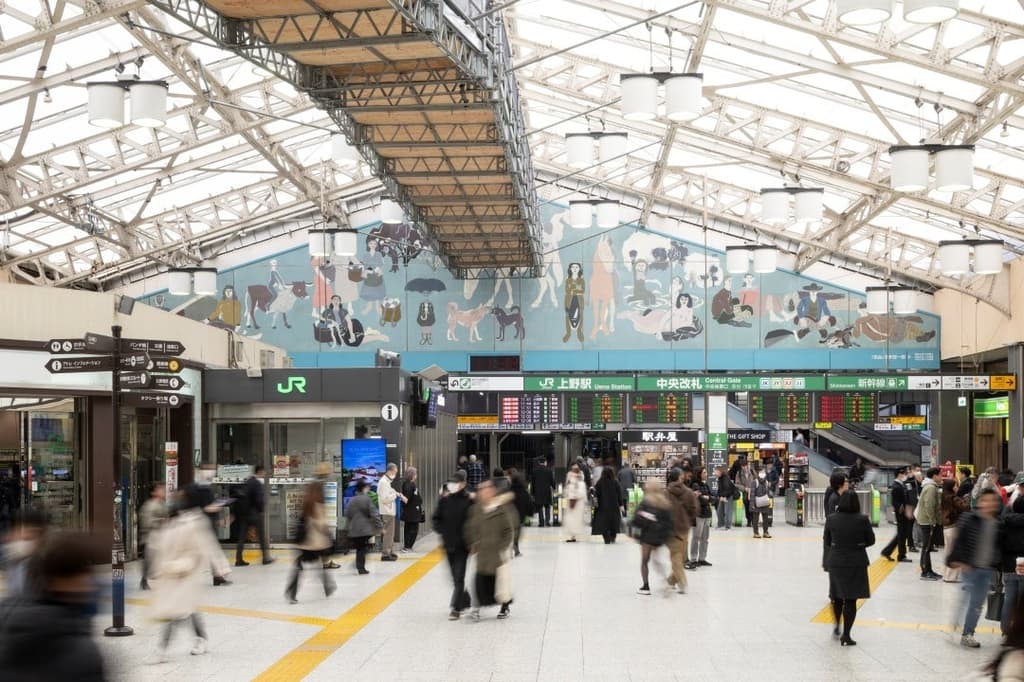
Genichiro Inokuma's Freedom, 1951. Photo: Keizo Kioku (February 2025)
The Mural That Watched Over Tokyo's Northern Gateway
At the central ticket gate of JR East's Ueno Station hangs Freedom, a massive mural by Genichiro Inokuma (1902-1993). Created in 1951 during the chaotic postwar period, this artwork has become a symbolic presence at what is known as Tokyo's "Northern Gateway." For over 70 years, it has watched over the countless travelers passing through the station.
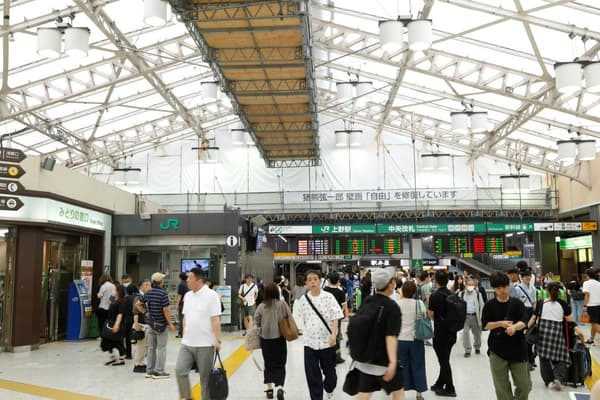
JR Ueno Station Grand Concourse during Freedom restoration. Photo: Keizo Kioku (June 2025)
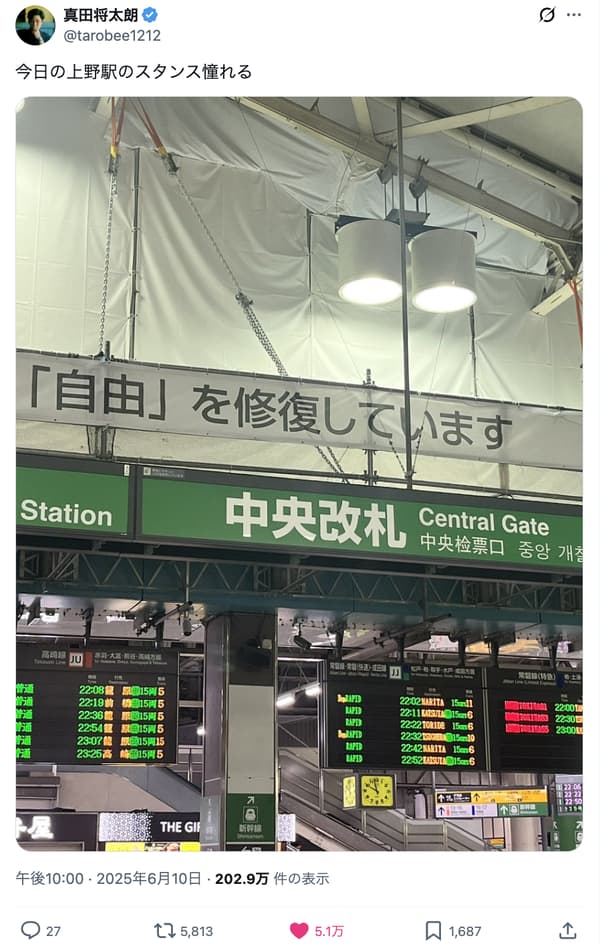
Reference: X post by Shotaro Sanada © Shotaro Sanada
Due to material shortages during its creation and the open environment of a train station, the mural has been vulnerable to deterioration. It has undergone three major restorations to preserve it for future generations. The third restoration began in May 2025, and the banner placed in front of the mural reading "Restoring Freedom" sparked interest on social media, bringing renewed attention to the artwork itself.
As part of the ongoing renovation of JR Ueno Station's Grand Concourse, creative unit SPREAD has developed "Freedom Colors" by sampling and modernizing the color palette from the mural to harmonize the entire space.
This exhibition introduces Freedom from its origins to the present day. It offers an opportunity to reconsider the thoughts embedded in both the title Freedom and Inokuma's words: "Painting should not be monopolized but should please and guide more people, and should be for the benefit of many."
Exhibition Highlights
Tracing the History of Ueno Station and Freedom
Ueno Station opened in 1883 and celebrated its 140th anniversary in 2023. The exhibition presents a timeline of this historic station alongside the mural Freedom, which became a symbol of the "Northern Gateway" when it was created in 1951, showing how the artwork has been an integral part of the station's identity.
Experiencing the Scale of Freedom
To convey the monumental scale of the mural measuring approximately 27 meters wide and 5 meters tall, the exhibition recreates the outer frame at actual size on the gallery walls. Part of the mural, depicting northern landscapes, is displayed through life-size photographs.
Introducing the Restoration Process
The exhibition presents the meticulous restoration work from the third major restoration through photographs and actual tools used in the process, offering views rarely seen by the public.
Harmonizing Space with Freedom Colors
The exhibition introduces SPREAD's project using Freedom Colors, a color palette sampled from the mural, to create harmony throughout the station's renovated space.
Exhibition Structure
Chapter 1: About Ueno Station
Ueno Station opened in 1883 (16th year of Meiji) and celebrated its 140th anniversary in 2023 (5th year of Reiwa). As one of Tokyo's representative stations, it has been cherished as the "Northern Gateway" for trains bound for the Tohoku and Hokuriku regions. While serving as a major transportation hub with heavy passenger traffic, the surrounding area features the nature-rich Ueno Park, diverse cultural facilities, historic neighborhoods, and atmospheric downtown culture.
The exhibition traces Ueno Station's history through a timeline, introducing its role and characteristics, while providing an overview of how Inokuma's Freedom has evolved as part of the station's history.
With cooperation from East Japan Railway Company, the exhibition also features the film "Famous Trains Departing from Ueno," produced by the company and shown at JR Ueno Station, offering special insight into the station's appeal.
Chapter 2: About the Mural Freedom
Genichiro Inokuma, Freedom (original painting), 1951
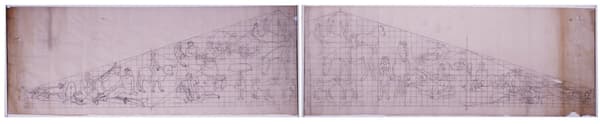
The exhibition introduces the circumstances surrounding the mural's creation, the production process at the time, and the artist's intentions through sketches and archival materials.
To help visitors experience the massive scale of the approximately 27-meter-wide, 5-meter-tall mural, the outer frame is recreated at actual size on the gallery walls, with portions of the artwork reproduced through life-size photographs.
Additionally, another actual-size frame painted in a single color will be gradually filled with lines and colors by participants through related programs during the exhibition period.
*Related programs will be held. Details will be announced as they are finalized.
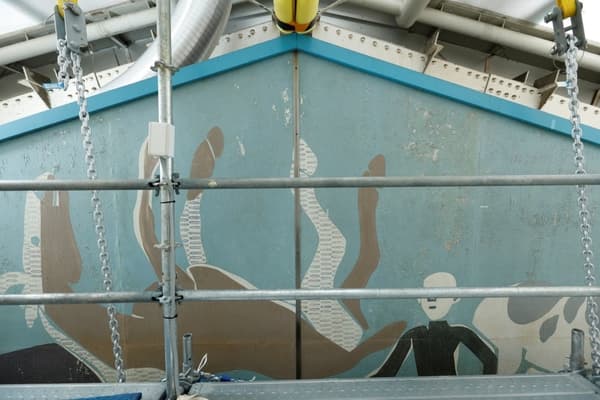
Freedom during restoration (detail). Photo: Keizo Kioku (June 2025)
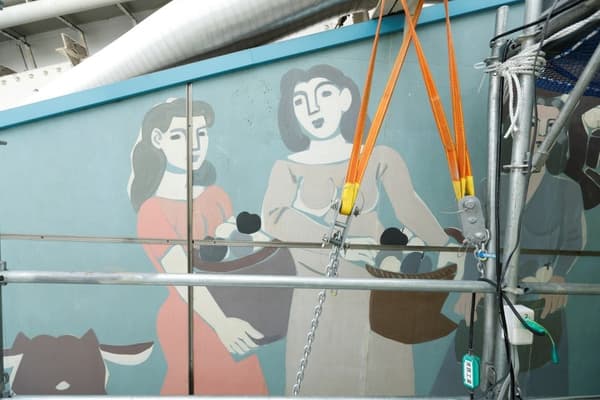
Freedom during restoration (detail). Photo: Keizo Kioku (June 2025)
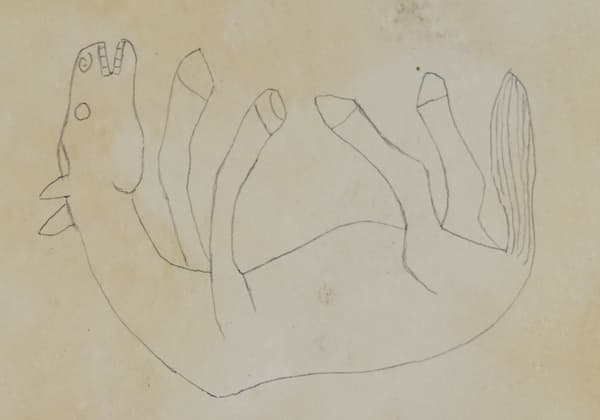
Genichiro Inokuma, Freedom (sketch), 1951
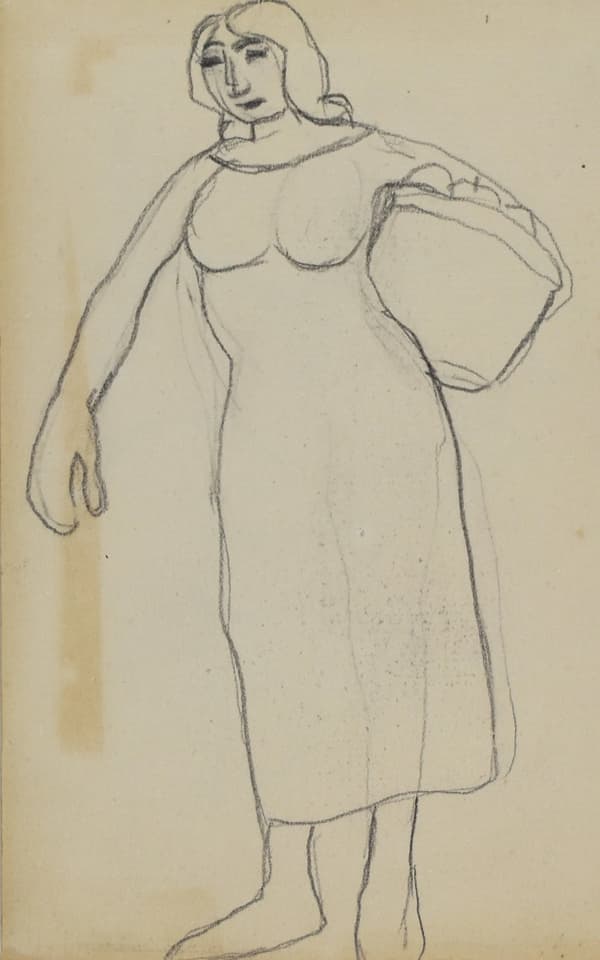
Genichiro Inokuma, Freedom (sketch), 1951
Chapter 3: The Future of Ueno Station and Freedom
Currently, large-scale renovation work is underway at JR Ueno Station's Grand Concourse. This chapter introduces two projects related to the Freedom mural.
① Third Major Restoration
The same meticulous and careful restoration work applied to small canvas paintings was performed on the massive mural over a period of more than six months. The work was carried out by Conservation Studio XXI, Ltd., which also handled the previous restoration in 2002.
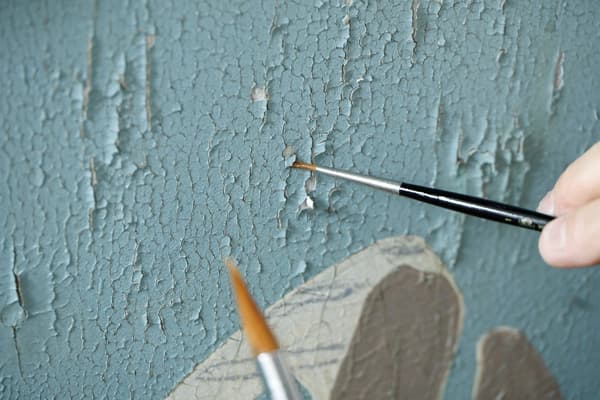
Freedom restoration in progress. Photo: Keizo Kioku (June 2025)
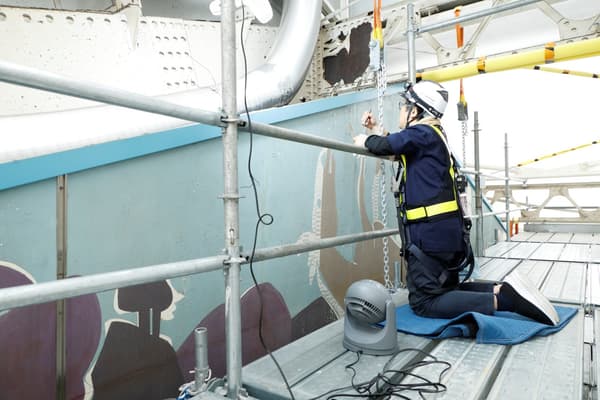
Freedom restoration in progress. Photo: Keizo Kioku (June 2025)
Conservation Studio XXI, Ltd.
Founded in 1972, the studio handles restoration of oil paintings, watercolors, prints, drawings, and works in other categories owned by museums, art galleries, and private collectors throughout Japan. They have restored numerous works by Genichiro Inokuma, including the mural Democracy at Keio University's student cafeteria in 2008.
② Freedom Colors
To harmonize the entire space, creative unit SPREAD sampled colors from Freedom and arranged them in a modern way to create "Freedom Colors." The exhibition introduces this creative process.
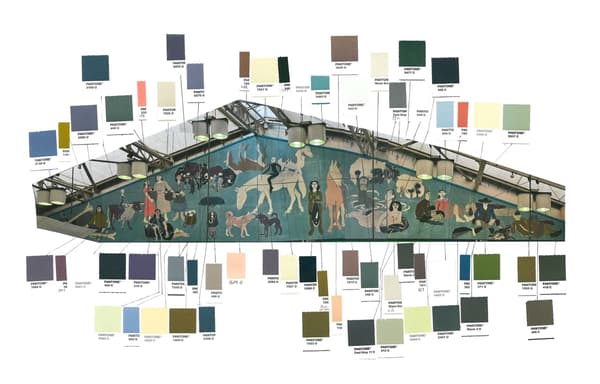
SPREAD, Color sampling from Freedom (first round), 2024
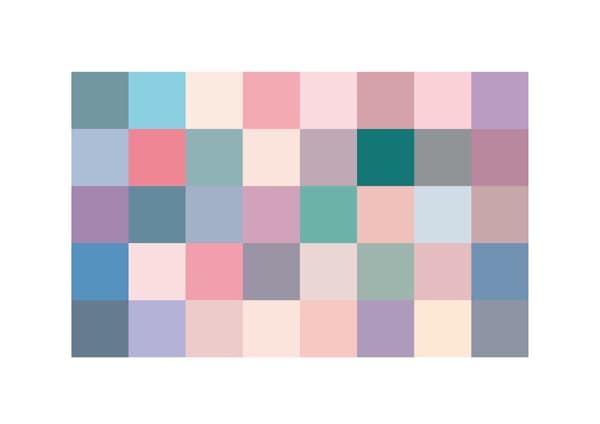
SPREAD, UENO FREEDOM COLOR, 2024
SPREAD
A creative unit launched in 2004 by Haruna Yamada and Hirokazu Kobayashi. Their motto is to "incorporate all memories and 'SPREAD' creativity," and they handle graphic, product, and exhibition design and direction. In 2025, they directed the exhibition "Genichiro Inokuma: Form, People, Living—Secrets and Beauty in Our Surroundings" at Shikoku Mura Gallery in Takamatsu.
Related Programs
Curator Talks
The exhibition curator (Kanako Furuno) will discuss highlights with visitors in the gallery.
Dates: March 1 (Sun), April 5 (Sun), May 3 (Sun), June 7 (Sun), 2026, each day at 2:00 PM
Admission: Free (separate exhibition ticket required), no reservation needed
Parent-Child MIMOCA Days
For each visitor under 18 or in high school or below, up to two accompanying adults receive free admission.
Dates: April 25 (Sat) and 26 (Sun), 2026, 10:00 AM to 6:00 PM (last entry 5:30 PM)
*Additional related programs will be announced on the museum's website as they are confirmed.
Artist Profile
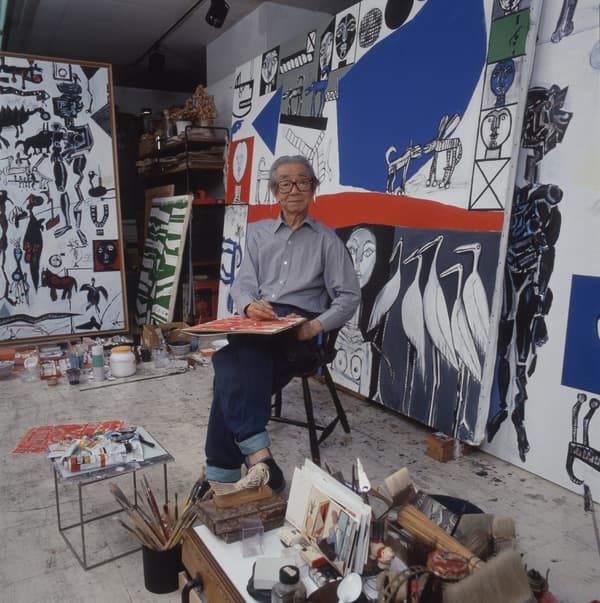
Photo: Akira Takahashi
Genichiro Inokuma
- 1902: Born in Takamatsu City, Kagawa Prefecture. Spent childhood in Kagawa.
- 1921: Graduated from former Marugame Middle School (current Kagawa Prefectural Marugame High School).
- 1922: Entered Tokyo School of Fine Arts (current Tokyo University of the Arts), studying in Takeji Fujishima's studio.
- 1926: First acceptance at the 7th Imperial Art Academy Exhibition.
- 1936: Co-founded the Shin Seisaku-ha Kyokai (current Shin Seisaku Association) with peers of his generation, which became his exhibition platform thereafter.
- 1938: Moved to France, establishing a studio in Paris (until 1940). Studied under Henri Matisse during his time in France.
- 1950: Designed the Mitsukoshi department store wrapping paper "Hana Hiraku" (Flowers Blooming).
- 1951: Created the large-scale mural Freedom at Japanese National Railways Ueno Station (current JR East Ueno Station).
- 1955: Moved to the United States, establishing a studio in New York.
- 1975: Closed New York studio and returned to Tokyo. Began creating in Hawaii during winters.
- 1984: Freedom underwent its first restoration to commemorate Ueno Station's centennial.
- 1989: Donated 1,000 works to Marugame City.
- 1991: Marugame Genichiro-Inokuma Museum of Contemporary Art opened.
- 1993: Passed away at age 90.
- 2002: Freedom underwent its second restoration during major renovation of Ueno Station.
- 2025: Third restoration of Freedom began in conjunction with the renewal of Ueno Station's Grand Concourse.
Exhibition Information
Exhibition Title: Ueno Station and Genichiro Inokuma's Freedom
Venue: Marugame Genichiro-Inokuma Museum of Contemporary Art
Address: 80-1 Hamamachi, Marugame City, Kagawa Prefecture
Period: March 1 (Sun) to June 28 (Sun), 2026
Hours: 10:00 AM to 6:00 PM (last entry 5:30 PM)
Closed: Mondays (except May 4, which is open), May 7 (Thu)
Admission:
- General: ¥1,500 (group rate ¥1,200, citizen rate ¥900)
- University students: ¥1,000 (group rate ¥800, citizen rate ¥600)
- High school students and under, or under 18 years old, Marugame City residents aged 65 and over, and holders of various disability certificates and one caregiver: Free
*Includes admission to the concurrent permanent exhibition "Genichiro Inokuma Exhibition: From Age 20 to 90."
*Group rate applies to groups of 20 or more.
*Citizen rate applies to Marugame City residents. Documentation (driver's license, insurance card, etc.) required at ticket purchase. Cannot be combined with other discounts including group rate.
Organizers: Marugame Genichiro-Inokuma Museum of Contemporary Art, MIMOCA Art Promotion Foundation, Japan Arts Council, Agency for Cultural Affairs
Inquiries: 0877-24-7755
Part of the Japan Cultural Expo 2.0 (commissioned project) for Reiwa 7
Ticket Purchase Information
Tickets for this exhibition are also available through "JRE MALL Tickets," an online ticket sales site operated by JR East. Details will be announced on the site once the sales start date is confirmed.
About Marugame Genichiro-Inokuma Museum of Contemporary Art (MIMOCA)
Over 30 Years of Activity Since 1991 Opening
Opened on November 23, 1991, in front of JR Marugame Station. Inheriting Genichiro Inokuma's vision for a "contemporary art museum" that actively introduces new expressions of the time, the museum develops diverse programs including permanent exhibitions centered on Inokuma's works, special exhibitions focusing on contemporary art, and workshops for children. The museum houses approximately 20,000 works including paintings and drawings left by Genichiro Inokuma. Through permanent and special exhibitions, it deeply and broadly introduces Inokuma's activities, including the small sculptural works he called "dialogue sculptures" and the extensive collection that the Inokuma couple gathered from various locations to enrich their life.
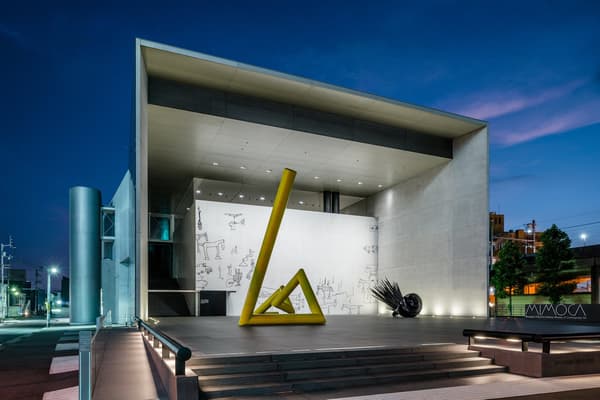
Photo: Yoshiro Masuda
As a Museum Specializing in Contemporary Art
The museum focuses on contemporary art, presenting exhibitions featuring the activities of artists from Japan and abroad. Past solo exhibitions include works by Jan Fabre, Marina Abramović, Marlene Dumas, Ernesto Neto, Hiroshi Sugimoto, Chiharu Shiota, Takashi Homma, and Miyako Ishiuchi, while actively engaging with emerging artists such as Teppei Kaneuji, Taketo Koganezawa, Rieko Shiga, and Koji Nakazono. In recent years, the museum launched "MIMOCA EYE," a public call for young artists. It also focuses on creative expressions of the times, expanding into fashion, furniture design, and contemporary architecture.
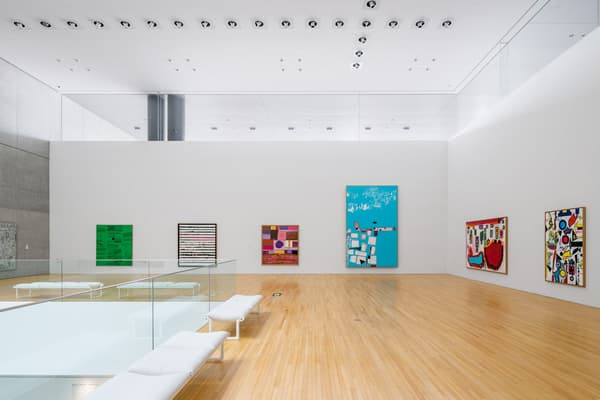
Photo: Yoshiro Masuda
Beautiful Architecture Designed by Yoshio Taniguchi
The museum was designed by Yoshio Taniguchi, who has received high acclaim for numerous museum architecture projects. Through dialogue with Inokuma, the ideals of both artist and architect are realized down to the finest details. The expansive facade, featuring Genichiro Inokuma's massive mural Creative Plaza, gently connects the station plaza and the building. Inside, an open space filled with abundant natural light unfolds. On the second floor are two exhibition rooms with contrasting proportions, leading to the third-floor exhibition room with a generous ceiling height of approximately 7 meters.
Additionally, the grand staircase on the front left connects to a public space that enables various approaches to art. The second-floor Art Center includes a library, hall, and studio, while the Cascade Plaza and cafe at the rear of the third floor provide visitors with comfortable experiences.
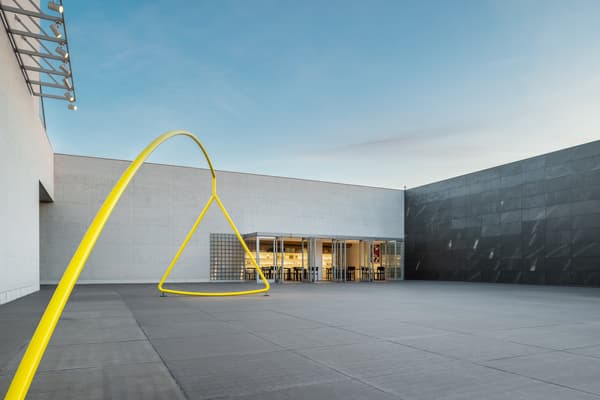
Photo: Yoshiro Masuda