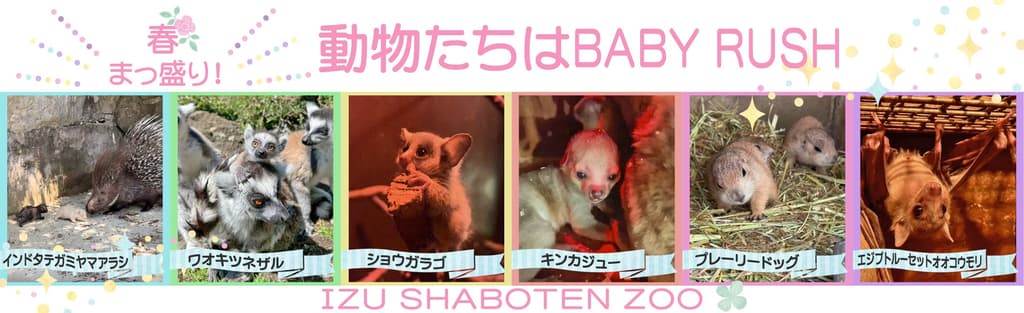
Izu Shaboten Animal Park is in the midst of a baby boom this spring, with six different animal species welcoming newborns between February and April 2026.
Indian Crested Porcupine
English name: Indian crested porcupine
Scientific name: Hystrix indica
Order / Family: Rodentia, Hystricidae
Distribution: India
Indian crested porcupines are herbivores that feed mainly on plant roots and fruits. Skilled diggers, they create underground burrows and live in groups. Their name comes from the long, dark mane running from the head to the shoulders. The back and sides are covered in black-and-white patterned quills reaching about 50 cm in length, which they raise to ward off predators.
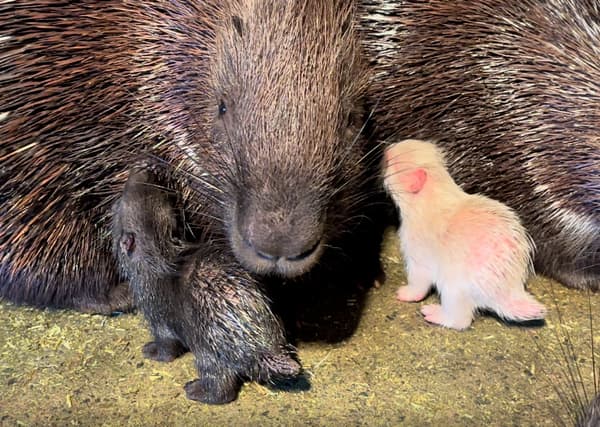
Two Indian crested porcupine babies (approx. 15 cm long, approx. 400 g each) were born on Tuesday, April 7, 2026, at the Porcupine Exhibit in the Taiyō no Hiroba area. Just like the twins born last April, one baby has dark-brown fur matching its parents, while the other is white — siblings born at the same time with different coat colors.
As nocturnal animals, they spend much of the day resting in the shade of U-shaped drainage channels inside the exhibit. Early morning and late afternoon feeding times offer the best chances to see them active.
Ring-Tailed Lemur
English name: Ring-tailed lemur
Scientific name: Lemur catta
Order / Family: Primates, Lemuridae
Distribution: Southern Madagascar
Ring-tailed lemurs live in female-dominant groups of up to about 20 individuals, spending most of the day on the ground. Their most recognizable feature is the long tail with alternating black-and-white bands. At the park, the breeding season runs from autumn to early winter, with a gestation period of approximately 135 days; mothers give birth to one or two offspring at a time. Babies begin riding on their mother's back around 2 to 3 weeks after birth and start eating solid food at around one month.
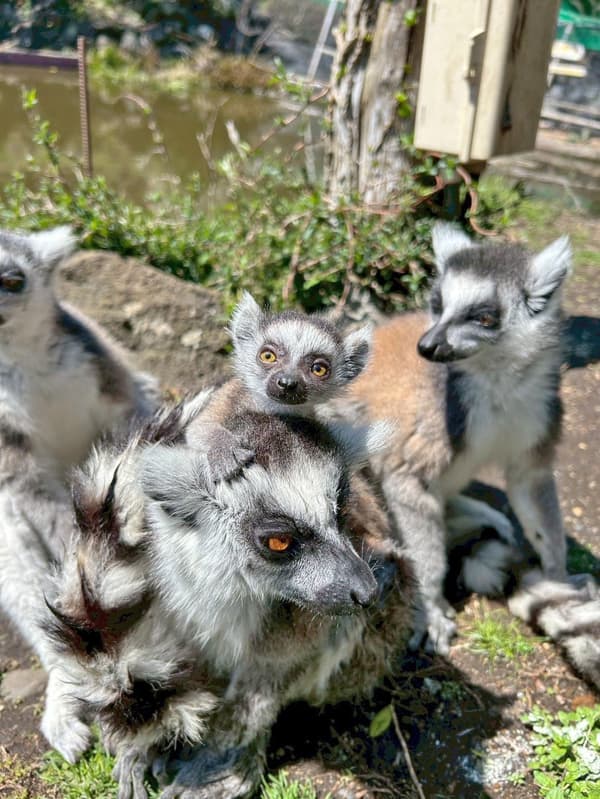
One ring-tailed lemur was born on Friday, March 20, 2026, on the Ring-Tailed Lemur Island of the Animal Boat Tours attraction, and another was born on Thursday, March 26, 2026, in the Squirrel Monkey Tunnel. The babies, who were initially clinging to their mother's belly, have recently been seen moving onto her back and interacting with other members of the group.
Note: The Animal Boat Tours attraction requires a separate fee in addition to park admission and may be cancelled due to weather.
Lesser Galago
English name: Lesser galago
Scientific name: Galago senegalensis
Order / Family: Primates, Lorisidae
Distribution: Sub-Saharan Africa
Lesser galagos are small nocturnal prosimians that inhabit wooded and shrubby areas, living either alone or in social groups. They are omnivores, feeding on leaves, fruit, small animals, and insects. Their long tails help with balance in the trees, and their powerful hind legs allow them to leap to branches up to 3 meters away. The gestation period is 120 to 140 days, with one to two offspring born per litter.
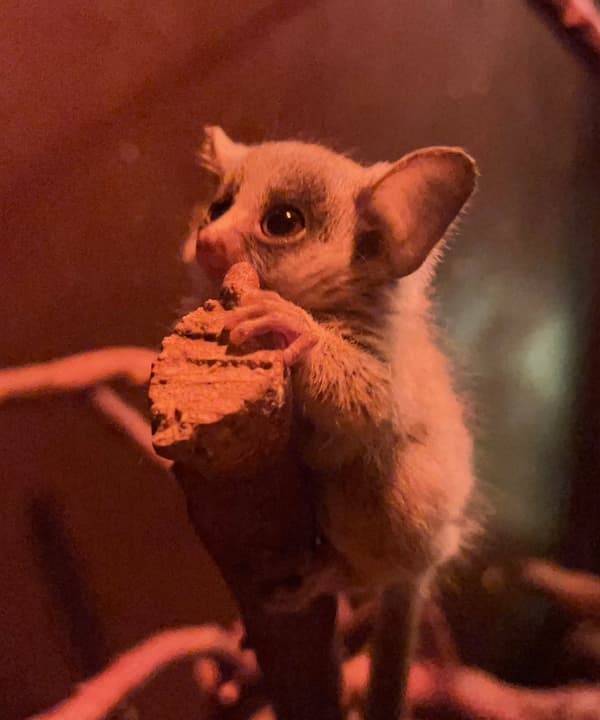
Twin lesser galago babies (approx. 5 cm long, approx. 50 g each) were born on Thursday, March 19, 2026, in the nocturnal animal area on the first floor of the Waku Waku Monkey House. After spending time quietly in the nest box, the babies have recently been observed playing on their own inside the exhibit.
Kinkajou
English name: Kinkajou
Scientific name: Potos flavus
Order / Family: Carnivora, Procyonidae, genus Potos
Distribution: Forests from southern Mexico to central Brazil
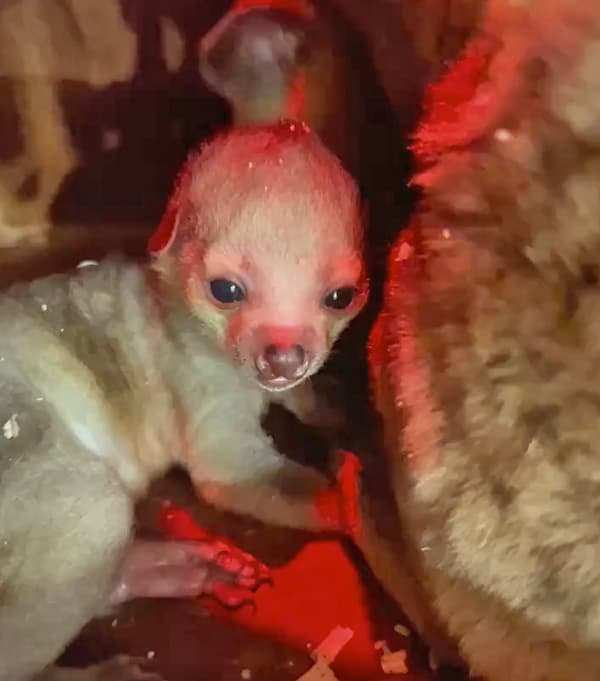
Kinkajous are arboreal animals that live primarily in the tree canopy, using their long, strong prehensile tails to move through the forest. Nocturnal with large eyes, they feed on fruits such as avocado, guava, and mango, as well as insects. The gestation period is 112 to 120 days, and typically one offspring is born per litter, though twins are occasionally recorded. Newborns weigh around 150 to 200 g and grow to 2 to 4 kg as adults.
One kinkajou baby (approx. 15 cm long, tail approx. 20 cm, approx. 200 g) was born on Tuesday, March 10, 2026, at the Kinkajou Exhibit on the second floor of the Waku Waku Monkey House. The baby is currently living inside the nest box, but visitors may be able to see it playing in the exhibit from around one and a half months of age.
Prairie Dog
English name: Black-tailed Prairie Dog
Scientific name: Cynomys ludovicianus
Order / Family: Rodentia, Sciuridae
Distribution: Grasslands of North America and northern Mexico
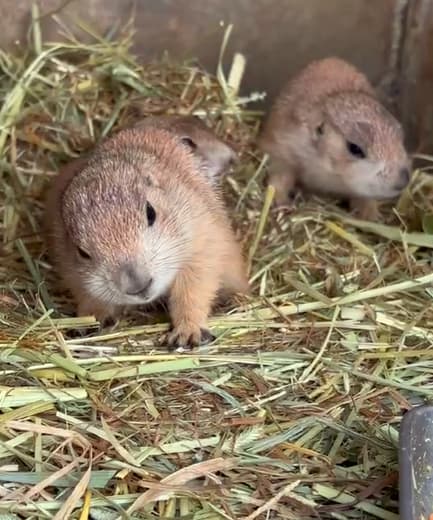
Prairie dogs inhabit grasslands and savannas and, unlike most members of the squirrel family, live in large colonies. Highly alert, they post sentinels near their burrows to keep watch. When danger approaches, the lookout emits a warning call resembling a dog's bark — the origin of their name. The gestation period is approximately 35 days, with litters of three to four offspring.
At the Prairie Dog Exhibit in the Rock Garden, three babies were born on Tuesday, March 3, 2026, and four more on Wednesday, March 11, 2026. The babies (approx. 5 cm long, approx. 20 g each) are still living underground, but they should begin emerging into the exhibit at around two months of age.
Egyptian Fruit Bat
English name: Egyptian fruit bat
Scientific name: Rousettus aegyptiacus
Order / Family: Chiroptera, Pteropodidae
Distribution: Caves from the Middle East to northeastern Africa
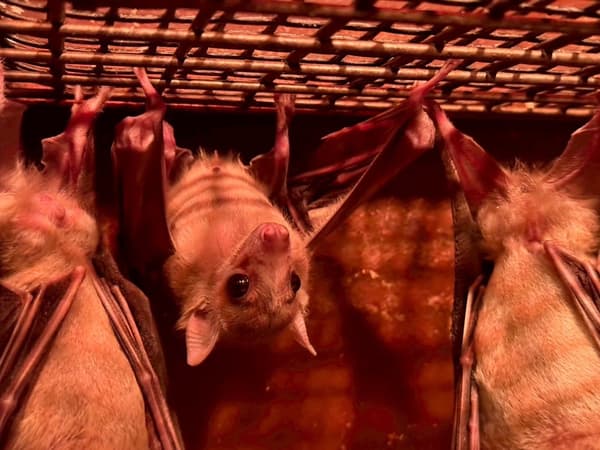
Egyptian fruit bats are small members of the fruit bat family, living in caves and mangrove forests in large colonies. They feed mainly on fruit and flower nectar, using their large eyes to locate food. Among small fruit bats, they are the only species known to produce echolocation calls, using the reflected sound to navigate through dark caves without colliding with obstacles.
One Egyptian fruit bat baby (approx. 5 cm long, approx. 30 g) was born on Tuesday, February 10, 2026, in the nocturnal animal area on the first floor of the Waku Waku Monkey House. The baby, which was initially clinging to its mother's belly, can now be seen moving around independently on its own.