A new tableware series that gives discarded ceramic materials a second life has begun rolling out. The "NEO CLAY® × TSUMUGI" series went on sale from February 25, developed through a collaboration between Toyo Ceramics and General Incorporated Association Upcycle's TSUMUGI project.
The Materials Behind the Series
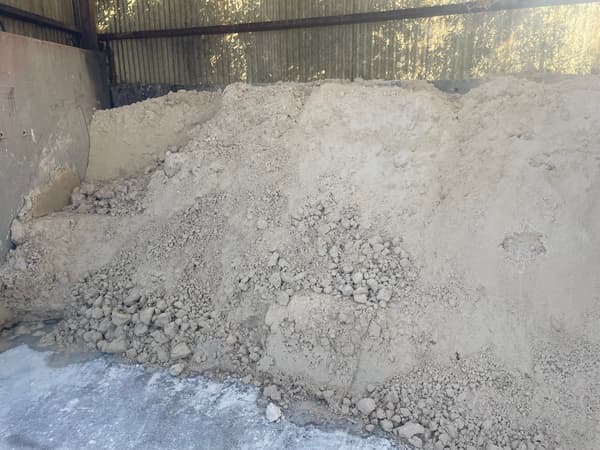
During the production of Arita ware porcelain clay, a byproduct called "kei" (silica) is generated. This component lacks the viscosity needed for ceramic molding and had previously been discarded as industrial waste — with roughly 300–400 tons produced per year and disposal costs reaching approximately ¥10 million annually. At the same time, resource depletion has long been a concern for Japan's ceramics industry as a whole.
In response to both issues, Toyo Ceramics developed "NEO CLAY®" by finely grinding the kei material and blending it with other compounds to achieve the viscosity required for shaping, successfully transforming what was once waste into a usable ceramic clay.
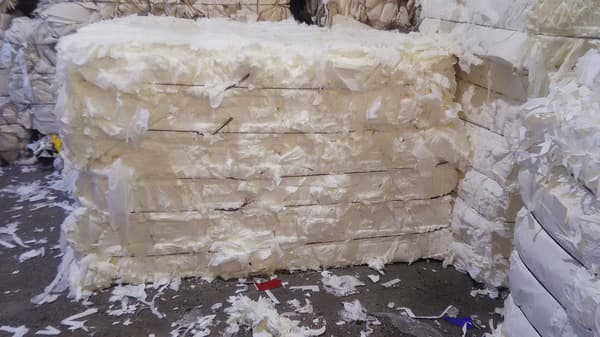
For the TSUMUGI collaboration, pulp — the intermediate stage of paper resources before they become paper thread — is incorporated as a pigment component within the NEO CLAY® formula, adding another layer of upcycled material to the product.
Product Overview
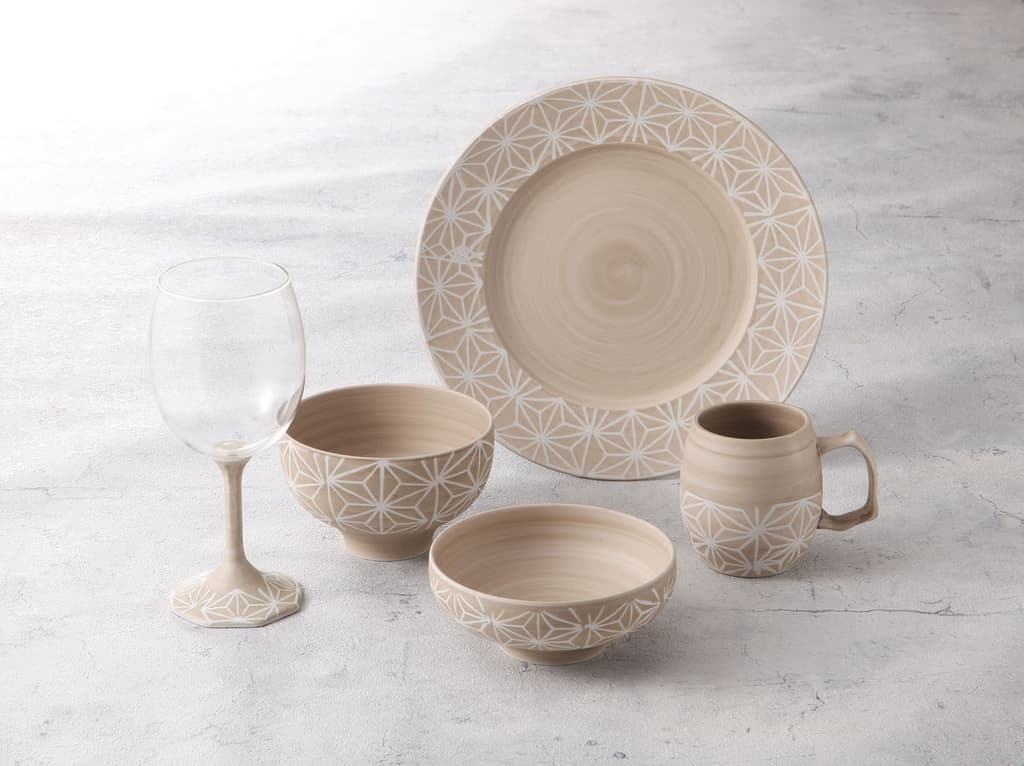
Unlike traditional Arita ware, which is typically finished with a smooth white glaze, the NEO CLAY® × TSUMUGI series is intentionally left unglazed to showcase the naturally rough, textured surface characteristic of kei material. Each item is available in three designs — Asanoha (hemp leaf pattern), Wakaba (young leaves pattern), and hand-painted sumi-e arabesque — for a total of 15 product variations across 5 item types.
Despite the advanced technical process required to reclassify waste kei into viable ceramic clay, production costs have been kept largely comparable to conventional Arita ware.
Asanoha (Hemp Leaf) Pattern
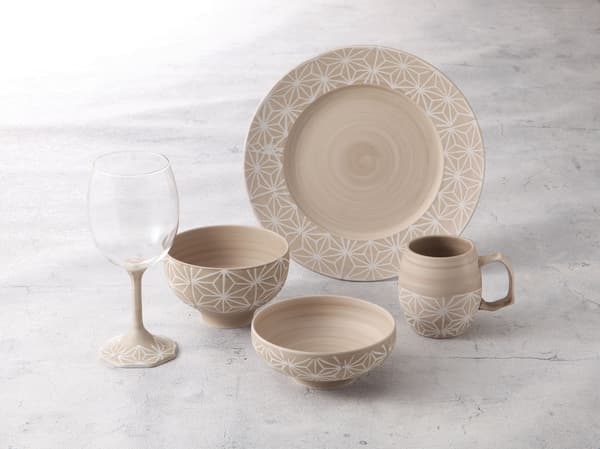
- Dinner plate (23 cm): ¥3,750 (excl. tax)
- Bowl (11.5 cm): ¥2,400 (excl. tax)
- Flat bowl (12.5 cm): ¥2,350 (excl. tax)
- Casual wine glass: ¥3,300 (excl. tax)
- Mug: ¥2,850 (excl. tax)
Wakaba (Young Leaves) Pattern
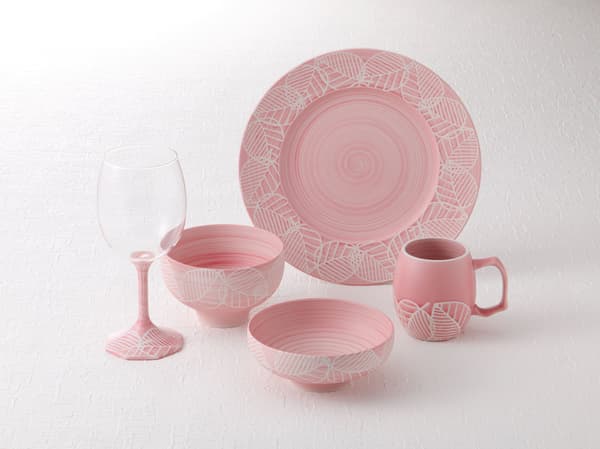
- Dinner plate: ¥3,600 (excl. tax)
- Bowl: ¥2,250 (excl. tax)
- Flat bowl: ¥2,200 (excl. tax)
- Casual wine glass: ¥3,300 (excl. tax)
- Mug: ¥2,750 (excl. tax)
Hand-Painted Sumi-e Arabesque Pattern
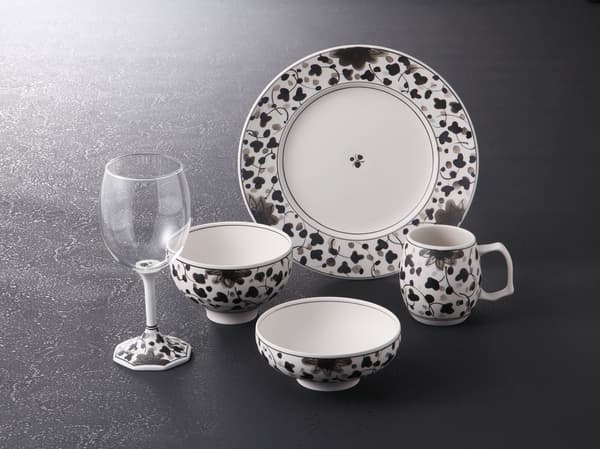
- Dinner plate: ¥4,800 (excl. tax)
- Bowl: ¥2,750 (excl. tax)
- Flat bowl: ¥2,700 (excl. tax)
- Casual wine glass: ¥3,600 (excl. tax)
- Mug: ¥3,300 (excl. tax)
Where to Buy
The series is available from February 25 at the following locations. Note that the casual wine glass is scheduled to go on sale from late March onward.
- Toyo Ceramics store — Arita Ceramics Park (Arita-cho, Nishimatsuura-gun, Saga)
- TSUMUGI store — Nanukamachi, Aizuwakamatsu, Fukushima
- Nescafe Harajuku — Jingumae, Shibuya, Tokyo
- Toyo Ceramics EC site: https://www.toucera.co.jp/
- TSUMUGI EC site: https://tsumugi-upcycle.com/
About the TSUMUGI Project
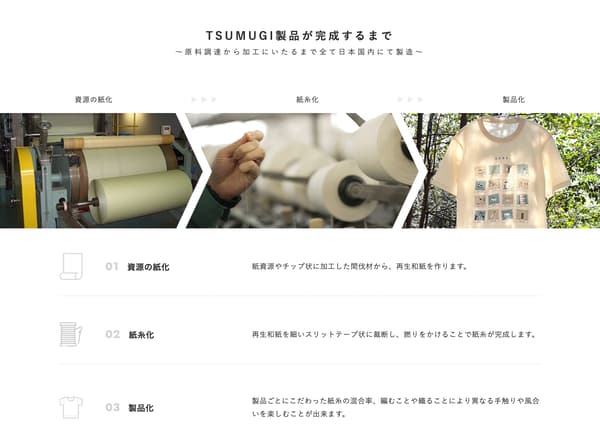
The TSUMUGI project transforms used paper resources and unused thinned timber such as Japanese cypress into paper thread. The project name reflects the aspiration to "spin" connections between people, the earth, and local communities. For the NEO CLAY® × TSUMUGI series, pulp from the project is channeled into ceramic pigments, giving discarded paper resources a new purpose as part of functional tableware.
The collaboration also aims to raise wider awareness of Arita ware culture — an industry with over 400 years of history that currently faces challenges including declining orders and a shortage of successors. The products are sold not only in Arita but also in Tokyo, Aizuwakamatsu, and via online stores, with the goal of spreading the NEO CLAY® technology and Arita ware culture to audiences across Japan.