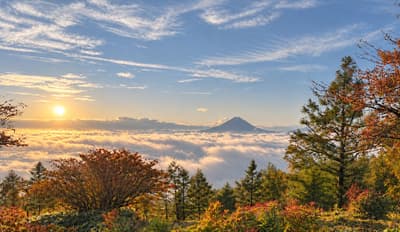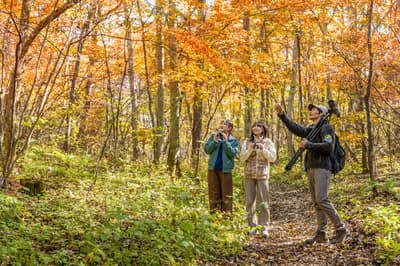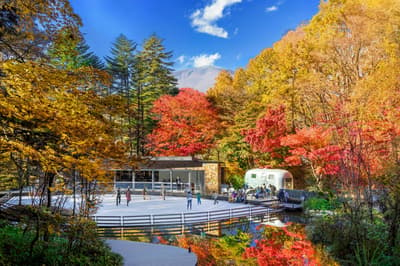
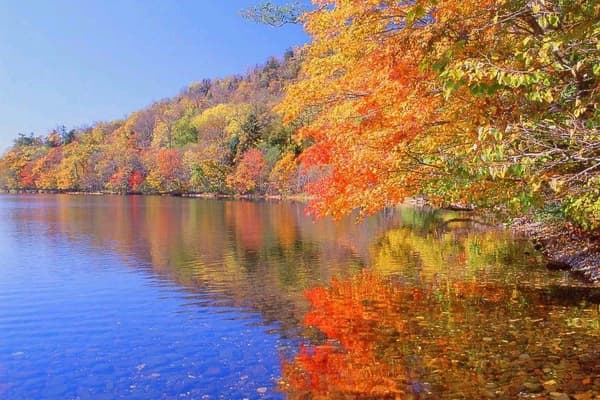
Teshikaga, in eastern Hokkaido, usually reaches peak autumn color from late September through October. Beyond a quick drive through the leaves, the town points to a few ways to slow down and take in the season: a scenic drive through gradients of color, trekking and canoeing to enjoy the foliage up close, and a tour of foot baths to rest travel-worn feet.
A Scenic Drive Through Autumn's Gradients
It's often said that driving through is a shame, but a leisurely autumn drive is still one of the easiest ways to enjoy the season. This year's Silver Week is a good chance to explore autumn Teshikaga by car.
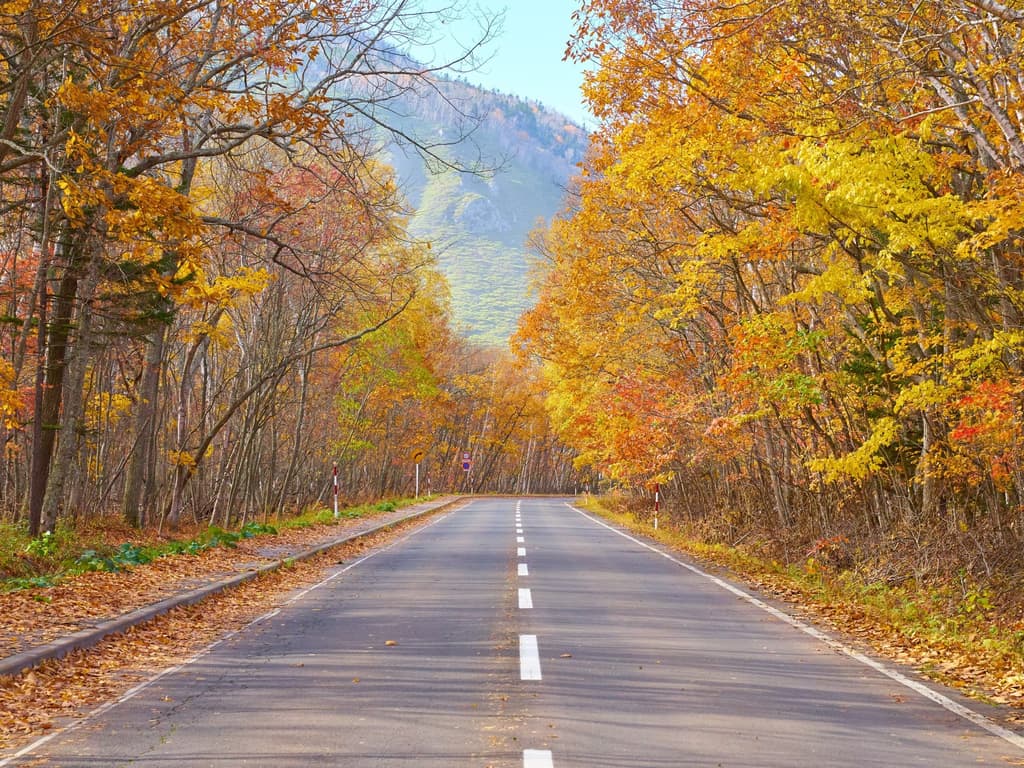
Many spots around Teshikaga have trees forming natural arches over the road, making for a striking "tunnel of autumn leaves" to drive beneath. From viewpoints such as Bihoro Pass and Tsubetsu Pass overlooking Lake Kussharo, you can also take in a sweeping gradient of fall color spread out below.
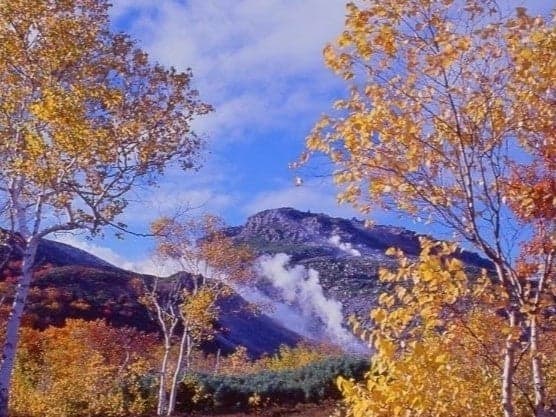
One standout route is Hokkaido Prefectural Road 52, known as the "Mashuko Iozan Sky Road," running from Lake Mashu toward Kawayu Onsen.
The foliage along the descent from Lake Mashu is beautiful in its own right, but the stretch from National Route 391 onto Prefectural Road 52 toward Mount Io is especially striking: the soft, sun-dappled greenery of summer gives way in autumn to a vivid tunnel of color.
Continuing through Kawayu Onsen and along the shore of Lake Kussharo, the road runs for about 15 km through a corridor of fall foliage — an unusually long stretch to find in Japan. Color lines the road from every direction, and the contrast with the lake's blue surface adds to the sense of scale.
Activities to Take In the Season
As autumn arrives, cooler air makes it a good season for getting outside. Moving through color-filled trees under clear skies is an experience of its own.
To get closer to Teshikaga's autumn, trekking and canoeing are the top picks — a slower way to take in the leaves than passing by on a drive.
Recommended trekking courses
Beginner
Tsutsujigahara Nature Trail
Distance: about 2.8 km, time: about 1 hour, elevation change: about 20 m
Starting from the Mount Io side, the trail passes through changing vegetation — from creeping pine to Labrador tea shrubs, broadleaf forest, and conifers. Starting instead from Kawayu Onsen, walkers head toward the steaming active volcano Mount Atosanupuri ahead of them, so the direction you walk changes the scenery entirely.
Beginner to intermediate
Wakoto Peninsula Nature Trail
Loop: about 2.5 km, time: about 1 hour, elevation change: about 20 m
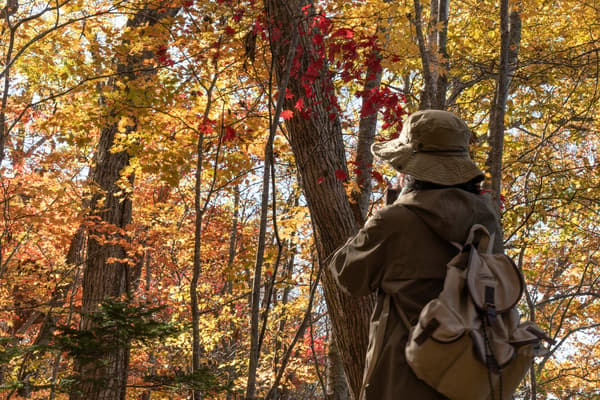
Starting at the Wakoto Field House, this loop around the Wakoto Peninsula follows the contrast between Lake Kussharo's blue water and the surrounding fall color. Along the way, an observation deck offers unhurried lake views, and at the tip of the peninsula, Oyakotsu Jigoku lets visitors watch dynamic volcanic activity up close. A variety of trees line the path, making it an appealing route for viewing autumn leaves at close range.
Advanced
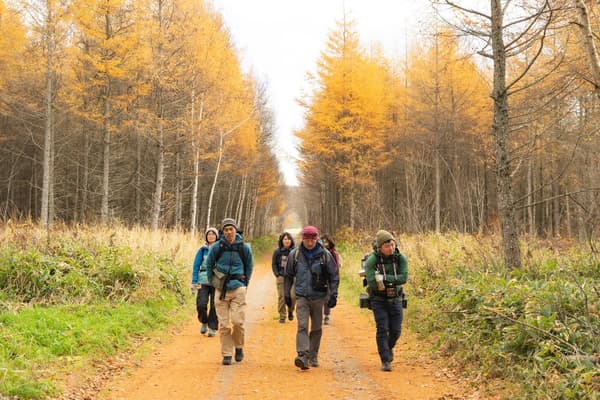
More experienced hikers can take on the 410 km 北海道東トレイル, a trail linking the Shiretoko, Akan-Mashu, and Kushiro Shitsugen national parks and surrounding areas, or the 62.5 km 摩周・屈斜路トレイル (Mashu-Kussharo Trail) within Akan-Mashu National Park. Both can be walked in full or broken into sections, but much of the route has little public transport or shopping, some sections have no cellphone signal, and hikers should prepare for wildlife and insects and take care on trails without a footpath. Plan and prepare thoroughly before setting out.
Recommended canoe routes
Wakoto Peninsula
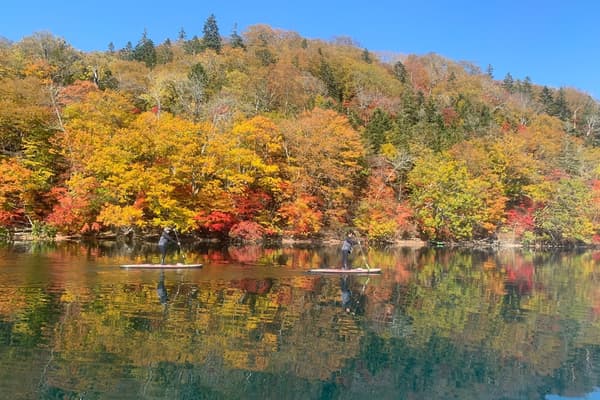
For a different perspective on autumn, try taking in the colors from the water. At Oyakotsu Jigoku, on the tip of the Wakoto Peninsula, some tours let paddlers land — weather permitting — to boil eggs in the hot spring or relax over tea. The autumn leaves reflected on the water also draw plenty of photographers. Because sunset comes earlier from autumn onward, guided tours often end early, so it's worth checking the schedule in advance.
Kushiro River headwaters
The Kushiro River begins at Lake Kussharo, and the stretch between the lake and Mashu Bridge is known as the river's headwaters. Paddling this stretch of untouched nature and clear water offers a close, full-sensory way to experience the changing season.
For both routes, many guides recommend early-morning or evening tours.
A Foot Bath Tour to Warm Up After a Day Outside
After a day of driving or activities, a round of foot baths surrounded by autumn color is a good way to rest tired feet.
Teshikaga has five public foot baths in total — three in the Kawayu area and two in the Mashu area — each with its own setting and water character.
Even a few minutes is enough: the warmth spreads from your toes, and the fatigue and swelling from walking around start to ease.
Kawayu area
- Kawayu Onsen town foot bath — open 24 hours (outdoor, roofed). Water type: acidic, sulfur- and iron-bearing sodium sulfate-chloride spring (hydrogen sulfide type). Set inside Kawayu Onsen Park in a gazebo-style structure with a roof and benches. The water has a sharp, strongly acidic feel, but even a short soak warms the whole body.
- Foot bath beside Kawayu Kanko Hotel — open 24 hours (outdoor, no roof). Same water type as above, drawn from a source closer to Kawayu Kanko Hotel. The temperature runs a little cooler than the town foot bath, so it's worth comparing the two.
- Kawayu Onsen Station foot bath — open April to October and November to March (indoor). Water type: acidic hydrogen sulfide spring, acidic sulfur spring. The only indoor foot bath in town, so it can be used regardless of cold, rain, or snow, and it's a popular spot while waiting for a train. Note that the station is unstaffed and has no announcements, so keep an eye on the time to avoid missing your train.
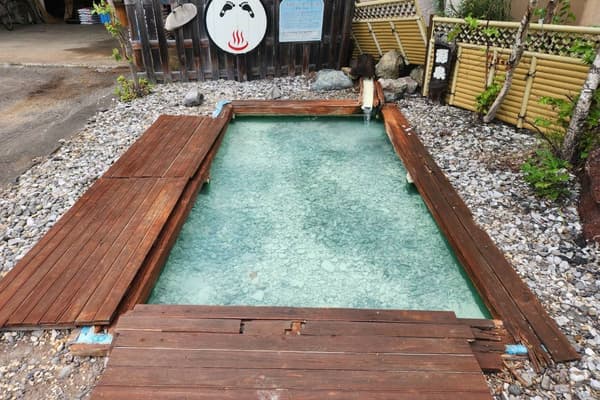
Mashu area
- JR Mashu Station Poppo-yu — open 24 hours (outdoor, roofed). Water type: mildly saline spring. Built in a rock-bath style with a small garden feel; the station building also houses a tourist information center, making it a convenient stop for gathering information on the area.
- Foot bath at Michi-no-Eki Mashu Onsen — open 24 hours (outdoor, roofed). Water type: alkaline simple spring. A popular stop at this roadside station, with a slightly hot, pleasant soak — it's common to see visitors chatting with the person seated next to them.
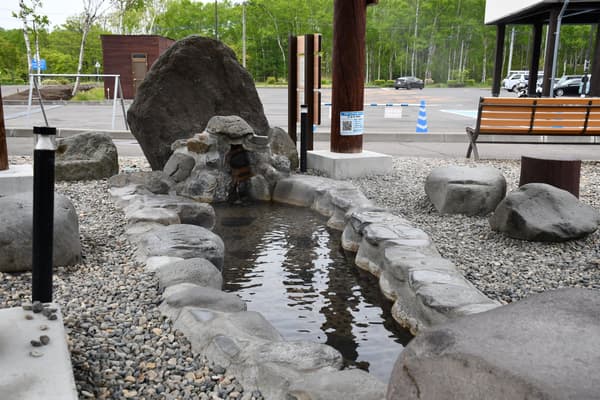
Bring a towel if you plan to use the foot baths, and please avoid splashing the seating area for the next visitor. If you don't have a towel, nearby shops sometimes sell them, so it's worth checking ahead.
Another Way to Enjoy the Season
Alongside the autumn colors, Teshikaga's Mashuko Tourism Association is running a LINE point rally called "Teshikaga Forest's Big Party." In the story-based event, players deliver invitations to woodland animals on behalf of a swan planning a party: adding the association's official LINE account and scanning QR codes posted at various spots around town reveals animals holding Teshikaga's local specialties, with the surprise of which animal appears left until each scan. Collected points can be used to enter prize drawings, and the event can be joined at any time and pace during the period.
Event period: August 8 (Saturday) to November 29 (Sunday), 2026
How to join:
- Add the Mashuko Tourism Association's official LINE account as a friend.
- Visit the spots in any order, scanning the QR code posted at each to collect points.
- Enter prize drawings based on the number of points collected.