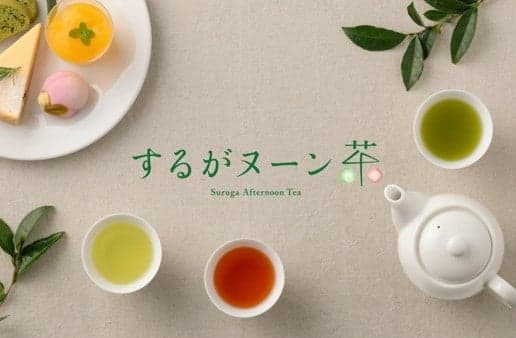
Suruga Afternoon Tea (するがヌーン茶), an afternoon tea event that pairs Shizuoka tea with sweets, will be held in the "Suruga region" of central Shizuoka Prefecture (Shizuoka City, Shimada City, Yaizu City, Fujieda City, Makinohara City, Yoshida Town, and Kawanehon Town). The event begins on November 1, 2026 (Sunday), Shizuoka City's "Tea Day."
Now in its fourth year, the event aims to share new appeals of Japanese tea at a time when fewer people brew tea in a teapot at home. Visitors can experience pairings of sweets with authentic tea brewed by professionals.
What Is Suruga Afternoon Tea?
Suruga Afternoon Tea is an afternoon tea event held in central Shizuoka Prefecture (the Suruga region), a tea-producing area shaped by a wide range of landscapes, from Mt. Fuji, Japan's highest mountain, to Suruga Bay, Japan's deepest bay. This year, 34 shops are taking part. Each offers two or more kinds of Shizuoka tea paired with carefully selected sweets, so visitors can enjoy the rich character of the tea and compare different varieties.
Three Features of Suruga Afternoon Tea
1) A Wide Variety of Teas and Sweets Pairings That Bring Out Their Characters
The Suruga region has many tea fields, from the coast along Suruga Bay to terraced tea fields in the mountains, and each area produces tea suited to its climate and terrain. Suruga Afternoon Tea reflects this diversity. Carefully selected Japanese and Western sweets are paired with each tea's aroma and flavor, including sencha made with different methods such as deep-steamed and light-steamed, as well as Japanese black tea and hojicha. The sweets are served on colorful stands and plates, offering a food experience found only here.
2) Authentic Japanese Tea Brewed by Professionals, Even Without a Teapot at Home
The Suruga region processes and ships tea gathered from across Japan, and is known for its advanced "gogumi" (合組) technique, or tea blending. Even for those without special knowledge or equipment, the event offers a chance to taste authentic Japanese tea made with the advanced blending skills of tea merchants. Every participating shop offers two or more kinds of Shizuoka tea, brewed carefully by tea professionals at the best water temperature and steeping time. Visitors can easily compare the differences in flavor between growing areas and production methods.
3) A Treat for Yourself in Spaces With Views of Mt. Fuji
The locations include panoramic views of Mt. Fuji and Suruga Bay, historic gardens of scenic beauty, and charming port towns. Enjoying fragrant Japanese tea and sweets while looking out over the scenery makes a fitting reward for yourself or a special tea time with someone close.
Event Details
- Period: November 1, 2026 (Sunday) to February 28, 2027 (Sunday). Serving periods vary by shop.
- Area: Central Shizuoka Prefecture (Suruga region): Shizuoka City, Shimada City, Yaizu City, Fujieda City, Makinohara City, Yoshida Town, and Kawanehon Town
- Offering: Afternoon tea combining two or more kinds of Shizuoka tea with sweets
- Participating shops: 34
- Official website: https://suruga-noontea.com/
- Other: Pamphlets suited to touring the participating shops are available at each shop and at tourist information centers. Participating shops are marked by an original flag. A survey-response campaign is also planned.
Featured Shops (Selected)
Serving periods vary by shop. Please check the official website for details.
GOOD TIMING TEA 南
A special pairing of Shizuoka tea and sweets from 大国屋, a long-established Japanese confectionery shop. Fragrant Japanese tea and wagashi with an elegant sweetness are arranged in a basket made with the traditional Shizuoka craft of Suruga bamboo "sensuji-zaiku" (駿河竹千筋細工). Through the tea, the sweets, and the traditional craft, visitors can take in the charm of Shizuoka with all five senses.
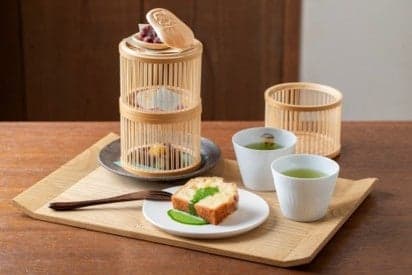
- Menu: 和の国 (Wa no Kuni), ¥2,200
- Address: 1-22 Minami-cho, Suruga Ward, Shizuoka City
- Phone: 054-266-5415
- Serving period: November 1 (Sunday) to February 28 (Sunday)
- Hours: Sunday to Thursday 8:00 AM to 9:00 PM; Friday and Saturday 8:00 AM to 12:00 AM (midnight)
- Serving days: Daily during the period
- Website: https://goodtimingtea.jp/
Nihondaira Yume Terrace 茶房夢テラス
With the aged Honyama tea, a seasonal Japanese sweet and the tea's mellowness enhance each other, as do the toasty aroma and saltiness of Japanese rice crackers and the tea's richness and umami. The enzyme-reacted tea La香寿 is paired with a caramel tart that melts into the tea's aroma and adds depth, while the acidity of the jelly brings out the tea's fruitiness. Visitors can enjoy the pairing of two kinds of tea with sweets.
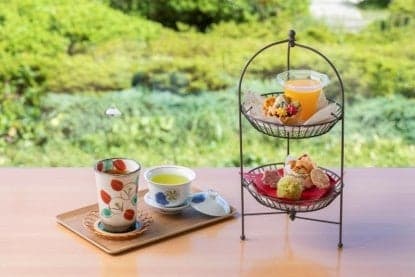
- Menu: 秋冬に季節へ「熟成茶を愉しむ」 (autumn/winter seasonal "Enjoying Aged Tea"), ¥2,500 (separate admission fee required)
- Address: 600-1 Kusanagi, Shimizu Ward, Shizuoka City
- Phone: 054-340-1172
- Serving period: November 14 (Saturday) to late February
- Hours: Sundays and holidays 9:00 AM to 5:00 PM (last order 4:00 PM); Saturdays 9:00 AM to 8:00 PM (last order 7:00 PM)
- Serving days: Saturdays, Sundays, and holidays, except December 26 to January 11
- Website: https://nihondaira-yume-terrace.jp/
Fugetsuro CAFE KARYO (浮月楼 CAFE KARYO)
An elegant afternoon at Fugetsuro, which overlooks a beautiful garden associated with Tokugawa Yoshinobu. Japanese and Western sweets and dishes made from seasonal ingredients by the craftspeople of the ryotei restaurant are served with tea specially blended for Suruga Afternoon Tea, and the combination makes an exquisite harmony. Guests can enjoy a special time here while feeling the colors of the four seasons.
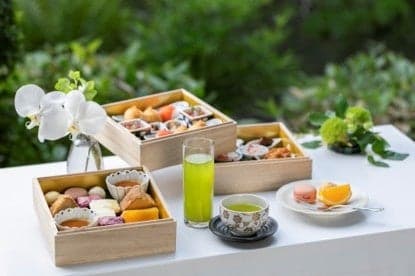
- Menu: Suruga Afternoon Tea Set, ¥4,500 (for 2 or more guests; reservation required)
- Address: 11-1 Konya-cho, Aoi Ward, Shizuoka City
- Phone: 054-252-0131
- Serving period: November 1 (Sunday) to February 28 (Sunday)
- Hours: 11:00 AM to 4:00 PM
- Serving days: Tuesday, Wednesday, Thursday, and Friday
- Website: https://fugetsuro.co.jp/
雅正庵 千代田本店
A seasonal afternoon tea made for the harvest season of autumn. The rich, mellow sweetness of chestnuts is combined with fragrant hojicha from Shizuoka Prefecture, in a variety of flavors including Mont Blanc, millefeuille, and gelato. It offers a relaxed way to enjoy the tastes of autumn.
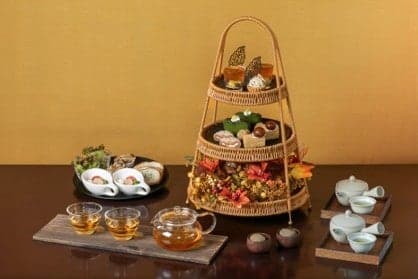
- Menu: Afternoon Tea: Chestnut and Hojicha, ¥2,000 (for 2 or more guests; reservation recommended)
- Address: 7-1-47 Chiyoda, Aoi Ward, Shizuoka City
- Phone: 054-267-3008
- Serving period: October 1 (Thursday) to December 20 (Sunday)
- Hours: Three seatings: 10:50 AM to 12:20 PM / 1:00 PM to 2:30 PM / 3:00 PM to 4:30 PM
- Serving days: Daily during the period
- Website: https://oyaizu.co.jp/
Official Information
- Suruga Afternoon Tea official website: https://suruga-noontea.com
- Official Instagram "するとら": https://www.instagram.com/suruga_traveler/
Tea Tourism: A New Way to Travel to Shizuoka
Shrinking Tea Fields and Young People's Interest in Japanese Tea
Tea fields, long familiar to people in Japan, are at risk of decline as tea farmers and tea plants age.
According to Ministry of Agriculture, Forestry and Fisheries statistics and Nikkei estimates, the harvested area in Japan's major producing regions fell to 25,400 hectares in 2025. If the decline of the past 20 years continues, it is estimated to drop to about 5,300 hectares by 2050, a decrease of about 80% (Note 1).
On the other hand, a look at the attitudes of younger generations, including people in their 20s (Generation Z), shows that more than 70% say they like Japanese tea (Note 2). However, very few people have a habit of brewing tea from leaves in a teapot in daily life.
- Note 1: Nikkei, "消えゆくお茶畑 抹茶ブームに影 農家も茶樹も高齢化" / Ministry of Agriculture, Forestry and Fisheries, "Crop Statistics Survey"
- Note 2: Cross Marketing, "Survey on Japanese Tea (2025)"
Bringing Tradition Into Modern Lifestyles as an Experience
To close this gap and share the appeal of authentic Japanese tea with young people and visitors from overseas, the idea is that simply conveying traditional etiquette in one direction is not enough. Offering new tea experiences suited to modern lifestyles and sensibilities is seen as the way to create new value.
The city's approach is "tea tourism," which brings tradition and tea culture into modern travel, including Suruga Afternoon Tea, where authentic Japanese tea can be enjoyed casually.
Tea Tourism Experiences in Shizuoka City
Beyond simply drinking tea, these experiences let visitors place themselves in the climate and terrain where tea is grown, and take in history and tradition with their own senses. These experiences unique to Shizuoka City are starting to draw attention from discerning domestic and international travelers and food lovers as high-value travel.
1) Tea Terraces Among Lush Green Tea Fields
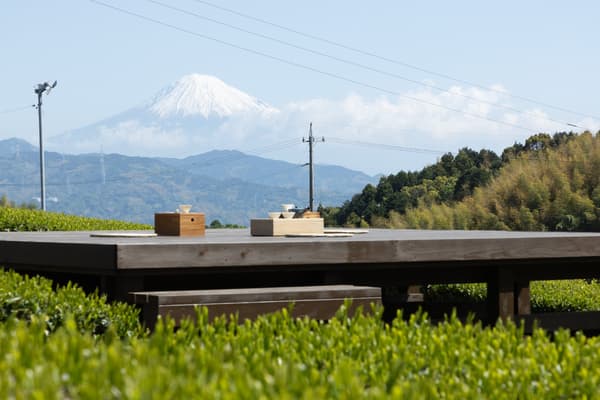
A tea terrace is a terrace built within tea fields spread across mountain valleys, a new initiative by tea farmers. From the terrace, visitors can look out over the tea fields and enjoy a special tea experience away from everyday life. Each terrace has its own appeal, such as one with a view of Mt. Fuji and another surrounded by tea fields on all sides. The clear air and rich natural setting are also part of the draw. Visitors can listen to the growers' commitment to cultivation and tea processing while tasting tea harvested in those very fields. It makes for a refreshing break for body and mind.
2) Momijiyama Garden: Tasting the Traditional Flavor Tokugawa Ieyasu Loved
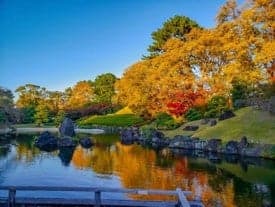
Momijiyama Garden is presented as a spot to experience the origins of Shizuoka tea history. Located on the site of Sunpu Castle (inside Sunpu Castle Park), where Tokugawa Ieyasu spent his later years, the garden preserves the historic atmosphere of Edo and the character of a daimyo garden. At the "ryurei-seki" (立礼席, table-style tea seating) in the garden, visitors can enjoy traditional "Shizuoka Honyama matcha" and sencha, which have been loved by Ieyasu and other figures in history, together with seasonal Japanese sweets in a relaxed setting. Quietly facing a cup of tea amid the historic scenery is a way to touch the depth of traditional culture.
Reservations and Details
- Shizuoka City tourism site "静岡市観光ナビ": https://www.visit-shizuoka.com/feature/detail_151.html
- Shizuoka City tea tourism introduction video "お茶知るたびに、静岡へ": https://www.youtube.com/watch?v=OicgfjB0V-Q
November 1 Is Shizuoka City's "Tea Day"
In line with Shizuoka City's "Tea Day" on November 1, the city is carrying out city-wide efforts that draw on its historical background, along with new measures aimed at the next generation and the world.
Why Shizuoka City Is Known as a Tea Town
Shizuoka tea is said to have begun in the Kamakura period, when Shoichi Kokushi planted tea seeds he brought back from Song China, where he had studied, in Ashikubo (Aoi Ward). In the Meiji period, Shimizu Port became a hub for tea exports, and the volume exported was the largest in Japan. The city grew into a leading center for tea in Japan.
Tea Day and City-Wide Efforts
In 2009, the city enacted the Shizuoka City "Aim to Be Japan's Number One Tea Region" Ordinance (静岡市めざせ茶どころ日本一条例). To encourage familiarity with Shizuoka tea and share its appeal in Japan and overseas, November 1 was designated Shizuoka City's "Tea Day," after the birthday of Shoichi Kokushi (November 1, 1202).
A New Platform for Tea Culture, Connecting the World and the Next Generation
While matcha has become established overseas, the diverse appeal of sencha, Japanese black tea, and hojicha is still little known. Through promoting Suruga Afternoon Tea and supporting tea farmers, Shizuoka City plans to build a new tea culture platform that connects the sensibilities of younger generations with the world's food culture.
- Shizuoka City official tourism site "静岡市観光ナビ": https://www.visit-shizuoka.com/index.html