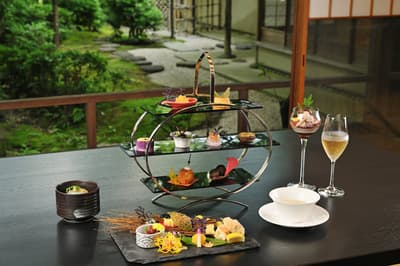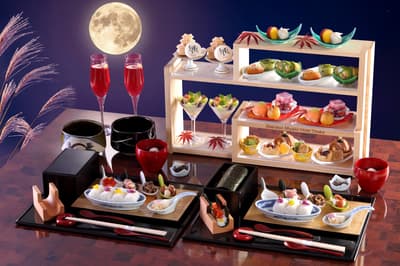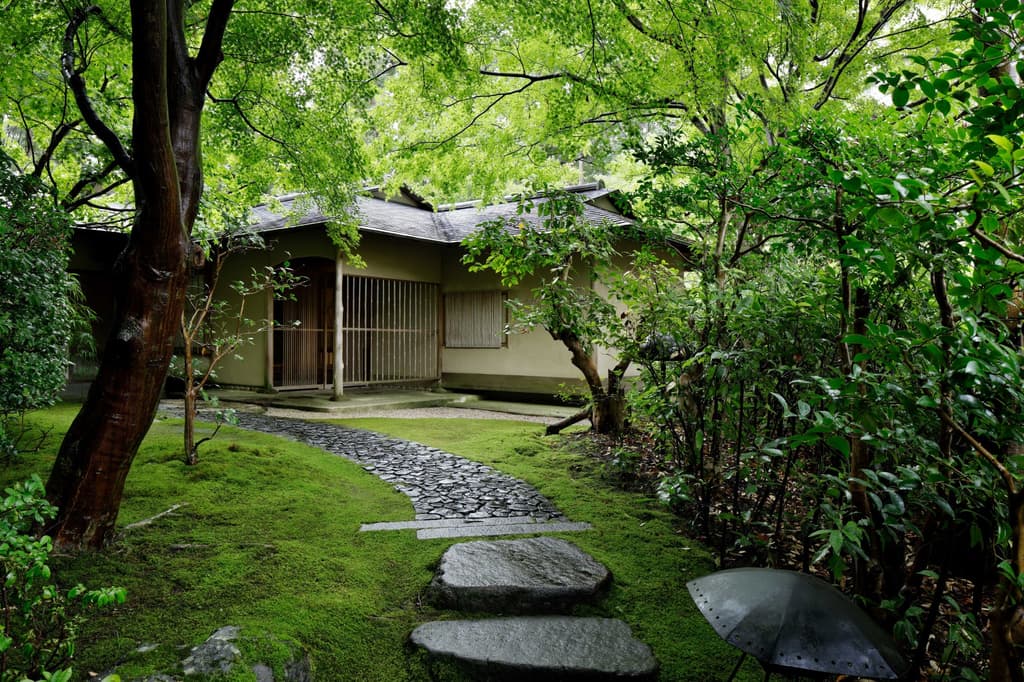
The Prince Kyoto Takaragaike (Sakyo-ku, Kyoto) is holding a Japanese-style afternoon tea set at its Japanese-garden annexe "Saryo" (茶寮) on select dates, by reservation only. The menu is a collaboration between Japanese cuisine head chef Takahiro Goto, pastry chef Etsuo Suda, and baker Wakana Komaki, bringing together cooling summer flavors inspired by Japanese tea.
Three Highlights of the Japanese Afternoon Tea
1. Green Tea from Fukujuen, a Long-Established Kyoto Tea Shop
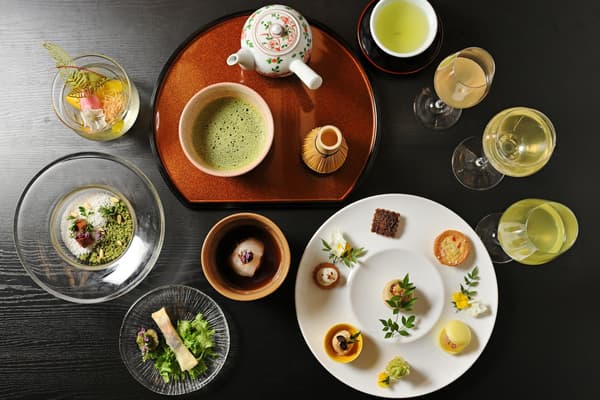
This spring, the hotel introduced a pairing menu featuring Japanese teas, with guidance from the renowned Kyoto tea merchant Fukujuen (福寿園). The teas are brewed with meticulous attention to leaf selection, water temperature, and steeping time, perfectly complementing each sweet and savory course.
2. A Refreshing Retreat at "Saryo," Accessible by Subway
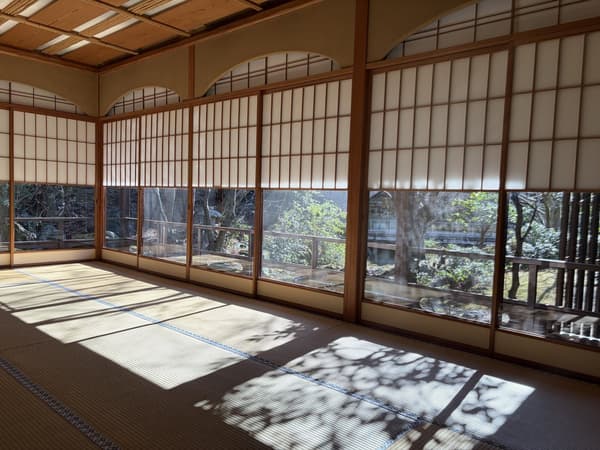
The "Saryo" tearoom sits within The Prince Kyoto Takaragaike's Japanese garden, surrounded by nature and situated beside a pond — offering a welcome escape from the summer heat of the city. Guests can reach Takaragaike directly from central Kyoto via subway, making it an easy and serene summer getaway.
3. An Artful Savory First Course
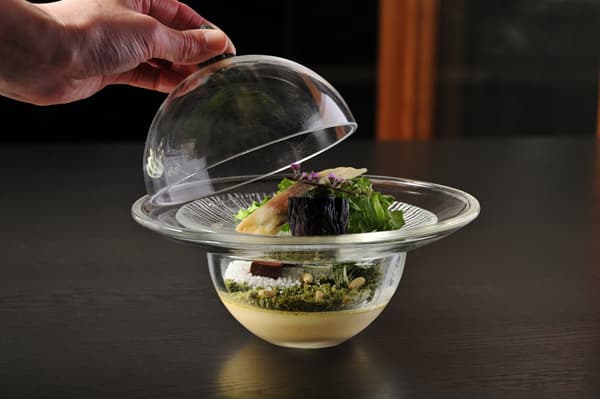
The first course savory is a striking terrarium-style presentation: ingredients are arranged inside a glass vessel to evoke a miniature moss garden. Head chef Goto's edible green tableau is, of course, entirely consumable.
Menu Details
Available Dates: Saturdays, Sundays, and Monday holidays in July and August 2026:
July 4 (Sat), 5 (Sun), 11 (Sat), 12 (Sun), 18 (Sat), 19 (Sun), 20 (Mon, holiday), 25 (Sat), 26 (Sun); August 1 (Sat), 2 (Sun), 8 (Sat), 9 (Sun), 22 (Sat), 23 (Sun), 29 (Sat), 30 (Sun)
Reservations required at least 7 days in advance.
Time: 1:00 PM – 3:00 PM
Venue: The Prince Kyoto Takaragaike, "Saryo"
Price: ¥10,000 per person (tax included; 15% service charge applies separately)
Limited to 5 groups (maximum 10 guests) per session; minimum 2 guests. Maximum dining time: 2 hours. Menu subject to change based on ingredient availability.
Welcome Drink
- Cold-brew gyokuro
First Course: Savory — Terrarium Style
Tea pairing: Fukujuen "Hachijuhachi" (八十八) — first steep
Fresh aroma and flavor to complement the savories.
- Matcha okara with mijin-ko, hojicha sesame tofu with pine nuts, baby leaf salad
- Eel and Kujo leek spring roll with tea salt
- Green salad with matcha citrus dressing; eggplant dengaku with tea miso
- Tamago yose (set egg)
Second Course: Sweets
Tea pairing: "Hachijuhachi" — second steep
A gentle astringency and richness to balance the sweetness.
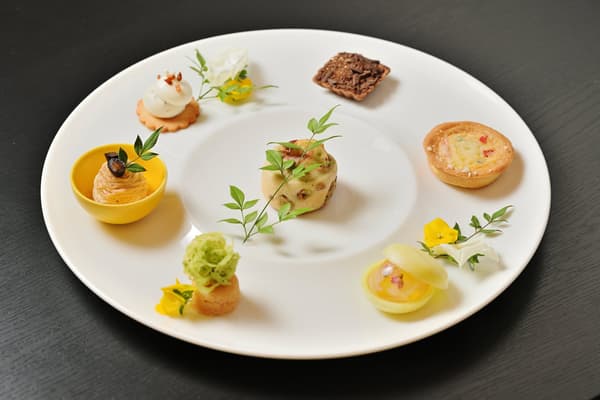
- Quiche Lorraine
- Tamba black bean and hojicha Mont Blanc
- Genmai-cha and soy milk mousse
- Chamonmon (tea and sweet red bean bread)
- Griotte cherry and pistachio chocolate tart
- Sencha and kinako snowball cookies
- Mango monaka
Palate Cleanser
- Granita-style mocktail
Third Course: Japanese-Style Parfait — Ikebana Inspired
Tea pairing: Genmai-cha
The sweetness of the parfait pairs harmoniously with the toasty aroma of genmai-cha.
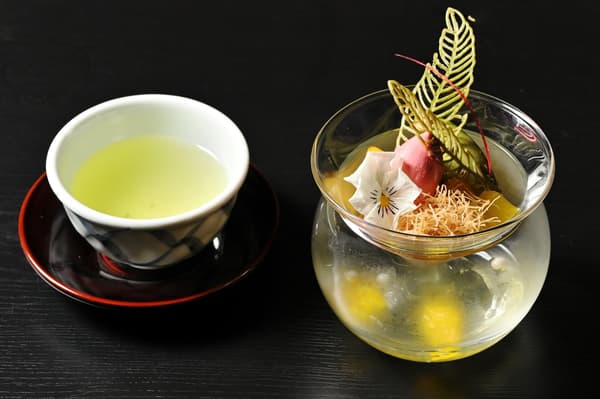
A parfait featuring matcha and mango mousse, red shiso and wild raspberry sherbet, arranged in the style of an ikebana floral arrangement.
Optional Matcha Experience
Guests may request to prepare their own matcha using a chasen (bamboo whisk).
Closing Course: "Bubuzuke" with Hojicha
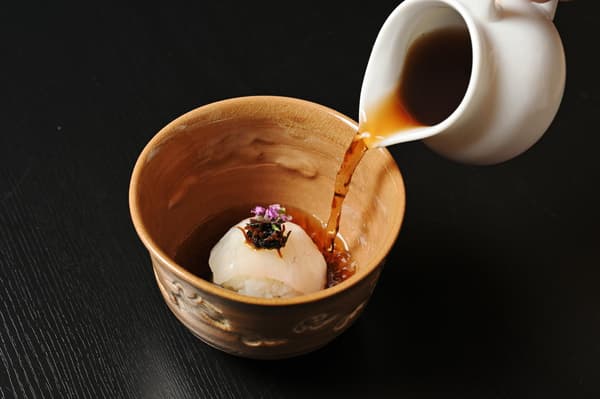
Hand-shaped rice in the form of temari sushi, served with sea bream sashimi and finished at the table with fragrant hojicha poured over the top — a distinctly Kyoto finale.
About the "Saryo" Tearoom — Architectural Heritage by Murano Togo
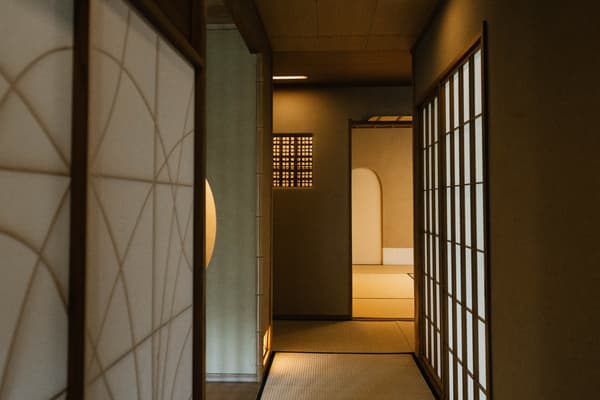
The "Saryo" tearoom at The Prince Kyoto Takaragaike is a sukiya-style wooden structure designed in the late years of celebrated architect Murano Togo. It stands in the hotel's Japanese garden, and every refined detail reflects the artisan craftsmanship and aesthetic sensibility that define his legacy.
Sukiya-Zukuri Architecture
Sukiya-zukuri is a traditional Japanese architectural style rooted in the spirit of the tea ceremony as passed down since Sen no Rikyu. It emphasizes the texture of natural materials and a deep harmony with the surrounding environment.
Historical Context
The 1980s brought rapid economic growth and accelerating innovation in Japan. As urbanization increased, demand grew for quiet, extraordinary spaces removed from everyday life, and many tea rooms were built during this period. The "Saryo" opened in autumn 1986 alongside the hotel, and is considered a summation of Murano Togo's technique and aesthetic philosophy.